Whaling ripped a huge hole in the oceans food web
What matters in science |

Is this your brand on Milled? Claim it.
|
|||||
|
|||||
|
Hello Nature readers, |
|||||

|
|||||
| Spending long stretches of time with a person with COVID-19 increases the chance of catching the disease, but masking and staying outdoors reduces the risk. Credit: (Ceng Shou Yi/NurPhoto via Getty) | |||||
Long chats, indoors: where masks matterAn analysis of hundreds of COVID-19 cases suggests where face masks matter most: during long encounters and indoors. Researchers studied more than a thousand people in California who tested positive for SARS-CoV-2 between February and September 2021. Each of them was matched with at least one control participant: a person with the same factors, such as age and sex, but who tested negative during that time period. Participants who’d been exposed to someone known to have COVID-19 provided details about the encounter, such as the setting and duration. The study, which is not yet peer reviewed, found that participants who were not fully vaccinated had the greatest risk of infection when they reported an exposure to someone with COVID-19 that occurred indoors or that lasted for more than three hours. Participants exposed to someone with COVID-19 had lower odds of infection if masks were worn at the encounter than if they weren’t. Nature | 4 min readReference: medRxiv preprint (not peer reviewed) |
|||||
|
|
|||||
|
|||||
|
|
|||||
US astronomy’s ambitious ten-year planA long-anticipated road map for the next ten years of US astronomy just dropped, and it’s super-ambitious. It recommends that NASA coordinate, build and launch three flagship space observatories that are capable of detecting light over a broad range of wavelengths. It suggests that the US National Science Foundation fund two enormous ground-based telescopes in Chile and possibly Hawaii, to try to catch up with an advanced European telescope that’s under construction. And for the first time, it issues recommendations for how federal agencies should fight systemic racism, sexism and other structural issues that drive people out of astronomy, weakening the quality of the science. Nature | 8 min read |
|||||
|
|
|||||
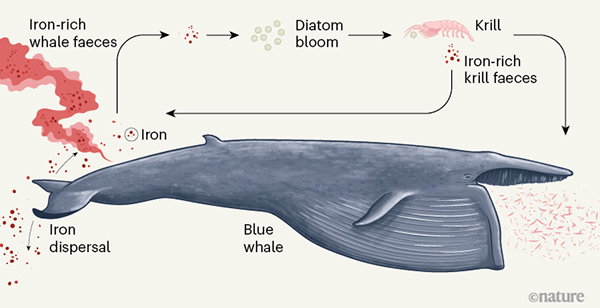
Boost hungry whales to restore ocean lifeWhales eat up to three times more prey than was previously thought. Their faeces once fuelled a rich undersea ecosystem that was devastated by whaling. Researchers tagged whales and monitored krill to directly observe the eating habits of baleen whales, such as humpbacks (Megaptera novaeangliae) and blue whales (Balaenoptera musculus). With an estimated 2 million animals killed by whalers in the twentieth century — a mass twice as large as all the wild mammals on Earth today — that means an estimated 430 million tonnes of krill went uneaten. That iron-rich poo never sank to fertilize the ocean’s food web, breaking an iron cycle that nourished everything from diatoms to seabirds. People might be able to help restore these formerly rich ecosystems, say researchers, by seeding the ocean with iron that ultimately encourages the whale population to bounce back and do the job itself. The Atlantic | 6 min readRead the expert view by bio-oceanographer Victor Smetacek in the Nature News & Views article (7 min read, Nature paywall) Reference: Nature paper |
|||||
|
|
|||||
|
|||||
| When whales eat krill, they aid iron cycling by defecating the iron-rich remains. They can also aid iron availability by mixing ocean waters through their vigorous tail movements. Since iron availability limits productivity in ocean waters, this fuelled a rich food web — which widespread whaling has disrupted. (Nature News & Views article | 7 min read, Nature paywall) | |||||
Today at COP26
If all the promises made at the 26th Conference of the Parties (COP26) this week in Glasgow are kept, one analysis projects that global warming could be kept to 1.9 ℃ above pre-industrial levels. That’s a very big ‘if’, but recent pledges from China and India to curb emissions are nudging us closer to the upper limit enshrined in the 2015 Paris climate agreement. “For the first time in history, the aggregate effect of the combined pledges by 194 countries might bring the world to below 2 ℃ warming with more than a 50% chance,” said a statement from Climate Resource. The group is led by climate scientist Malte Meinshausen, who was a lead author for the latest Intergovernmental Panel on Climate Change report. (iNews | 3 min read) |
|||||
|
|||||
|
|||||
|
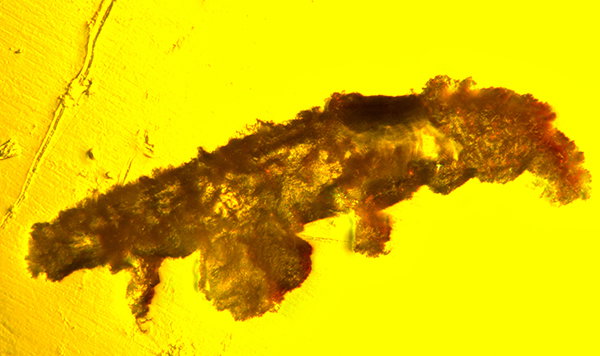
This tiny tardigrade has been preserved in amber for 16 million years. Researchers were studying the fragment for months before spotting the half-millimetre-long creature in a corner. The discovery is “truly a once-in-a-generation event”, says entomologist Phil Barden. It is only the third fossilized tardigrade to be found, and the first from the Cenozoic, the current geological era. The fossil specimen — a genus and species new to science — has been named Paradoryphoribius chronocaribbeus. See more of the month’s sharpest science shots, selected by Nature’s photo team. (Ninon Robin, Harvard/NJIT) |
|||||
Quote of the day“The greatest, truest essence of creative productivity is joy.”After much of his brain’s left temporal lobe was removed in 1980, celebrated jazz guitarist Pat Martino recovered his skills by remembering the pleasure of playing. Martino died on Monday, aged 77. (Nautilus | 16 min read, from 2015) |
|||||
|
|
|||||
|
|||||
|
|
|||||
|
|||||
|
You received this newsletter because you subscribed with the email address: - Please add [email protected] to your address book. Enjoying this newsletter? You can use this form to recommend it to a friend or colleague — thank you! Want to switch to the weekly edition or change your email address? Update your preferences. Had enough? Unsubscribe from the Nature Briefing. Fancy a bit of a read? View our privacy policy. Forwarded by a friend? Get the Briefing straight to your inbox: subscribe for free. Want to master time management, protect your mental health and brush up on your skills? Sign up for our free short e-mail series for working scientists, Back to the lab. Would you like to read the Briefing in other languages? 关注Nature Portfolio官方微信订阅号,每周二为您推送Nature Briefing精选中文内容——自然每周简报。
Nature | The Springer Nature Campus, 4 Crinan Street, London, N1 9XW, United Kingdom Nature Research, part of Springer Nature. |