Who needs testosterone therapy?
What matters in science |

Is this your brand on Milled? Claim it.
|
||||||
|
||||||
|
Hello Nature readers, |
||||||
|
||||||
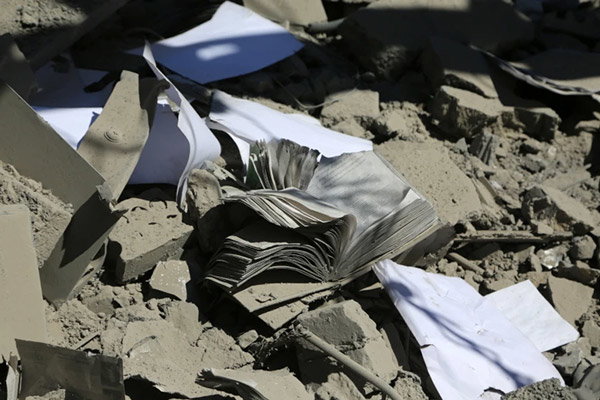
| Sharif University of Technology after it was bombed on 7 April 2026. (Fatemeh Bahrami/Anadolu via Getty) | ||||||
Bombs damage Iran’s scientific hubsBombing by the United States and Israel have damaged some of Iran’s universities and hospitals, researchers tell Nature. One of the damaged institutions is the Shefa Neuroscience Research Center in Tehran, according to Ali Gorji, a neuroscientist in Germany who supervises PhD students at the Shefa centre. “If attacks on universities become a normal thing, then they can happen in any future stupid war. And this idea is much more destructive than attacking a single building,” he says. A White House spokesperson and a representative of Israel’s military separately told Nature that they do not target civilian infrastructure, but did not explain why these and other institutions were bombed. Nature | 8 min read |
||||||
AI rewrite simplifies protein alphabetAll life on Earth depends on the same molecular alphabet: 20 amino acids that cells string together to make proteins. But now, scientists have engineered bacteria to run a core part of their cellular machinery — the ribosome — with just 19 of those amino acids. Researchers took advantage of recent advances in generative artificial intelligence to create proteins that worked without the amino acid isoleucine. The work offers a blueprint for engineering cells with capabilities beyond those found in nature, the team says, while also hinting at a simpler past when early life relied on a more limited set of building blocks. Nature | 6 min readReference: Science paper |
||||||
Congress eases Trump science cutsUS lawmakers have voted to cut science spending in 2027 from 2026 levels but declined to approve cuts as large as those sought by the administration of US President Donald Trump. Members of the House of Representatives voted to cut the National Science Foundation’s spending in 2027 by 20%, rather than the 55% proposed by the Trump team, for example. The Senate will draft its own version of spending legislation in the next few months, and then the House and Senate will hammer out any differences between their proposals. Regardless of what they decide, some scientists worry that the White House Office of Management and Budget could still delay the release of money to science agencies, as it did in 2026. Nature | 7 min read |
||||||
Scientists to return to FukushimaFifteen years after Japan’s worst nuclear-power accident, construction is under way for the Fukushima Institute for Research, Education and Innovation (F-REI) in Namie, a small town that was evacuated because of concerns about radiation exposure. The institute will focus on robotics, agriculture, the medical uses of radiation and environmental recovery from nuclear disasters. Nature | 6 min read |
||||||
|
||||||
|
||||||
|
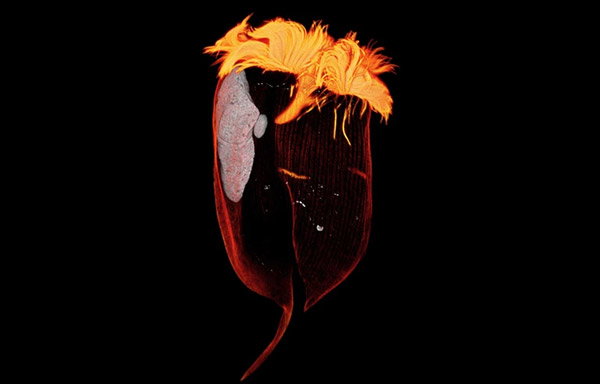
Scientists have identified a previously unknown type of cellular organelle inside microbes that live in the guts of ruminant animals such as sheep and cows. The newly discovered organelle was found in rumen ciliates (such as Entodinium caudatum, pictured). It removes oxygen and releases hydrogen, which archaea in the rumen use as fuel to produce methane. Burping livestock contribute around 30% of global methane emissions produced by human activities, and the authors say their discovery could inspire new ways to reduce these emissions. (Nature | 6 min read) Reference: Science paper (Chuanqi Jiang, Jinying He & Che Hu/Inst. of Hydrobiology, CAS) |
||||||
| ||||||
|
||||||
|
||||||
|
||||||
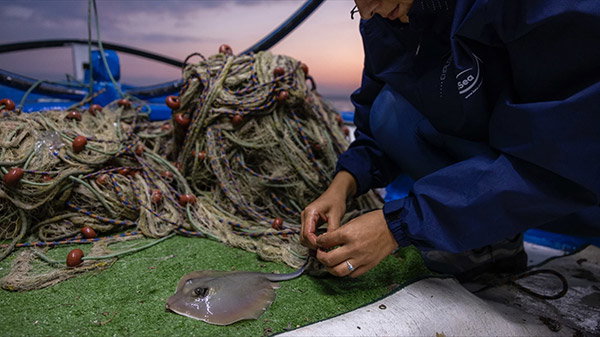
| Naasan Aga-Spyridopoulou gently handles a marbled ray (Dasyatis marmorata) found in a catch. (Ugo Mellone) | ||||||
In photos: coming back from the catchMany of the fishers in the Amvrakikos Gulf in Greece participate in the conservation project By ElasmoCatch. They allow researchers such as marine scientist Roxani Naasan Aga-Spyridopoulou on board their boats to collect data on shark and ray species they occasionally catch. Her work has shown that, when handled with care, these creatures can survive a trip through a fisher’s net. “The results show that when handling is done correctly, the short-term survival rate is very high — for some species, over 95%,” she says. Nature | Leisurely scroll |
||||||
Who needs testosterone therapy?As the United States considers loosening its rules around which men can access testosterone therapy, the hormone is increasingly being promoted by people promising fitter bodies and a boost in energy levels. But there are risks: at high doses, testosterone can be addictive and cause heart problems, infertility and even psychosis. For women, the hormone seems to help with low sexual desire after menopause that causes distress. But the wider benefits are unclear, and muddied by the “incredible placebo effect” of just being listened to by a physician, says endocrinologist Susan Davis. Ultimately, more research is needed to see what widespread use of testosterone might achieve. “If you treat all men with low testosterone, will it actually prevent ill health? We haven’t proved that,” says endocrinologist Bu Yeap. Nature | 16 min read |
||||||
The world’s farms need fertilizerHalf of all food consumed depends on synthetic nitrogen fertilizers, which rely on natural gas — supplies of which are being roiled by war and global crises. To safeguard the global food system, a group of researchers argues that support should be provided to enable countries should be supported to hold strategic fertilizer reserves, farmers to apply products with care, and industry to roll out fossil-fuel-free alternatives. Nature | 14 min read |
||||||
Quote of the day“While modern scientists can more accurately describe how things actually work in nature, this doesn’t mean that phlogistians, or even alchemists, did not make useful observations.”Don’t just teach scientific progress from the perspective of the ‘winners’, argues philosopher of science Vanessa Seifert — we need to learn about the history of science to understand how our best theories came about. (Chemistry World | 8 min read) |
||||||
|
|
||||||
|
||||||
|
|
||||||
Free newsletters from NatureWant more? Update your preferences to sign up to our other Nature Briefing newsletters:
|
||||||
|
||||||
|
You received this newsletter because you subscribed with the email address: - Please add [email protected] to your address book. Enjoying this newsletter? You can use this form to recommend it to a friend or colleague — thank you! Had enough? To unsubscribe from this Briefing, but keep receiving your other Nature Briefing newsletters, please update your subscription preferences. To stop all Nature Briefing emails forever, click here to remove your personal data from our system. Fancy a bit of a read? View our privacy policy. Forwarded by a friend? Get the Briefing straight to your inbox: subscribe for free. Want to master time management, protect your mental health and brush up on your skills? Sign up for our free short e-mail series for working scientists, Back to the lab. Get more from Nature: Register for free on nature.com to sign up for other newsletters specific to your field and email alerts from Nature Portfolio journals. Would you like to read the Briefing in other languages? 关注Nature Portfolio官方微信订阅号,每周二为您推送Nature Briefing精选中文内容——自然每周简报。
Nature Portfolio | The Springer Nature Campus, 4 Crinan Street, London, N1 9XW, United Kingdom Nature Portfolio, part of Springer Nature. |