Lady Liberty
by Krishna Teja
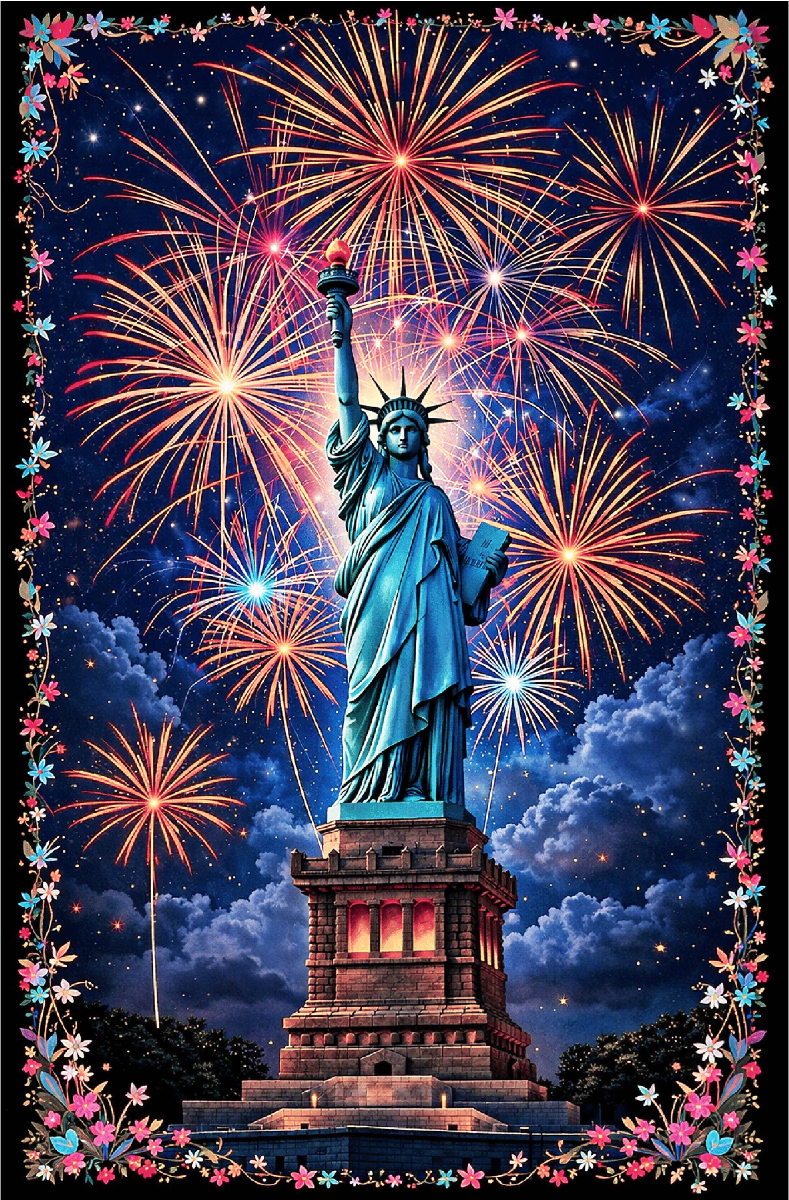
The Statue of Liberty is one of America’s strongest symbols of freedom, democracy, and hope. France gave it to the United States in 1886 to show the friendship between the two countries and their shared belief in liberty as a basic human right. Standing tall in New York Harbor, the statue has greeted millions of newcomers, especially immigrants who saw it as the first sign of a new life. The torch she holds high shows that America can be a place of opportunity for those looking for safety, dignity, and a better future.
The Statue of Liberty matters because it represents core American values like freedom, equal rights, and the pursuit of happiness. The tablet she holds shows the date of the Declaration of Independence, connecting her to the founding of the United States and the idea that government should protect people’s rights. Over the years, the statue has become more than just a monument. It stands as a promise that America should be a place where people from all backgrounds can live freely and take part in society.
Today, the Statue of Liberty still inspires people in the United States and visitors from around the world. It reminds the country of its ideals and the responsibilities that come with them. Although America has not always lived up to its promise of liberty for all, the statue encourages each generation to work for justice, inclusion, and equality. Its importance lasts because it brings together history, hope, and a sense of national purpose. As a symbol, it reminds Americans that freedom needs to be protected, shared, and renewed again and again.
As we celebrate America’s 250th anniversary this year, we wanted to commemorate this milestone with a puzzle. We saw this joyful image and thought it perfectly captures the spirit of those celebrations, and we hope you enjoy it.
Lady Liberty is 461 Pieces and a Level 3.
It has lots of fun, intricate, whimsy pieces celebrating America's Independence Day.
The Team at Nautilus Puzzles
"History does not belong to us, but we belong to it."
-Hans-Georg Gadamermer
|