Hi -,
It’s never too early to start caring for your cognitive health, but we’ve recently identified ages 40 to 65 as a key time to identify problems and future-proof your brain. Plus, in this week’s video, we spoke to scientists in Antarctica about the dramatic melting of the Thwaites glacier and the potentially catastrophic consequences of its eventual collapse.
|
|
|
|
|
Hi -,
It’s never too early to start caring for your cognitive health, but we’ve recently identified ages 40 to 65 as a key time to identify problems and future-proof your brain. Plus, in this week’s video, we spoke to scientists in Antarctica about the dramatic melting of the Thwaites glacier and the potentially catastrophic consequences of its eventual collapse.
|
|
|
|
Like what you see? Subscribe today to gain unlimited access to all our subscriber only content. |
|
|
|
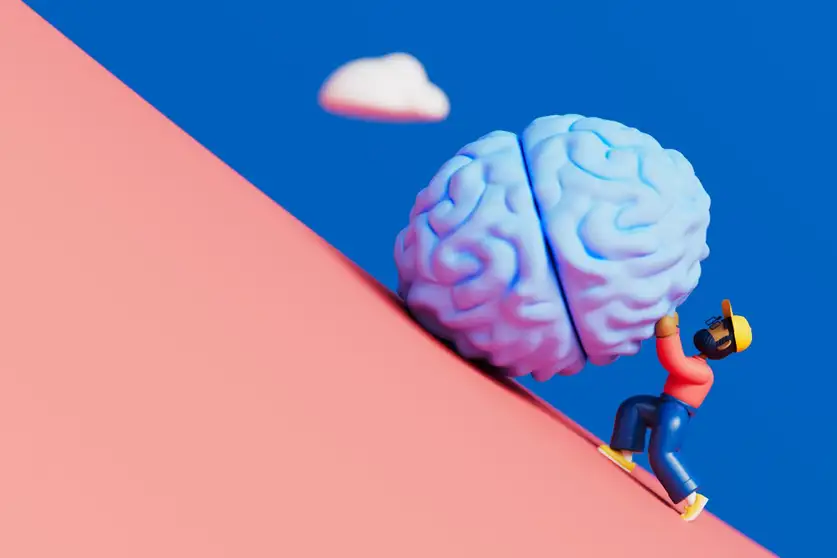
Neuroscientists have long focused on the turbulent brain changes at either end of our lives: development in childhood and adolescence, and decline in old age. But recently, scientists have turned their attention to the key turning points that happen in midlife. They’ve identified significant transformations, mainly focused on connectivity in the brain, that take shape between the ages of 40 and 65 and lay the foundation for cognitive abilities for years to come. Now, they are working on tracking these shifts, as spotting any problems early can be key to protecting against the worst of Alzheimer's. Read more
|
|
|
|
Has Antarctica’s collapse begun? |
The Thwaites glacier is sometimes called the “doomsday glacier” for good reason. If it destabilises, it could trigger a wider collapse of the West Antarctic ice sheet, raising sea levels by up to 5 metres. Scientists believe we may be approaching a tipping point that could completely redraw the world's coastlines, putting cities such as Kolkata, New York and London at risk of severe flooding, displacing millions of people. In our latest video, we speak to scientists involved in an international effort to better understand what is happening with Thwaites and why the consequences of its collapse are potentially much more devastating than we previously thought. Watch now
|
|
|
|
10-12 October, Excel London and online |
Journey to the stars and beyond, exploring the biggest cosmic mysteries, from the hunt for dark matter to unravelling the multiverse and the future of space travel on the Universe Stage. Book now
|
|
|
|
|
Atom-based quantum computers |
A quantum computer made from extremely cold atoms can correct its own errors during long computations, an important prerequisite for becoming truly useful. Read more |
|
|
|
Following a ketogenic diet was linked to recovery in a majority of people with the eating disorder in a small trial. Read more |
|
|
|
For the first time, fire salamanders have been shown to biofluoresce, absorbing and re-emitting light at different wavelengths. Read more |
|
|
|
Mark Thomson, CERN's director general
KLAWE RZECZY |
|
|
|
Mark Thomson first became fascinated by CERN as a teenager. More than 40 years later, he has become its director general, arriving at a decisive moment for particle physics. The Large Hadron Collider is set for a major upgrade, but CERN is already looking to a possible £13 billion successor: the Future Circular Collider. Thomson argues this vast machine could test whether the mysterious Higgs boson holds clues to dark matter, antimatter and the origins of mass. It is an expensive gamble, but one he says may be the best way to break our current picture of reality. Read more
|
|
|
|
“We are not saying be rude to your AI. But don’t fall into the interaction trap and don’t go falling in love with it either.” |
Kaveh Madani, Director of the United Nations University Institute for Water, Environment and Health, on the findings that ditching the niceties in AI prompts could drastically reduce their energy use. Read more |
|
|
|
|
Free John Lewis gift card |
The extraordinary is everywhere and exploring it starts here. Enjoy a whole year's unlimited digital access and receive a £20 John Lewis gift card. Subscribe now |
|
|
|
|
This email has been sent to -.
Unsubscribe from the Daily newsletter |
Do not reply directly to this email. If you have an enquiry, please contact us using the relevant contact details listed here. |
Copyright © New Scientist Ltd
Registered Office: Northcliffe House, 9 Derry Street, London, W8 5HY
Registered in England. No.10644366
Australian mailing address: PO Box 2315, Strawberry Hills, NSW 2012, Australia
Registered in Australia. ABN 22 621 413 170
Privacy Policy | Terms & Conditions
|
|
|
|
|
|
|