Hi -,
We know that women’s health has historically been neglected in scientific research, but often that’s in the context of pregnancy, menopause or gynaecological-related conditions. Now, scientists have found that the memory tests frequently used to assess signs of Alzheimer’s disease may be failing to pick up on early signs of the condition in women. In more uplifting news, scientists have found that putting carbon dioxide into rocks while getting hydrogen out is a climate double win.
|
|
|
|
|
Hi -,
We know that women’s health has historically been neglected in scientific research, but often that’s in the context of pregnancy, menopause or gynaecological-related conditions. Now, scientists have found that the memory tests frequently used to assess signs of Alzheimer’s disease may be failing to pick up on early signs of the condition in women. In more uplifting news, scientists have found that putting carbon dioxide into rocks while getting hydrogen out is a climate double win.
|
|
|
|
Like what you see? Subscribe today to gain unlimited access to all our subscriber only content. |
|
|
|
Women tend to have more robust verbal memories than men, which can mask signs of early Alzheimer’s disease. This means that commonly used memory tests may fail to pick up on the condition in women, delaying their diagnosis and treatment, according to a new study. “We are starting to recognise that gender differences in Alzheimer’s is a big issue,” says Ralph Martins at Edith Cowan University in Perth, Australia, who wasn’t involved in the research. Read more
|
|
|
|
We desperately need clean hydrogen for processes that cannot be powered by renewable electricity – and it might be possible to generate vast quantities from rocks deep underground while locking away carbon dioxide at the same time. Researchers at the University of Texas at Austin have shown that this process works for one common rock type in lab studies. They now want to work with companies on field trials. Read more
|
|
|
|
Women experience a steady rise in body temperature from their teens to midlife, which may be useful for monitoring ageing and overall health. Read more |
|
|
|
There’s unexpected news of a fifth movie for one of the most underrated sci-fi reboots. Hurray, says New Scientist film columnist Bethan Ackerley. Read more |
|
|
|
Autism pioneer Uta Frith wants to dismantle the spectrum, and in this video with Thomas Lewton, she explains why. Watch here |
|
|
|
Do you want to attract moths and bats into your outdoor space after the sun’s gone down? Penny Sarchet explains how. Watch here |
|
|
|
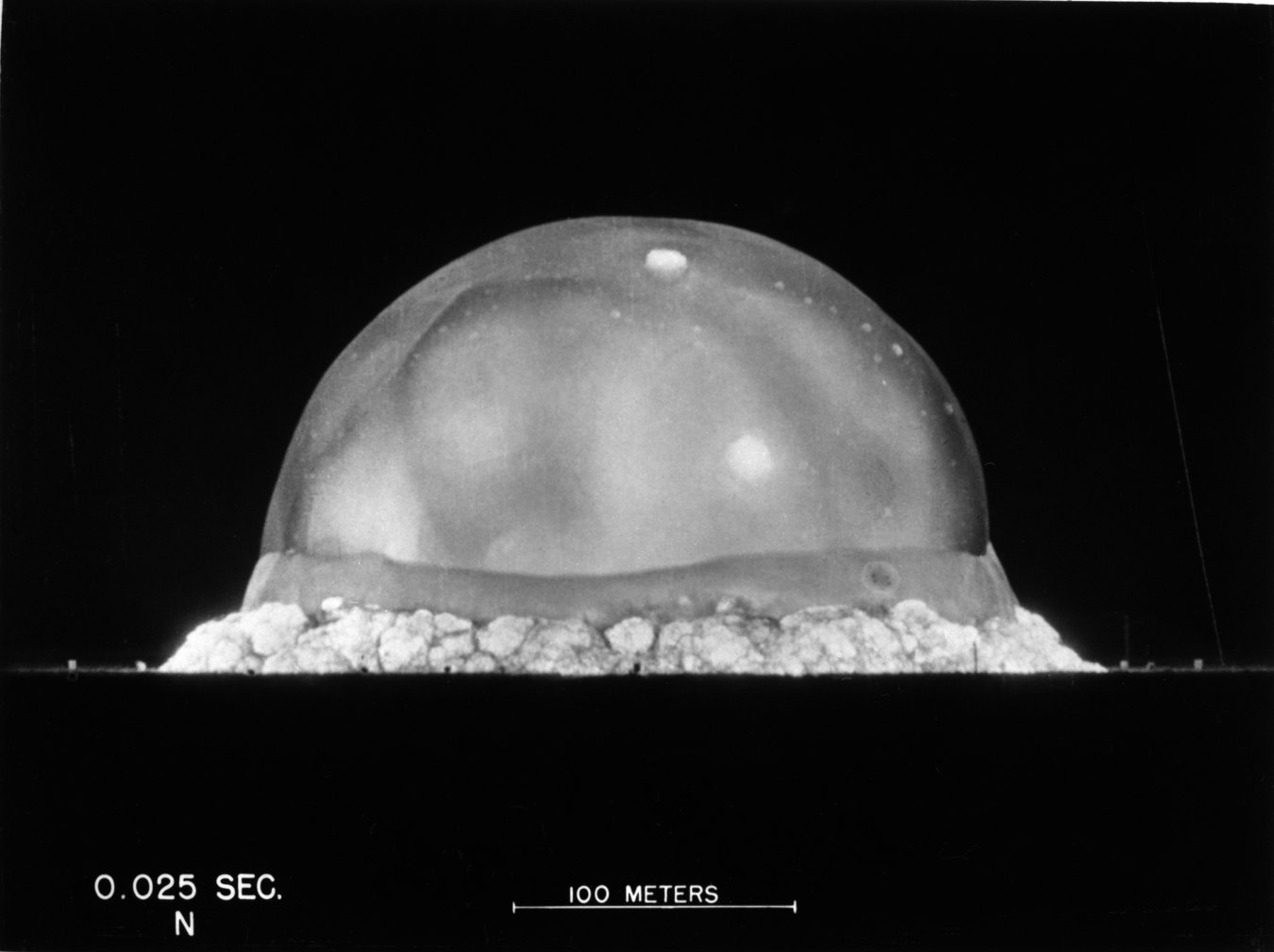
Photos reveal unexpected details from the world’s first atomic test |
|
|
|
Los Alamos National Laboratory |
|
|
|
Previously classified photos and documents reveal the scientific work that went into the world's first atomic test in the New Mexico desert in 1945 – a test that, just weeks later, would see nuclear bombs dropped on Hiroshima and Nagasaki in Japan. The early moments of the nuclear blast can be seen in the stark black-and-white photograph above. The otherworldly, translucent orb of heat and light is surrounded by a dust “skirt” and a shockwave “belt”. Explore the images
|
|
|
|
“Don’t let anyone tell you that rectal bleeding is normal for runners.” |
Timothy Cannon at Inova Schar Cancer in Fairfax, Virginia, on the study linking marathons and ultramarathons to colon cancer, reported by The Washington Post. |
|
|
|
|
If understanding the ideas shaping our world excites you, you’re in the right place. For a limited time, enjoy one year of digital access for £99. Subscribe now
|
|
|
|
|
This email has been sent to -.
Unsubscribe from the Daily newsletter |
Do not reply directly to this email. If you have an enquiry, please contact us using the relevant contact details listed here. |
Copyright © New Scientist Ltd
Registered Office: Northcliffe House, 9 Derry Street, London, W8 5HY
Registered in England. No.10644366
Australian mailing address: PO Box 2315, Strawberry Hills, NSW 2012, Australia
Registered in Australia. ABN 22 621 413 170
Privacy Policy | Terms & Conditions
|
|
|
|
|
|
|