|
💡 This is the core research insight
Most blue light glasses research asks whether a few weeks of use makes a difference. The answer, in most studies, is: not significantly. But this study asked what happens to real-world users over twelve months of consistent daily wear, and found something meaningfully different.
Significant predictors of symptom relief included adherence to the 20-20-20 rule, daily screen time under six hours, and lens use for twelve months or more. PubMed Central
The benefit is not immediate. It is cumulative. The gap between regular and non-regular users is so large it was statistically significant across nearly every symptom measured. Which brings us back to the photo at the top. I wear them every day. This week's research explains why that simple habit is the whole answer.
What the science says...
Why short-term studies keep missing the point
The research that dismisses blue light glasses was largely asking the wrong question.
The Cochrane review and most studies that found limited benefit ran for a few weeks and measured immediate changes. The eyes adapt gradually, not in days.
Blue light-filtering lenses have demonstrated efficacy in improving visual function parameters such as critical flicker frequency, contrast sensitivity, and visual maintenance ratio, parameters that require consistent use over time to show meaningful change. Asking whether glasses work after two weeks is like asking whether exercise works after two gym sessions. NVISION
What 12 months of consistent wear actually produces
85% reported improvement. The long-term data is considerably more encouraging.
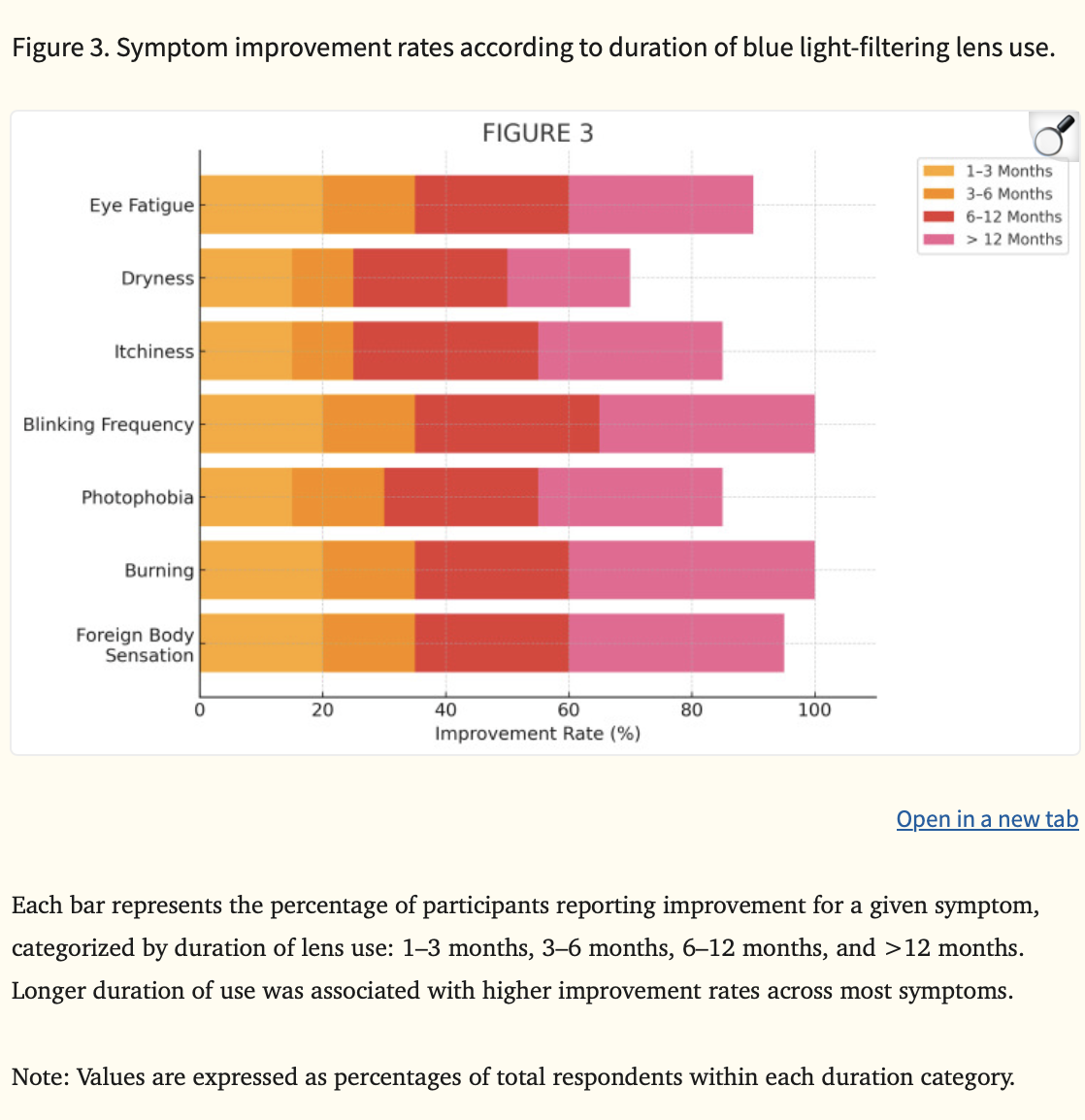
158 of 186 participants, 85%, reported improvement in at least one symptom after twelve or more months. Dryness and eye fatigue were the most frequently improved. Lens use for more than twelve months was a significant predictor of improvement with an odds ratio of 3.511, meaning consistent long-term wearers were three and a half times more likely to report improvement than inconsistent users. PubMed CentralCoresight Research
The habits that multiply the benefit
The glasses work best as part of a broader daily approach.
Significant predictors of symptom relief included adherence to the 20-20-20 rule, odds ratio of 1.95, and daily screen time under six hours. People who wore their glasses and followed the 20-20-20 rule were almost twice as likely to report improvement. One habit produces modest results. Two or three consistent habits produce meaningful, lasting change. I do both. The research says that is exactly right. PubMed Central
The honest limitations worth knowing
Not everyone benefits equally, and the research is transparent about why.
Female gender and prolonged screen exposure were negatively associated with improvement. People spending more than six hours a day on screens showed lower improvement rates, suggesting that above a certain threshold, filtering alone is not sufficient without also reducing total exposure.
That said, the central finding holds: 85% of consistent wearers reported real improvement in symptoms they had been experiencing before they started. nihPubMed Central
What to take from this:
The debate about blue light glasses has been missing the most important variable, time. When you look at people who wear them consistently for a year, 85% report improvement, with regular users improving dryness symptoms at three times the rate of inconsistent users.
Consistency is the mechanism. Two habits that most predict benefit: wearing them every day and following the 20-20-20 rule. Both require a decision made once and repeated daily. That photo at the top is day one of someone else's twelve months.
|