Historians Revisit the American Story
|
|
|
|
...it will be celebrated, by succeeding Generations, as the great anniversary Festival…with Pomp and Parade, with Shews, Games, Sports, Guns, Bells, Bonfires and Illuminations from one End of this Continent to the other from this Time forward forever more. |
|
|
— John Adams, Founding Father and Second President of the United States (1797-1801) |
|
|
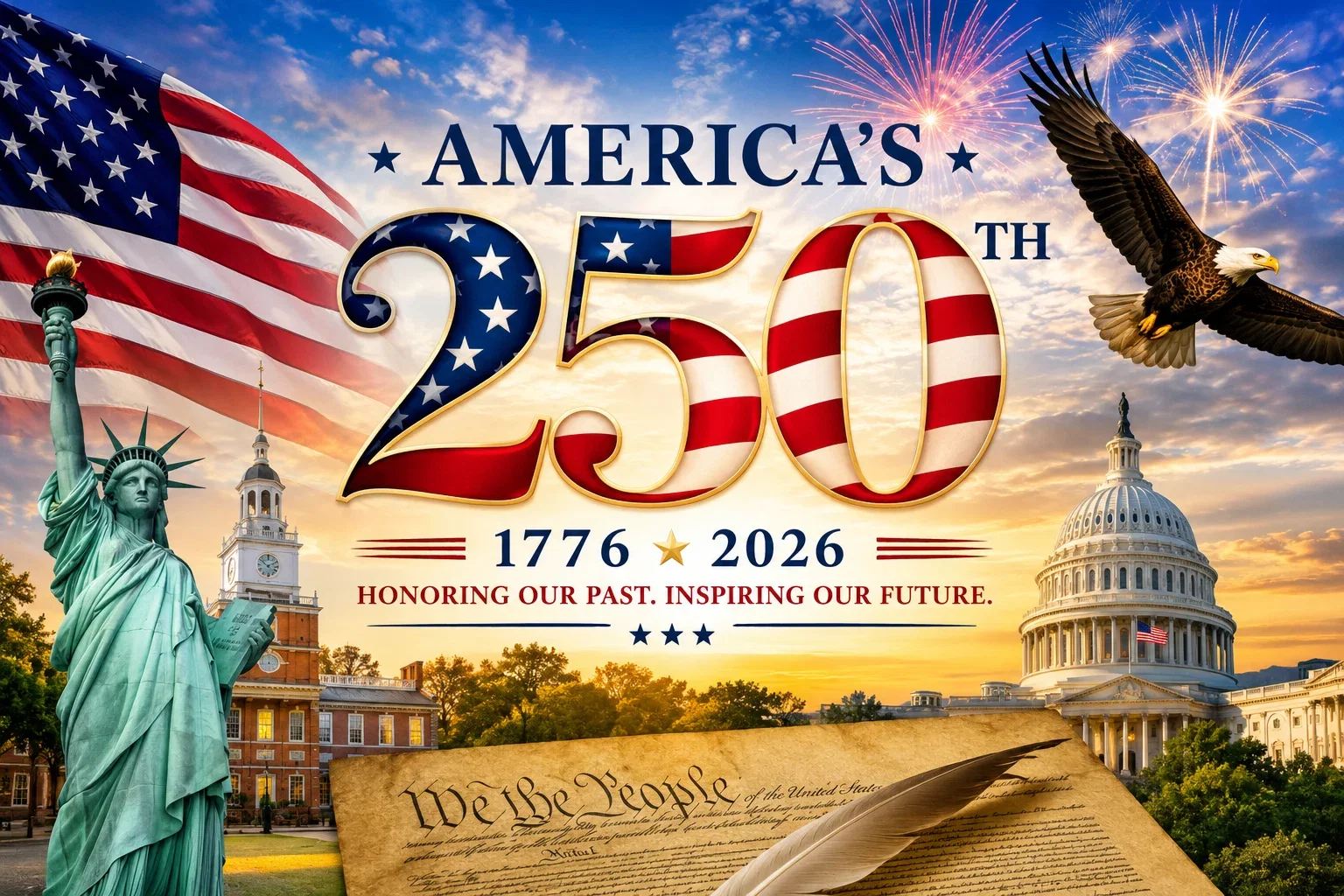
On July 4, 2026 America celebrates the 250th anniversary of the signing of the Declaration of Independence. In honor of this historic landmark, we posed the following question to some of Curiosity University's most popular professors:
|
"As the United States marks its 250th birthday,
what aspect of the American story do you think deserves more attention?"
|
Here are some of their fascinating answers:
America is 250. For what it’s worth, I prefer 251, since Lexington and Concord strike me as better moments to mark genuine independence than our mere declaration. Bullets trump words, to my historian’s sensibility. But given that 1776 appears to be our accepted birthdate, I remain awed by the aspiration embedded within what the Declaration of Independence otherwise presents as fact: “We hold these truths to be self-evident, that all men are created equal.”
Not true, then or now. As a statement of fact it is easily dismissed. Not all men were equal in 1776. Women certainly were not. Others were enslaved. But to point out the obvious flaws in what is otherwise our ideal American mission statement is to genuinely see the glass half-full. It is not who we were in 1776, or who we are today, but who we might yet be. We were more equal and freer on July 5, 1776, than the day before. We are, most would agree, freer and more equal today than in 1776. Is the country perfect? No. Do we continue to strive? Ideally so. As mission statements go, one could hardly do better.
—Jeffrey Engel, David Gergen Director of the Center for Presidential History, Southern Methodist University
I may be biased but I think that women’s experience of the 1963 March on Washington needs more attention, because the women honored at the event and the women who performed there represent the diversity of and the tensions within the civil rights movement. Although most people know “I Have a Dream,” the cultural memory surrounding the event has largely ignored the way that women also articulated their perspectives on the difficult journey toward great equality. From Marian Anderson to Josephine Baker to Myrlie Evers, the women who were part of the vision of the March were complicated and committed figures who were mostly seen, and not heard. As we think about the delicate work of democracy, we have to remember that we are only as strong as the honest stories we tell.
—Marcia Chatelain, Presidential Penn Compact Professor, University of Pennsylvania
Our national anthem has several verses, but we sing only the first one at the ballpark. I’ve always liked that it ends in a question. To me, that speaks to the American character. We ask ourselves every day if we are what we said we were going to be. Martin Luther King wanted America to live up to its written promises. The Constitution is an aspirational document and the men who wrote it were deeply flawed. We have yet to deliver on the promises we put on paper, but it’s the potential and promise of America that makes it great. So still we ask: are we truly the land of the free and the home of the brave? There is no again to which we return because this nation always will be a work in progress.
—William McKeen, Professor, Department of Journalism, Boston University College of Communication
|
|
|
(continued)
As we celebrate the 250th anniversary of the Declaration of Independence, we should all pay far more attention to the roles women played in our nation's struggle for Independence. John Adams famously refused to "remember the ladies" but we should surely remember them!
—Carol Berkin, Professor of History, Emerita, of Baruch College & The Graduate Center, CUNY
The American revolution would never have happened were it not for the writings of newspaper editors, as well as amateur essayists and polemicists. The greatest of those was Thomas Paine, whose pamphlet "Common Sense" tipped the balance in favor of rebellion because Paine wrote for the common people. There is no real freedom without freedom of the press.
—Chris Daly, Associate Professor of Journalism, Boston University
There are many misconceptions about that magical moment in 1776. For instance, it was actually July 2 (not July 4) when the Founders voted for independence. On July 4, they approved the Declaration... so, we now celebrate the document rather than the act it affirmed. Also, the Founders did not sign the Declaration on July 4—that would come several weeks later.
There are also some diverse voices which are often missing from the narrative. One is John Dunlap, an immigrant who printed the first 200 copies of the Declaration after its approval on July 4. Another is Mary Katharine Goddard. When the Founders finally signed the document—which took them from August 2 to January 1777 (because it was difficult to track everyone down)—it was Ms. Goddard who printed it. In doing so, she was courageous because many of them assumed they would be hunted by the British army and hanged for treason. In fact, Ms. Goddard even put her name at the bottom of the document!
However, the story that deserves more attention is that the Founders did not intend the Declaration just for the American colonists. Nor was it simply a way of declaring a new nation. Rather, it was an aspirational gift to humanity. They put forward the idea of an alternate vision for government—one based on liberty and rights—and this was a paradigm shift in history!
—Robert Watson, Distinguished Professor of American History and Avron Fogelman Research Professor, Lynn University
I believe that certain brilliant federal administrators deserve more attention than they have gotten in our history, for their roles in making congressional statutes a living reality for millions of people. People like Arthur Altmeyer, who led the Social Security Administration in its earliest days, and Wilbur Cohen, who pioneered Medicare and Medicaid under President Johnson, are all but unknown to the general public, but their ideas and their administrative energy affect more lives for the better than many a historical household name. Their examples could be vital correctives to the cynicism so many people feel about government, if only their stories were better known.
—Daniel Breen, Associate Professor of the Practice of Legal Studies, Brandeis University
|
|
|
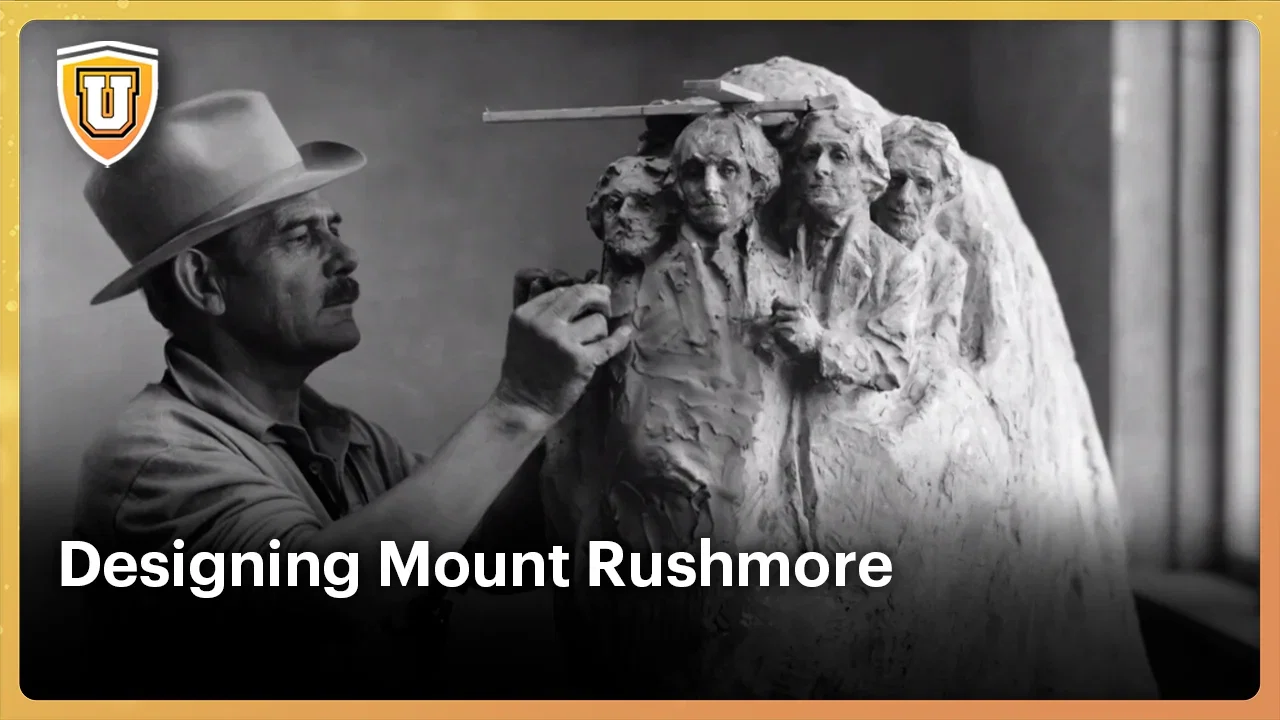
Mount Rushmore: Fact, Fiction, Reality and Myth |
|
|
“Ten thousand years from now our civilization will have passed without leaving a trace. A new race of people will inhabit the earth. They will come to Mount Rushmore and read the record we have made.”
—Danish-American Sculptor, Gutzon Borgium
Borgium's masterpiece is one of America's most recognizable landmarks and enduring symbols—visited annually by approximately 2 million people from around the world.
We all know the four majestic figures looming over us from the heights of the iconic Mount Rushmore: George Washington, Thomas Jefferson, Abraham Lincoln and Theodore Roosevelt. It’s hard to imagine, but the original design concept was supposed to include carvings of western heroes, such as Lewis & Clark, Sacagawea and Buffalo Bill Cody. And where did this distinctly American symbol get its name? Surprisingly, from a New York City attorney named Charles Edward Rushmore!
In this excerpt from his class Professor Robert Allison shares how this national landmark was envisioned and created.
Watch the entire talk HERE
|
|
Watch this free video here |
|
|
Curiosity University, 8484 Georgia Ave., Suite 700, Silver Spring, MD 20910, United States of America
Unsubscribe
|
|
|
|
|