The Complicated Legacy of Benedict Arnold
|
|
|
|
The man who fights against his own country is never a hero.
|
|
|
— Victor Hugo, French Author, Human Rights Activist and Politician |
|
|
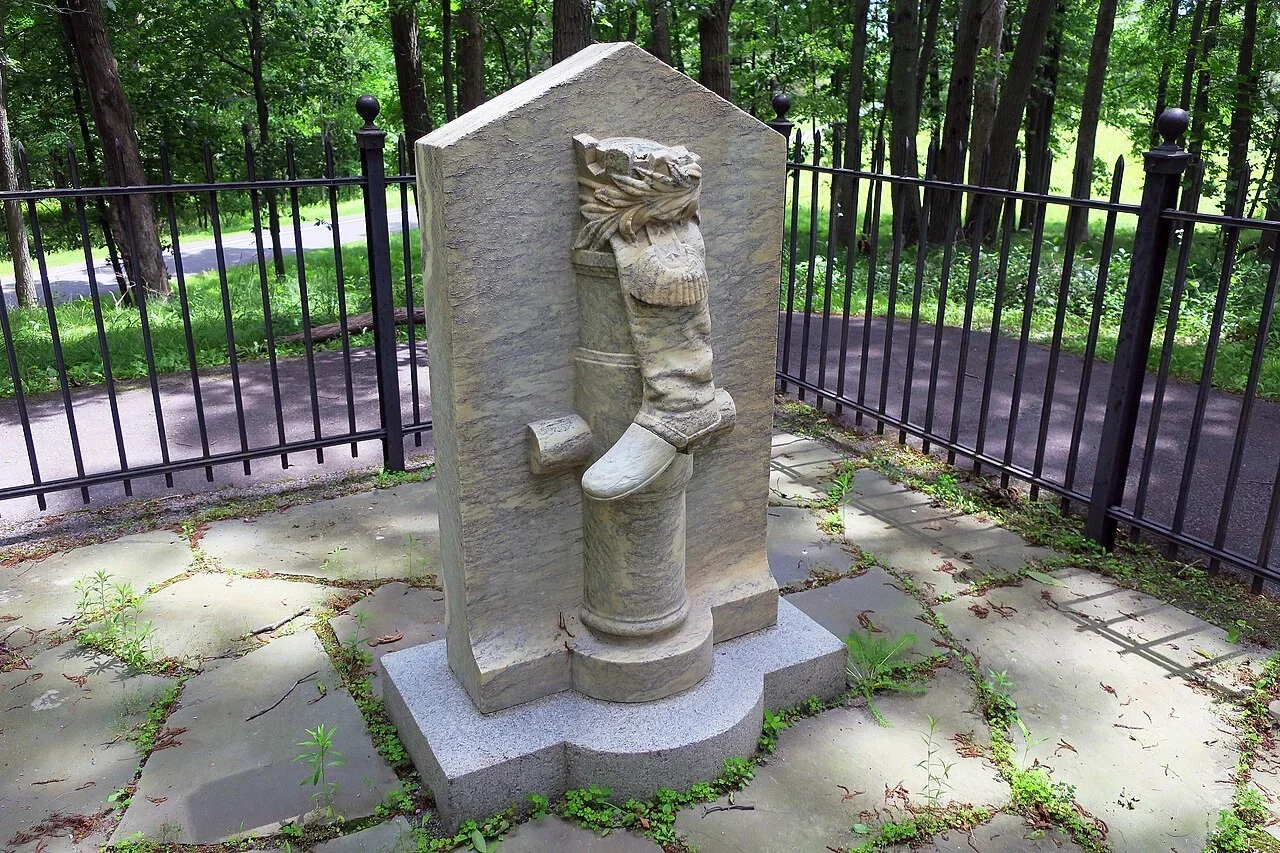
If you visit Saratoga National Historical Park in Stillwater, New York, you’ll probably encounter one of the Revolutionary War’s most unusual memorials: the “Boot Monument.” Erected in 1887 by John Watts de Peyster and sculpted by George Edwin Bissell, the bronze riding boot includes an anonymous tribute to an unnamed hero of the Battle of Saratoga:
"In memory of the most brilliant soldier of the Continental Army
who was desperately wounded on this spot,
winning for his countrymen the decisive battle of the American Revolution,
and for himself the rank of Major General."
Who was this unidentified American hero? The now-infamous Benedict Arnold.
Now, 225 years after his death on June 14, 1801, Arnold’s name remains synonymous with treason. Yet before he betrayed George Washington and attempted to hand over West Point to the British in 1780, he was widely regarded as one of the Continental Army’s most daring and effective battlefield commanders. His leadership helped secure key American victories, including the triumph at Saratoga that many historians consider the turning point of the Revolutionary War. Nevertheless, Arnold’s stunning betrayal ultimately overshadowed his military accomplishments.
Arnold was not the only American to side with Britain during the Revolution; in fact, an estimated 15 to 20 percent of colonists remained loyal to the Crown. So how did he become the nation’s ultimate symbol of treason?
The backlash began almost immediately. After Arnold’s plot was exposed in September 1780, Benjamin Franklin compared him to Judas, famously writing to the Marquis de Lafayette, “Judas sold only one man, Arnold three millions.” A 1794 schoolbook declared that “Satan entered into the heart of Benedict Arnold,” and the first major biography of him was titled The Life and Treason of Benedict Arnold. By the early 1800s, calling someone “a Benedict Arnold” had become shorthand for labeling them a traitor.
More than two centuries later, as the nation approaches the 250th anniversary of the American Revolution, Arnold’s legacy remains complicated. On one hand, "Benedict Arnold" is still widely used as a negative metaphor in modern-day politics, sports and culture. Yet, the New York State Military Museum is currently restoring the painting Benedict Arnold, Triumphant at Saratoga for public display in 2027—to coincide with the anniversary of the battle that secured his place in history as an American hero.
This week, Professor Richard Bell offers a closer look at how a Revolutionary War hero became America’s most famous traitor—and why his story still sparks debate today.
|
|
|
The 1887 "Boot Monument" at Saratoga National Historical Park (Stillwater, New York)
|
marks the location where General Benedict Arnold was wounded on October 7, 1777 |
|
|
Benedict Arnold was a traitor in America. Was he a hero back in Britain?
After Cornwallis was defeated at Yorktown, the last major battle of the war, the retreating British army shipped Arnold back to England. He arrived enveloped in scandal. British officers did not trust him or were disgusted that he sold his honor for money. They held him responsible for their spy John Andre’s execution. Many junior officers refused to serve under him. The London papers mocked him. Somehow, he had become a sort of scapegoat for the British loss of the colonies. When the peace treaty was finally signed, the British army cut his pay by half and forced Arnold into retirement. He agitated to be sent to India, where British military men with limitless ambitions could still thrive, but his request was denied.
Instead, in 1785, Arnold moved to a Loyalist colony in New Brunswick, Canada, as a private citizen, but his infamy followed him there, too. After six years, he and his young wife Peggy slumped back to London where rumors and nasty newspaper pieces continued to dog him.
A few years later Arnold tried one final time to return to active duty; again he was rebuffed. Arnold complained: “I am without rank or consequence, and without friends or connections that have the power to be of any service to me.”
Soon afterwards his health began to fade. On June 10, 1801, he fell into delirium caused by dropsy and gout, passing in and out of consciousness. He died four days later. Peggy believed the real cause of Arnold's death was his perturbed mind—he had paid the ultimate price for his betrayal. His death earned him a one-line obituary in the London papers.
The last two decades of his life had been agonizing and anti-climactic. He died, for all intents and purposes, “a man without a country.” To the British, he had been an embarrassment—a gifted leader who botched his defection, sold out his comrades and could never be trusted thereafter. To the Patriots, he had become a devil, a demon, a man of unfathomable evil. But in wartime, demonizing one’s enemy is the name of the game. And historians generally agree that Arnold’s treachery actually succeeded in restoring Patriot morale and stirring up new feelings of common cause among them. Arnold’s great betrayal gave the Patriots a new reason to fight on, to try to beat the British and to beat Benedict Arnold once and for all.
|
|
Richard Bell is Professor of History at The University of Maryland where his work focuses on early American history and the Revolutionary era. A former Andrew Carnegie Fellow, Professor Bell also has earned Fellowships with the National Endowment for the Humanities, Cambridge University, the Library of Congress and the Gilder Lehrman Center for the Study of Slavery, Resistance, and Abolition at Yale University. A frequent lecturer for C-Span and the Smithsonian Institution, Bell has received more than a dozen teaching awards. His latest book The American Revolution and the Fate of the World reframes the Revolution as an international event that reshaped societies across the globe.
|
|
|
The Dark Treason of Benedict Arnold |
|
|
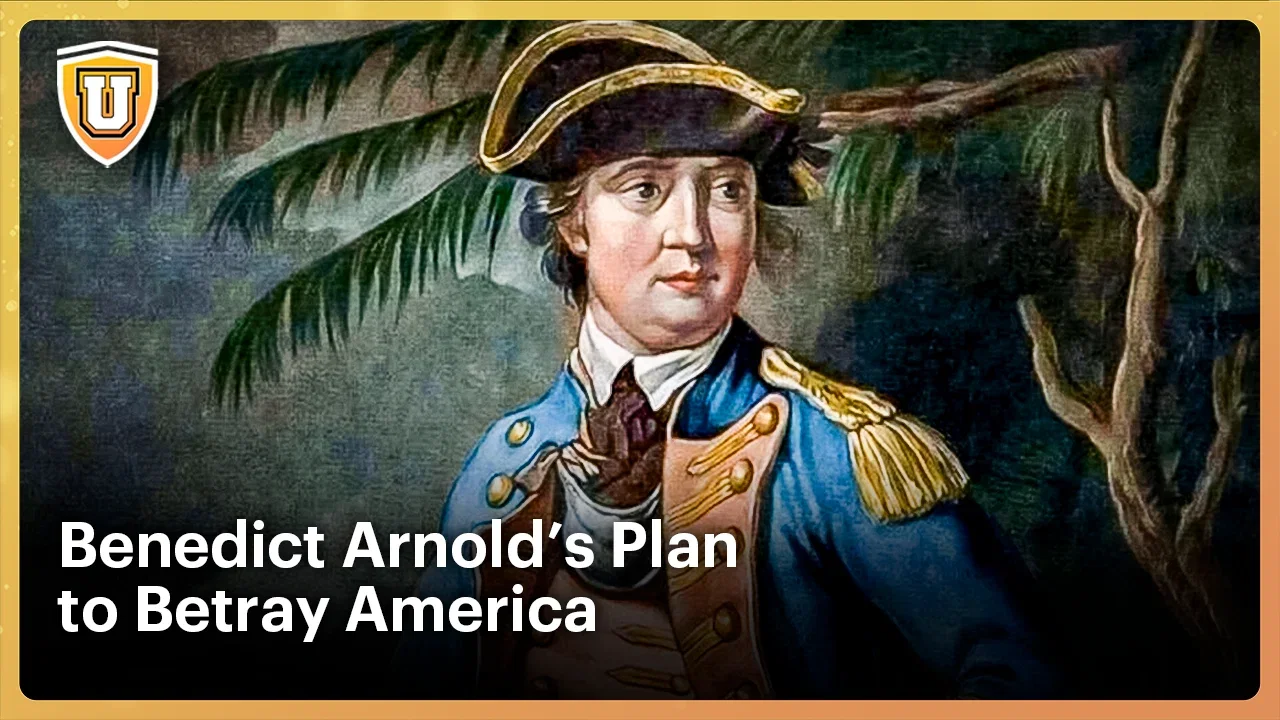
Benedict Arnold. He is America’s most notorious traitor.
But he didn’t act alone.
Why did “Benedict Arnold” become a household name while “John André” and “Peggy Shippen Arnold” did not?
Major André was the British intelligence officer who coordinated Arnold’s plot. When he was captured with incriminating evidence, Arnold fled to Britain. Washington offered to exchange prisoners: John André for Benedict Arnold. Instead, André was hanged as a spy.
Regarding Peggy Shippen Arnold—Benedict’s second wife—historians are still debating. However, there is ample evidence suggesting she was linked to British intelligence and may have played a role in her husband’s conspiracy. Some believe Peggy introduced him to her “dear friend” Major André. British documents from 1792 show that Mrs. Arnold was paid for handling secret dispatches. And written notes from Aaron Burr state that she "was disgusted with the American cause" and "...she had ultimately brought the general into an arrangement to surrender West Point."
In this clip from “The Dark Treason of Benedict Arnold,” Professor Rick Bell discusses how Arnold betrayed the American cause, shifted his loyalty to the Crown and suffered the consequences.
See the entire class HERE
|
|
Watch this free video here |
|
|
Curiosity University, 8484 Georgia Ave., Suite 700, Silver Spring, MD 20910, United States of America
Unsubscribe
|
|
|
|
|