From Athlete to Icon: What Makes a Superstar? |
|
|
|
If you don't try to win you might as well hold the Olympics in somebody's back yard. The thrill of competing carries with it the thrill of a gold medal. One wants to win to prove himself the best.
|
|
|
Babe Ruth. Michael Jordan. Serena Williams. Muhammad Ali. Pelé. Tom Brady. Jackie Robinson. Tiger Woods. Simone Biles. Wayne Gretzky. Joe DiMaggio.
These are not just athletes; they are superstars.
Out of the thousands of professional athletes competing around the world, what transforms a player into a household name? Is it record-breaking achievements? Career longevity? Cultural impact? Celebrity endorsements? More often than not, athletic talent alone is not enough. True sports superstars transcend the games they play. Their names remain recognizable even to people who never saw them compete, and stories about their extraordinary achievements are passed down through generations.
"The Greatest 45 Minutes in Sport"
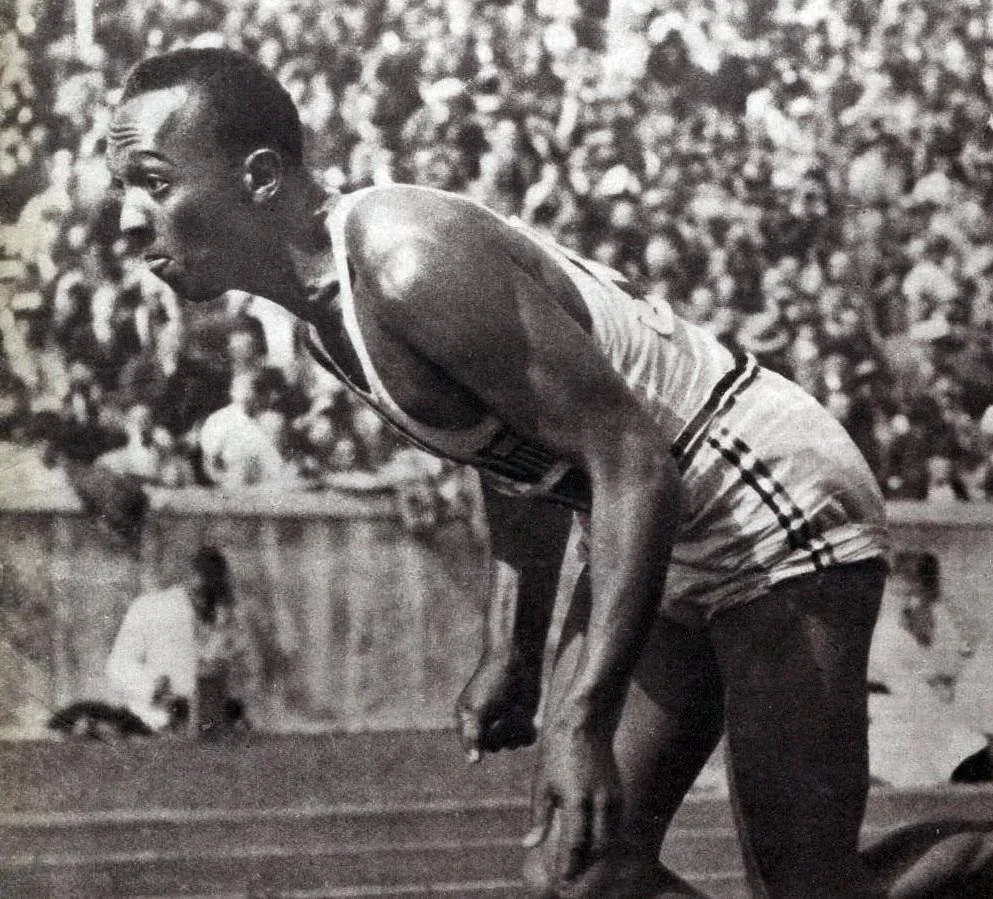
This week marks the anniversaries of two remarkable moments in sports history that helped cement athletes into American culture. On May 25, 1935, track and field star Jesse Owens delivered what Sports Illustrated would later call the “greatest 45 minutes in sport.” Competing for Ohio State University at the Big Ten Championships, Owens set three world records and tied another—within 45 minutes! Despite suffering from a back injury, he matched the 100-yard dash record before breaking records in the long jump, 220-yard dash and 220-yard hurdles. The astonishing performance established Owens as a sports legend even before his historic four gold medals at the 1936 Summer Olympics in Berlin.
Number 714
That same day, baseball icon Babe Ruth hit the final home run of his legendary career while playing for the Boston Braves against the Pittsburgh Pirates. Remarkably, it was his third home run of the game and the 714th of his career— a record that stood for nearly 40 years until Hank Aaron surpassed it in 1974. Although Ruth’s record no longer stands, the number 714 remains one of the most iconic in baseball history because of the larger-than-life legend attached to it.
It's also worth noting that May 31 marks the birthday of football great Joe Namath. The Hall of Fame quarterback shattered passing records, becoming the first player in professional football history to throw for more than 4,000 yards in a season. But Namath’s fame extended far beyond football. With his charisma, television appearances and 1969 Super Bowl III victory, he became one of the first true celebrity athletes of the modern media era.
Although Owens, Ruth and Namath competed in different sports and different eras, all three became cultural icons who helped define what excellence looked like in American sports.
Below, sports historian Matt Andrews explores records, statistics and the enduring human desire to measure greatness.
|
|
|
Legendary track and field star Jesse Owens at the 1936 Berlin Olympics |
|
|
Why are we so obsessed with records in sports?
Take modern man’s impulse to measure and quantify and combine it with the eternal human desire to be the best and you get the concept of “the record.” In modern sports we are obsessed with records—world records, Olympic records, American records, NCAA and high school records, our own personal record. This was not always the case. In pro-modern sporting contests, like at the Ancient Olympic Games, races were not timed. A race just happened and lived in the moment. But in today’s sports, as in almost every aspect of our lives, everything is timed, counted and measured—not only for our present understanding, but for the future. A notable feat becomes a record because we record it for posterity.
The idea of a record—or a benchmark—gives us the ability to think of sports in terms of progress. Since we can quantify how much faster men and women are than, say, 100 years ago, we can measure human beings’ biological progress. In 1936, Jesse Owens ran the 100m in 10.2 seconds. In 2009, Usain Bolt did it in 9.58. A human being just broke the record and ran a marathon in under two hours. We have made progress.
In an even more general sense, statistics and records give our sports “historical continuity.” Take baseball. Baseball statistics link generations of players by allowing us to numerically compare, say, Babe Ruth with Hank Aaron with Barry Bonds. The 20th Century statistician Bill James says that the numbers make baseball players immortal; their bodies die, but their baseball records live forever. The Ancient Greeks thought of their victorious athletes much in the same way. They were, in the words of Pindar, “something like the gods.” Our athletes are, too. But we have the numbers to prove it.
|
|
Matthew Andrews is Teaching Professor and Departmental Advisor in the History Department at the University of North Carolina (UNC) at Chapel Hill. His American History courses explore the links between sports and American history and culture. Andrews has been voted “Best Professor” three times and his courses often have been cited as “Best UNC Class.” Professor Andrews is the Creator and Host of the podcast “American Sport with Matt Andrews.” While exploring the sporting events that have defined our culture, he explains why sports have mattered so much in this country—revealing how sports have actually changed the course of American history.
|
|
|
The Ten Greatest Baseball Players |
|
|
When it comes to ranking the greatest baseball players of all time, one name consistently rises to the top: Babe Ruth.
Whether it’s a fan poll, a statistical ranking, a list by sportswriters or a discussion about cultural impact and historical influence, “The Babe” almost always dominates.
Here are just a few examples:
• ESPN’s All-Time MLB Rankings named Babe Ruth #1
• MLB Network’s “Top 100 Players of All Time” consistently ranks Ruth at #1 or #2
• The Sporting News placed The Great Bambino at #1 on its “100 Greatest Baseball Players” list
• Ranker’s ongoing fan poll of the “Greatest Baseball Players Ever” regularly has Babe Ruth in the top spot
Other legends frequently appear near the top, including: Willie Mays, Hank Aaron, Ted Williams, Barry Bonds, Ty Cobb, Lou Gehrig and Jackie Robinson. But Babe Ruth remains the defining figure in baseball history.
In this clip, Professor Vincent Cannato shares his picks for the top three players of all time from a historical perspective. Do you agree with his choices?
See the entire class HERE
|
|
Watch this free video here |
|
|
Curiosity University, 8484 Georgia Ave., Suite 700, Silver Spring, MD 20910, United States of America
Unsubscribe
|
|
|
|
|