and the Invention of Celebrity
|
|
|
|
Only the public can make a star. It’s the studios who try to make a system out of it.
|
|
|
The Summer of Marilyn
According to Smithsonian magazine, this is “the summer of Marilyn.” Born Norma Jeane Mortenson on June 1, 1926, the icon we know as Marilyn Monroe would have turned 100 years old today had she not died so tragically at just 36. More than six decades after her death, she remains one of the most recognizable celebrities in history—and perhaps one of the first modern stars to fully understand both the immense power and the darker side of fame.
Now, on the occasion of her centennial, museums, film archives and auction houses around the world are revisiting Monroe’s life and legacy. Beyond honoring a Hollywood star, these celebrations are reframing Marilyn not simply as a “blonde bombshell,” but as a gifted actor and savvy pioneer who helped “invent” modern celebrity culture.
Long before most performers took control of their image and career, Monroe protested about being typecast as a sex symbol and rebelled against the restrictive studio system of the 1950s. She left 20th Century Fox, moved to New York to study with Lee Strasberg and founded her own production company—a bold move for a woman in showbiz at that time.
Marilyn Monroe: Hollywood Icon
That idea of Marilyn as a powerful professional as well as a public figure is profiled in the Academy Museum of Motion Pictures’ new exhibition, Marilyn Monroe: Hollywood Icon, which runs through February 2027. Featuring costumes—including the iconic pink satin gown she wore while singing “Diamonds Are a Girl’s Best Friend”—letters, production documents and rarely seen personal materials, the installation explores how Monroe carefully shaped her public image and built one of the first true celebrity brands. The museum is also screening classics like Some Like It Hot and The Seven Year Itch in restored 35mm and 4K presentations.
Paris’ Cinémathèque Française and London’s National Portrait Gallery are launching major Marilyn retrospectives examining her influence on film, photography and popular culture. And in Los Angeles, Julien’s Auctions—the “Auction House to the Stars”—is celebrating “100 Years of Marilyn” with a sale of her costumes and personal artifacts.
Forever Marilyn
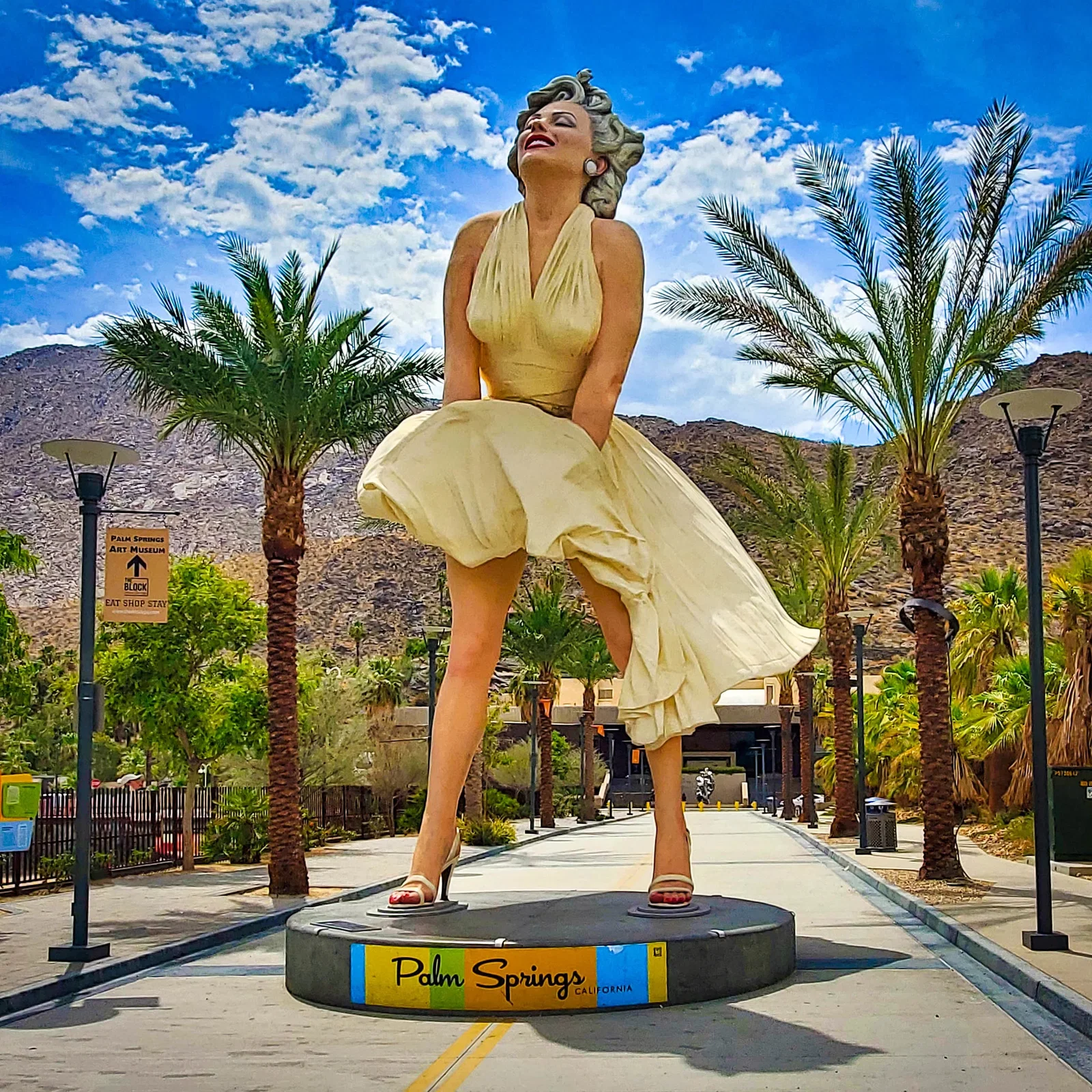
The Oscar for “Most Fun Celebration” goes to Palm Springs, where thousands gathered around the city’s giant 26-foot “Forever Marilyn” statue for a five-day celebration that included a Guinness World Record attempt for the largest gathering of Marilyn Monroe look-alikes.
Today, a century after her birth, the immortal Marilyn Monroe remains one of the most instantly recognizable and endlessly reproduced celebrities of all time. This week, media historian Susan Douglas explains how the culture of fame began and how it has evolved.
|
|
|
Designed by Seward Johnson, "Forever Marilyn" is a representation of Monroe from Billy Wilder's 1955 film "The Seven Year Itch"
|
|
|
The Rise of Celebrity Culture: How Did We Get Here?
Today we are awash in celebrity culture—a massive industry that shapes our hopes, dreams, anxieties and ideas about success, envy, scorn and admiration. And as we judge celebrities, we reinforce our own cultural values and attitudes. We may sympathize or identify with them, but we do not know them—and they have no idea who we are. This kind of one-sided relationship is a phenomenon of a mass-mediated culture.
For centuries fame was largely reserved for the privileged few: monarchs, military leaders and political figures like Alexander the Great or George Washington. But that began to change in the late 19th and early 20th century with industrialization, urbanization and the rise of mass media. Print media became dominant, with English-language daily newspapers growing from 480 in 1870 to 1,900 in 1900. Supported increasingly by advertising, they became essential tools for creating and sustaining celebrities.
Few understood this better than P.T. Barnum. A master promoter, Barnum made Tom Thumb famous and launched Swedish opera singer Jenny Lind into superstardom. His campaign branding her as “The Swedish Nightingale” created such hysteria that when she arrived in America in 1850 she was mobbed by fans in what became known as “Lindomania.”
By the 1880s, vaudeville theaters began to depend upon "name" stars to attract growing urban audiences. Expanding leisure time, immigration and population growth all helped create larger audiences and more newspaper readers who were eager for entertainment.
In the late 19th and early 20th centuries, many celebrities were industrial heroes like Thomas Edison, Henry Ford and Andrew Carnegie. But as the media expanded, newspapers increasingly promoted entertainers as national icons. The addition of sports pages also helped promote star athletes like Babe Ruth as examples of American values such as hard work, confidence and fair play.
The real turning point, however, came with the rise of the film industry. Early movie studios initially resisted identifying actors by name, fearing they would demand higher salaries. But audiences quickly became attached to performers like Mary Pickford, first known simply as “The Girl with the Curls.” Once studios realized that stars themselves could sell movies, generate fandom and drive profits, modern celebrity culture was born.
|
|
Susan J. Douglas is Catherine Neafie Kellogg Professor of Communication Studies at The University of Michigan where her fields of study include Historical Approaches to Media and Technology, and Gender and the Media. Professor Douglas was Chair of the Board of The George Foster Peabody Awards—one of the most prestigious prizes in electronic media. She has written for The Nation, The Village Voice, The Progressive and the Washington Post and has appeared on “The Today Show,” “The Early Show (CBS),” CNBC, NPR, “Weekend Edition” and “The Oprah Winfrey Show.” Dr. Douglas is the author of several books, including: Inventing American Broadcasting, 1899-1922 and Celebrity: A History of Fame (with Andrea McDonnell).
|
|
|
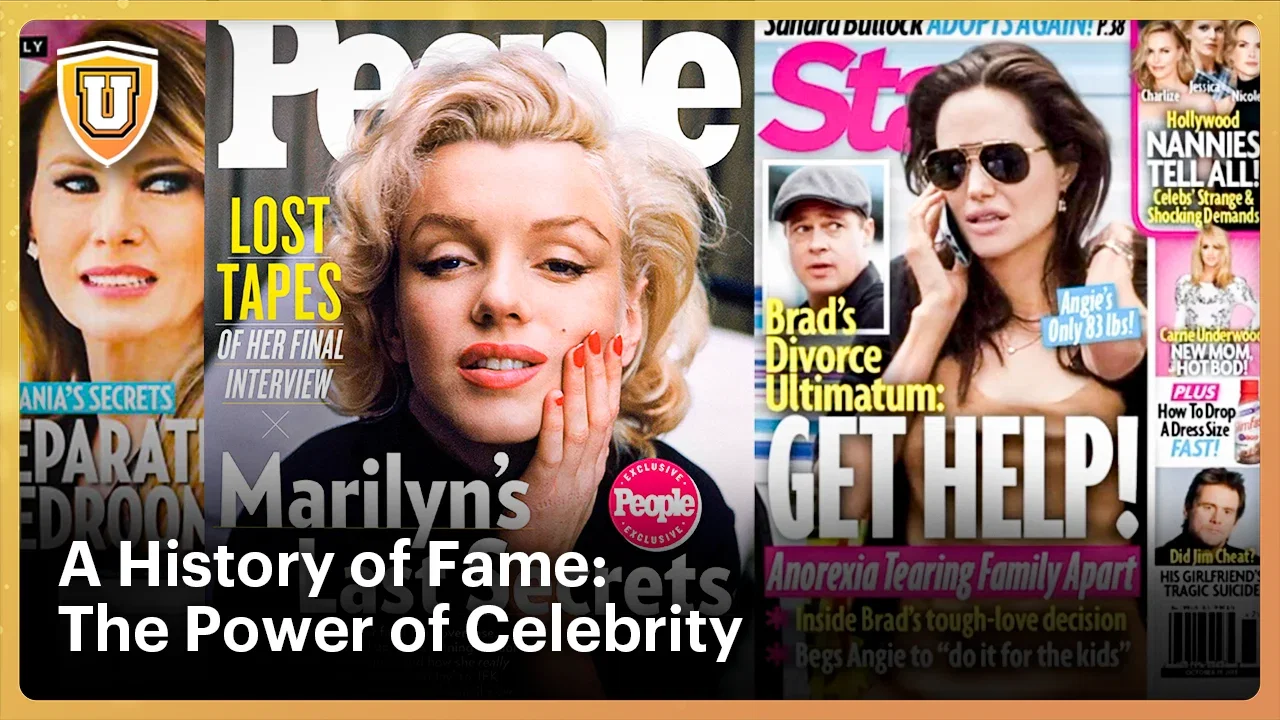
A History of Fame: The Power of Celebrity |
|
|
How have celebrity culture and the media landscape changed since Marilyn Monroe’s time?
During the Hollywood studio system, stars were manufactured and presented to mass audiences; movie studios, TV networks and record labels controlled their fame. But by the late 20th century, celebrity itself had become a media industry.
Before People magazine launched in 1974, celebrity journalism was considered frivolous. But within a year, People was selling 1 million copies per week. By 1980, circulation reached 2.5 million. In 2023, even after the shift to digital platforms, People and Us Weekly still averaged a circulation of over 6 million.
60 years after her death, Marilyn still appears on thousands of major magazine covers.
On social media, Marilyn-inspired beauty and fashion content is hugely popular, with millions following her “official” Instagram account. And creator Jasmine Chiswell—the “Marilyn Monroe of TikTok”—built an entire career by copying her 1950s look and persona. How would Norma Jeane react if she knew about her media presence in 2026?
This excerpt from "A History of Fame: The Power of Celebrity” discusses the modern explosion of celebrity culture.
See the entire class HERE
|
|
Watch this free video here |
|
|
Curiosity University, 8484 Georgia Ave., Suite 700, Silver Spring, MD 20910, United States of America
Unsubscribe
|
|
|
|
|