Women in Space: From Firsts to New Frontiers |
|
|
|
Again the pressure pushes me in the chair, shuts my eyes. I notice the dark red tongues of the flame outside the windows. I'm trying to memorize, fix all the feelings, the peculiarities of this descending, to tell those who will be conquering space after me. |
|
|
— Soviet Cosmonaut Valentina Tereshkova, the First Woman in Space (June 1963) |
|
|
Just a few months ago, Christina Koch became the first woman to travel beyond low Earth orbit and around the Moon on Artemis II. Soon, future Artemis missions will aim to land the first woman on the lunar surface. Today, women routinely serve as astronauts, mission commanders, scientists and engineers. At NASA, women make up roughly 40% of the active astronaut corps, while commercial spaceflight companies such as SpaceX, Blue Origin and Rocket Lab rely on women in executive, engineering and scientific roles.
Yet women remain a small minority among those who have traveled to space. Out of approximately 650 people who have left Earth, only about 100 have been women—roughly 15%.
What took so long?
NASA was founded in 1958, but women did not enter its astronaut corps until 1978. Why the 20-year gap?
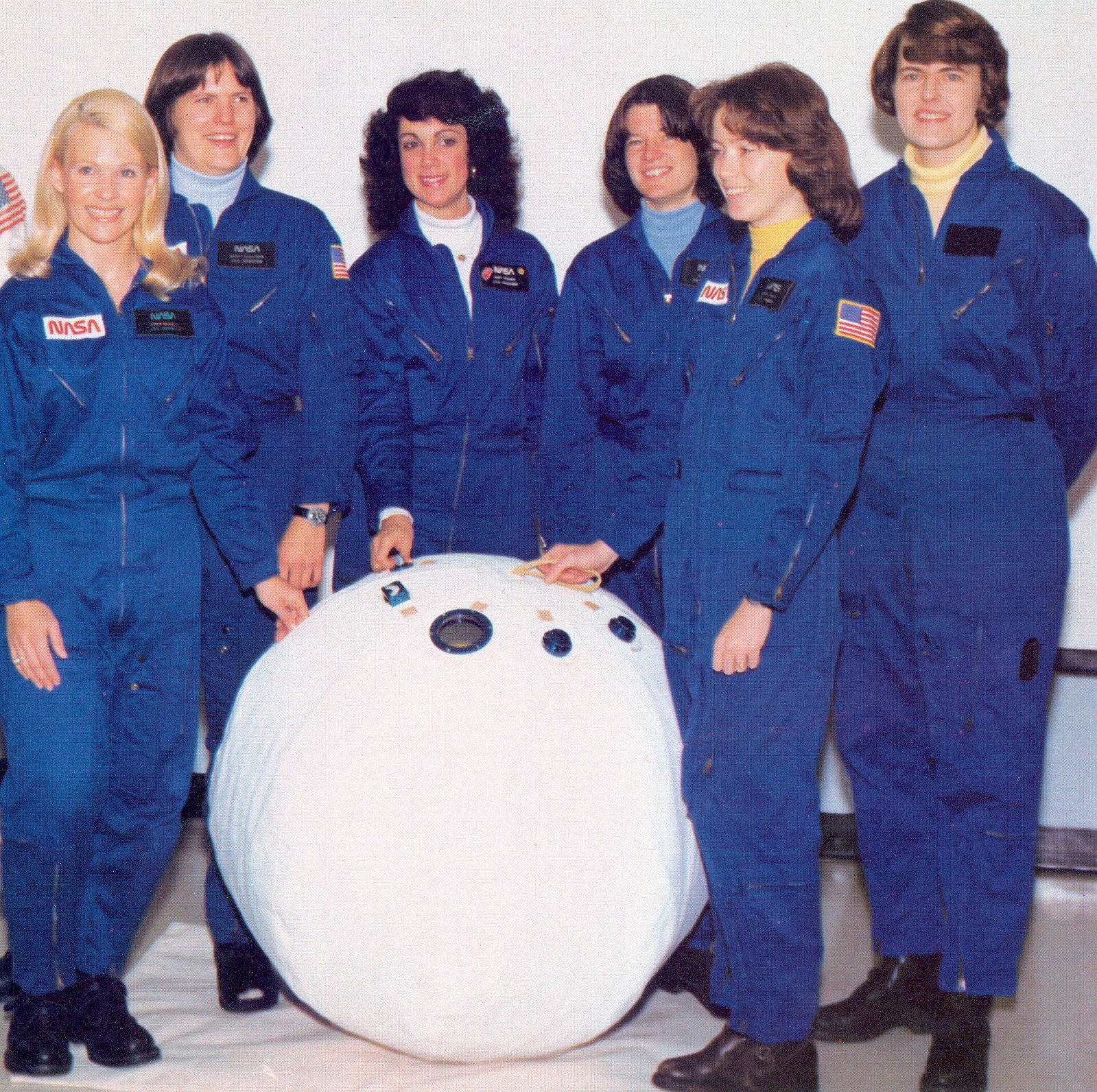
In the early years of the Space Age, astronauts were required to be military test pilots, a profession closed to women at the time. As a result, the astronauts selected for the early Mercury, Gemini and Apollo programs were exclusively male. By the 1970s, however, social change and the demands of the upcoming Space Shuttle program prompted NASA to rethink its requirements; now, in addition to pilots, they also needed scientists, engineers and mission specialists. In 1972, NASA opened astronaut applications to women and on January 16, 1978, announced its first six female astronaut candidates.
We cannot forget, though, that prior to 1978 women were essential to NASA—and its predecessor, the National Advisory Committee for Aeronautics (NACA)—from the very beginning. Without the "behind the scenes" mathematicians (aka “computers”) who calculated essential trajectories and the engineers who designed aircraft and solved complex problems, spaceflight would not have been possible.
The end of the Space Race?
This week marks the anniversaries of two major milestones for women in space. When Sally Ride flew aboard Space Shuttle Challenger on STS-7 on June 18, 1983, she closed another historic gap. Twenty years earlier, on June 16, 1963, Soviet cosmonaut Valentina Tereshkova had become the first woman in space, an achievement that marked a major victory for the USSR during the Space Race. Incredibly, Tereshkova remains the only woman ever to fly a solo space mission.
From Tereshkova's pioneering flight to Koch's journey around the Moon, women have become increasingly integral to space exploration. As astronauts and scientists prepare for new lunar missions and the next great frontier—Mars—there is no end to what women can achieve as we push farther into the universe.
|
|
|
NASA's first six women astronauts (from left to right) Margaret (Rhea) Seddon, Kathryn Sullivan, Judith Resnik, Sally Ride, Anna Fisher and Shannon Lucid pose with a mockup of a personal rescue enclosure (PRE) at the Johnson Space Center
|
New on CuriosityU: Between the Lines
|
|
|
Welcome to “Between the Lines” on Curiosity University!
This Emmy-winning series features one-on-one, thought-provoking interviews with best-selling authors, distinguished historians, prominent scientists, actors and directors, professional athletes, award-winning journalists, and leaders in business and entertainment.
Host Barry Kibrick brings passion and insight to each intimate conversation.
Here are just a few of the diverse titles and exciting speakers in this series:
• Astrophysics for People in a Hurry, with Neil deGrasse Tyson
• Legendary Actor Ed Asner: In His Own Words
• Why Do People Do What They Do?, with best-selling author Robert Greene
• William Friedkin: Reflections from a Maverick Filmmaker
• Matthew Weiner: Selling the 1960s in "Mad Men"
• Jackie Collins: "Drop Dead Beautiful" and the World of Lucky Santangelo
• Dave Winfield: A Hall of Famer's Career in Baseball
• Inside the Mind of Albert Einstein, with acclaimed biographer Walter Issacson
• Ron Howard: Directing "In the Heart of the Sea"
Be sure to check out excerpts from two different space-related episodes, below.
Watch the entire series HERE.
|
|
|
|
Making Contact: Humanity's Fascination with Mars |
|
|
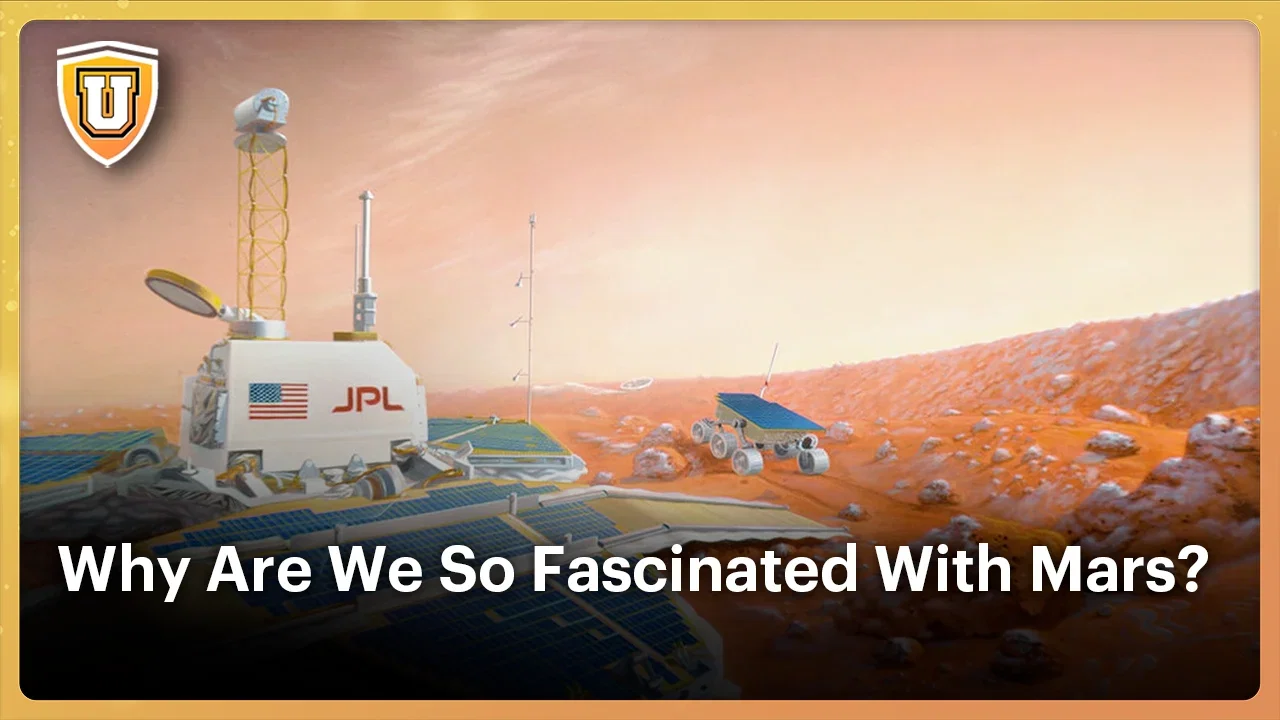
For thousands of years, humanity has been fascinated by the reddish object that wanders through the sky—from the ancient Babylonians, Greeks and Romans who linked Mars to their gods of war, to the men and women working on today's planetary rovers.
More than half a century after H.G. Wells captured the public's imagination with the planet in his 1898 The War of the Worlds, NASA's Mariner 4 brought us the first close-up images of Mars in 1965. Today, NASA's 2025 ESCAPADE mission is expected to land on the Red Planet in 2027. With future missions planned from Japan, Europe, China and the U.S., maybe we will finally unlock some of Mars' greatest mysteries: Did life ever exist there? Will humans one day call it home?
In this interview based on his book Mars: Making Contact (co-written by Dr. Jim Green, Director of the Planetary Science Division at NASA), journalist, author and documentary producer Rod Pyle examines humanity’s enduring fascination with Mars—taking us on an exciting journey from the earliest telescopic viewings, through NASA’s first flybys in the 1960s, to the landers in the 1970s, and the increasingly sophisticated rovers and orbiters of today.
Enjoy this excerpt!
Watch the entire talk HERE
|
|
Watch this free video here |
|
|
Astronaut Ron Garan: An Orbital Perspective |
|
|
Watch this free video here |
|
Have you ever wondered what it would feel like to blast off from Earth into space? Or what our planet looks like from so far away?
Then do not miss this intimate interview with decorated NASA astronaut, fighter pilot and test pilot, Ron Garan. He has spent 178 days in space and has traveled more than 71 million miles during 2,842 orbits of our planet. Garan flew on both the U.S. space shuttle and the Russian Soyuz spacecraft, where he accomplished four spacewalks, and spent six months on the International Space Station (ISS).
Ron’s transformative stay on the ISS resulted in a profound shift in perspective known as the Overview Effect; he realized how seeing Earth as a fragile, interconnected system calls for global cooperation.
In this talk, based on his breakthrough book The Orbital Perspective: Lessons in Seeing the Big Picture from a Journey of 71 Million Miles, Garan explains how we can all gain this “orbital perspective” to guide and inspire our efforts to build a better world.
Enjoy this excerpt!
Watch the entire Interview HERE
|
|
|
Curiosity University, 8484 Georgia Ave., Suite 700, Silver Spring, MD 20910, United States of America
Unsubscribe
|
|
|
|
|