Will small, local, and bespoke models be a substantial part of the future of AI, “democratizing” the technology for smaller companies and ordinary users? It’s one of the trends Mike Loukides picked up on this month. Cisco has released two very small models designed exclusively for security testing and bug fixing, and they can run on your laptop. Even smaller: A one-bit version of open weight model Bonsai 27B
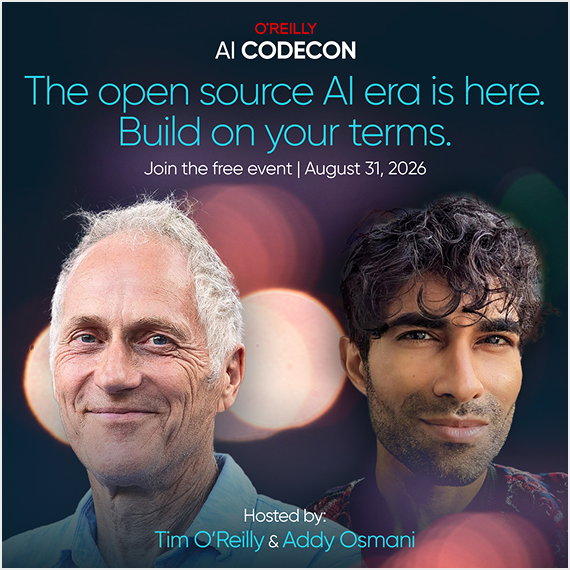
can run on the iPhone 17 Pro. Most tasks don’t require a zillion parameters anyway; many tasks can be routed to smaller, more specialized models. Vercel and Coinbase are each designing this mixture-of-experts production system to avoid the high cost of and dependence on frontier models. Frontier model guardrails delayed Hugging Face’s initial response to a rogue OpenAI agent, and that’s a serious drawback as the role of AI agents in business grows. The Hugging Face attack has already inspired dozens of tech companies to band together in a formal alliance with the aim of sharing open source tools for defense. (Our August 31 AI Codecon
is all about open source and the drive to own, inspect, and run models on your own terms. See below.)
Less powerful models may also have the extra advantage of flying under government radar because they can’t do as much damage on their own; wildly popular or powerful technology tends to draw government scrutiny. The US government appears intent on climbing up a slippery slope: It wants access to models prior to release to do its own testing, and it may also want to decide which companies can serve as “trusted partners,” taking that decision out of the hands of the tech giants. Which force will come out ahead in that scenario? Also, the Chinese government decided that “companion” AI agents promote emotional addiction and has summarily discontinued this feature on two of the country’s most popular apps with millions of users. No word yet on the emotional consequences for customers whose
AI friends vanished in the middle of the night.
More news in Radar Trends.
|