

gm legends, happy Thursday.
An email client built for when AI tools started treating your inbox like theirs, a lead-finding tool with no database, and why the people who built Slack just put money into something that competes with it.

Is this your brand on Milled? Claim it.

|
|
||
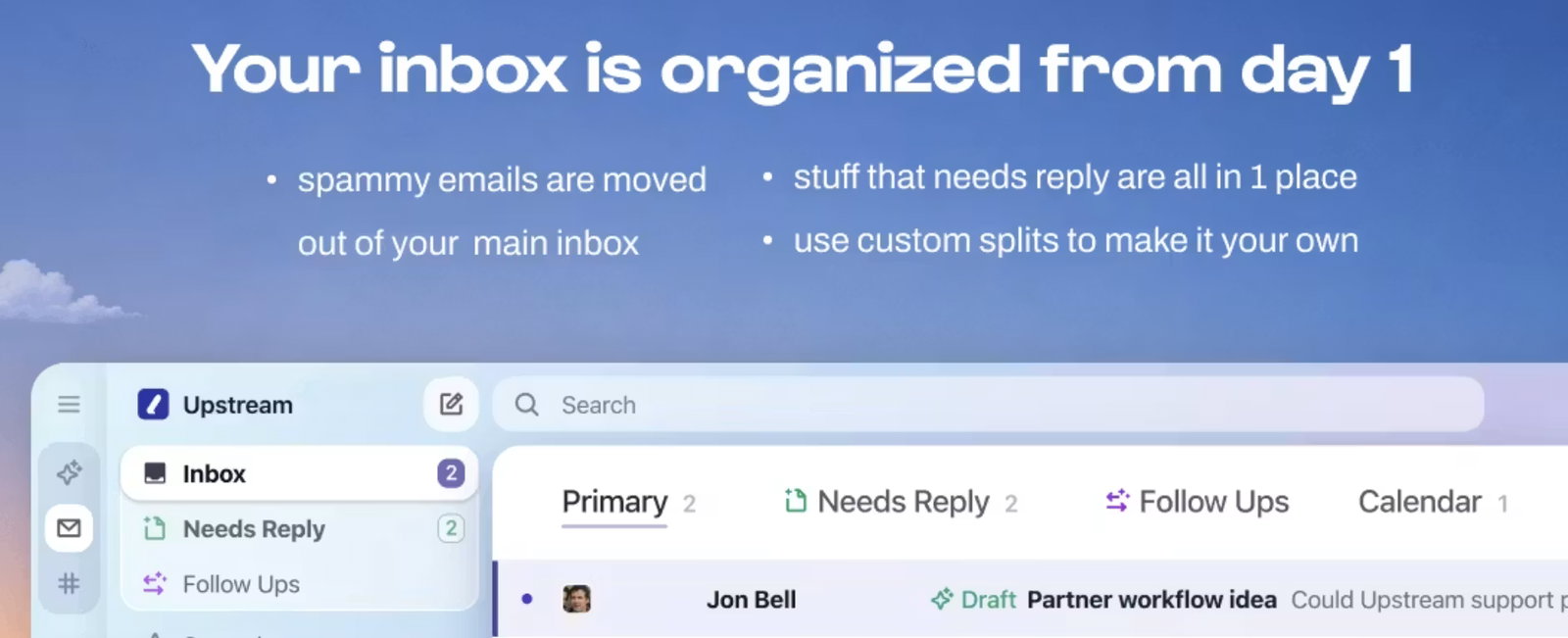
Upstream is an email client that separates the humans from the noise. AI agents sort your inbox, draft replies, and handle the grunt work, while tools like Notion, Granola, and your calendar get their own space rather than clogging up your actual conversations. Louis Lecat built it after drowning in 200 emails a day at Algolia
🔥 Our Take: Upstream's whole point is that your inbox stopped being for people a while ago. Half of what shows up is machines talking to you. GitHub, Notion, your calendar, now your AI agent, all sitting in the same list as an actual email from an actual person. Louis Lecat came out of Algolia, which is basically one long exercise in finding the thing you need while everything else is shouting, so this is a problem he already knew how to think about. Google will get around to putting AI in Gmail, but Gmail doesn't know what's in your Notion or your Granola notes, and Upstream does.
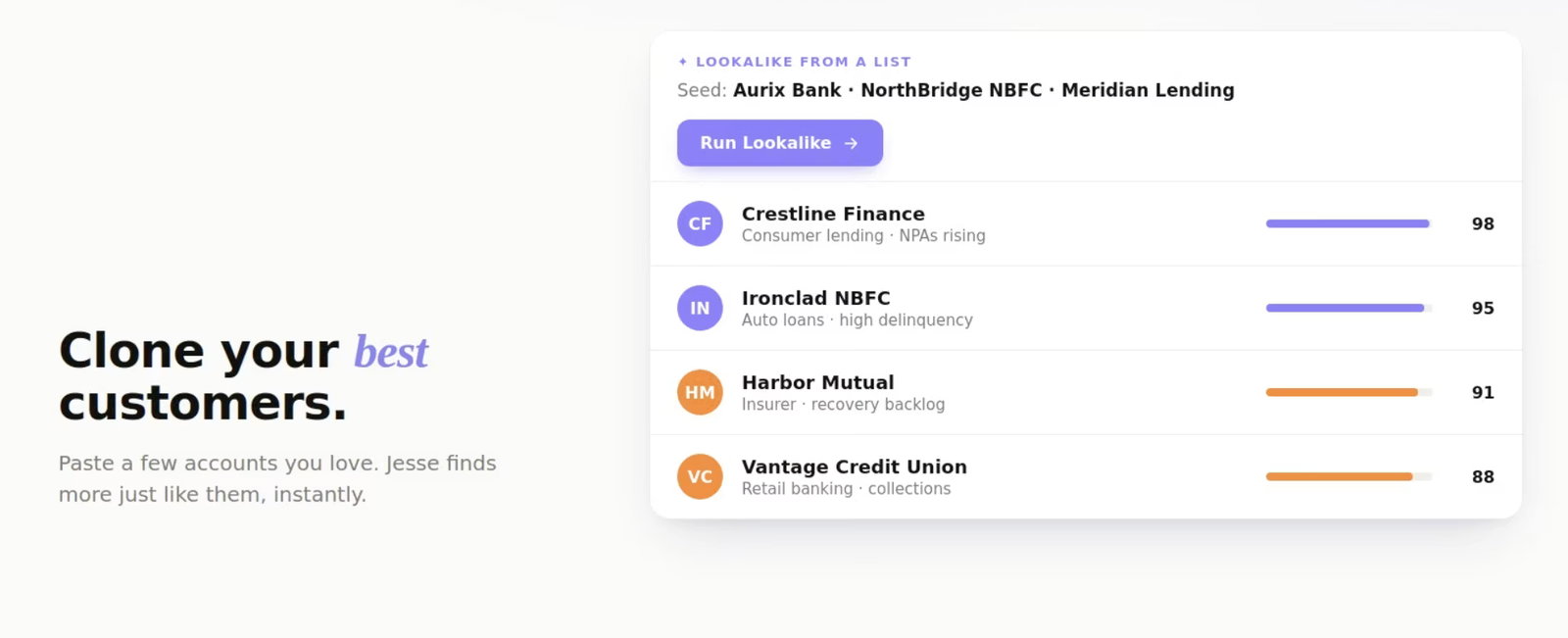
Jesse finds leads by searching the live internet instead of a stored database. Sudipta Biswas's first startup failed on sales, not product. His data was stale. He went through YC and built Jesse to fix it. Contact data decays at 2% a month, so any list you build is already wrong by the time you use it.
🔥 Our Take: Jesse is interesting because it doesn't try to beat Apollo at Apollo's own game. No giant database, no "trust us, this was verified at some point" energy. It just searches the live internet when you ask, which means the lead data is based on what exists now. Apollo's 200 million-contact database took 15 years to build, and that scale is impressive, but it makes the company pretty committed to the old model. Jesse is banking that the database is the problem and anyone who's ever sent a campaign to a supposedly clean list only to see it bounce probably agrees.
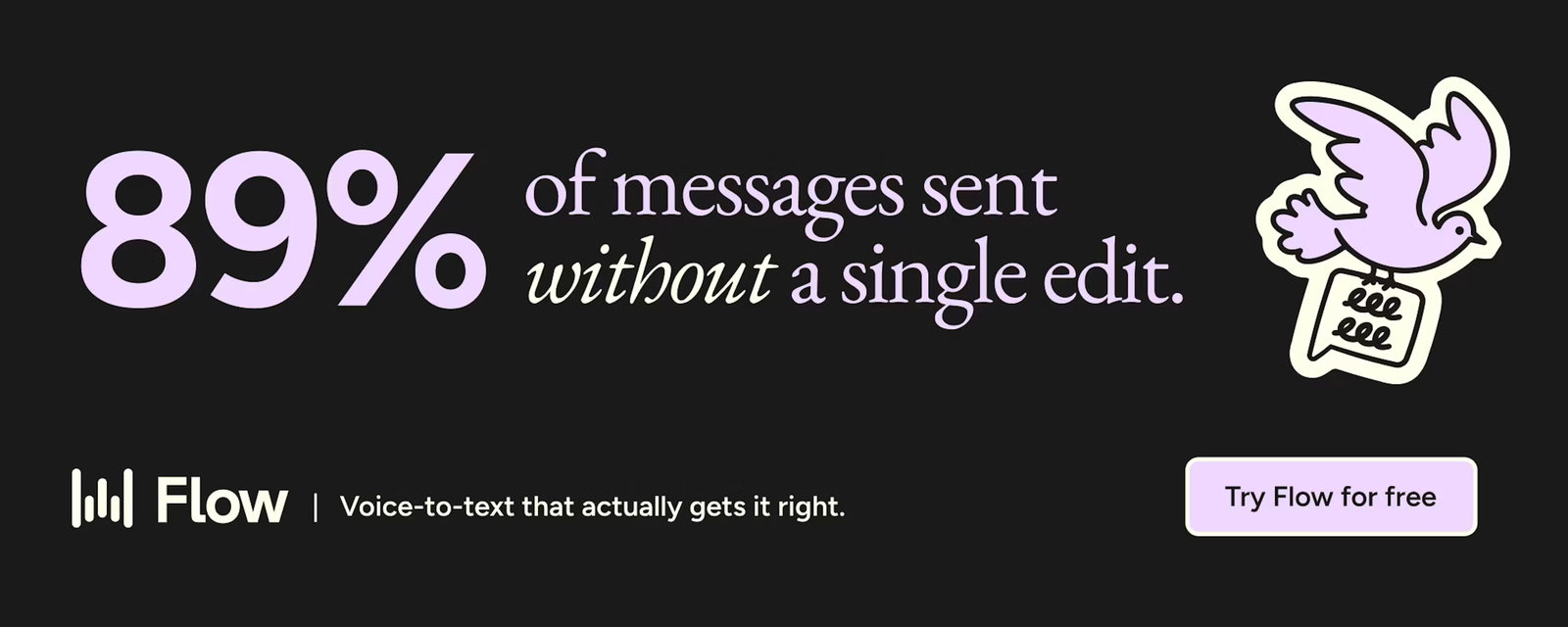
Full disclosure: Wispr Flow is the AI dictation tool most of us at Product Hunt (use we still have a few holdout typers, what romantics). Hold a key, talk, and clean text drops straight into whatever app you're already in — Slack, email, Notion, your IDE, wherever your cursor lives. No switching windows. No copy-paste ritual. Just say the thing – yes, you can whisper it – and even your most run-on sentences will be turned into polished writing at 4x the speed of typing.
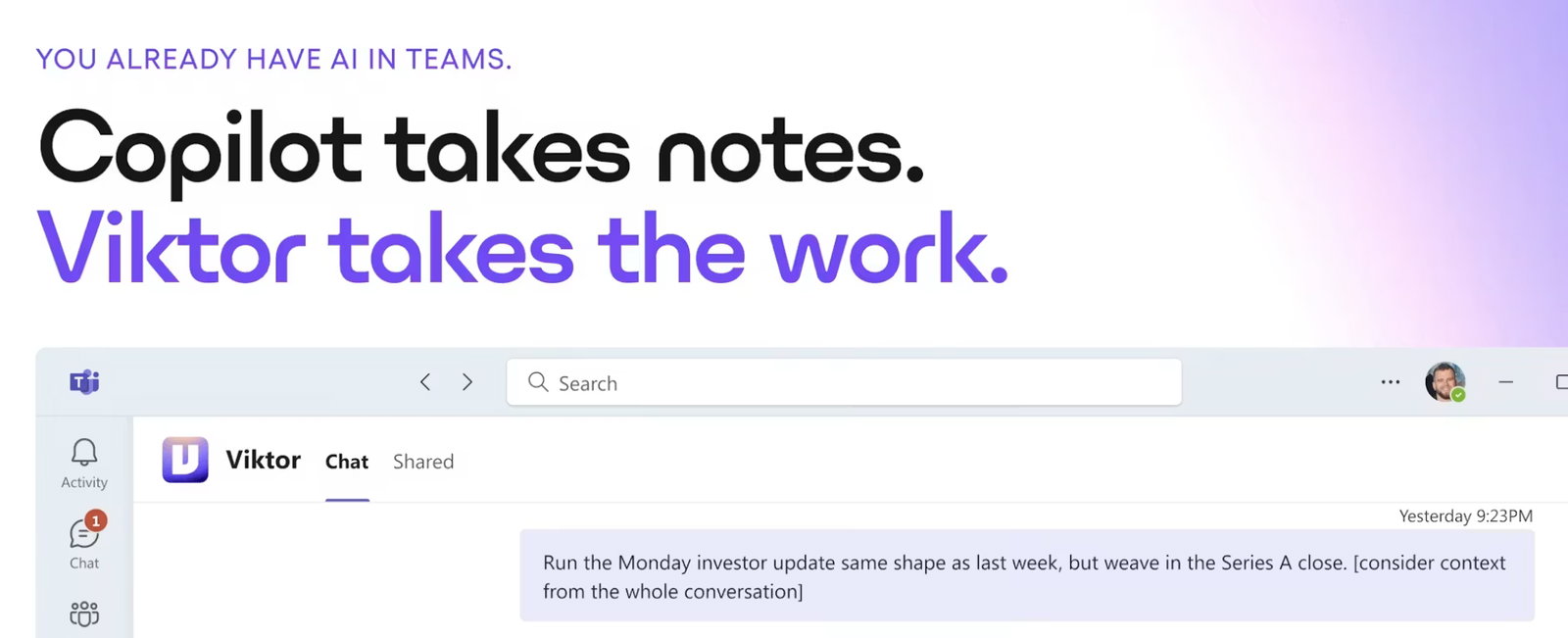
Viktor is an AI that lives in Slack and Teams and does work on its own: runs campaigns, writes code, manages projects. Peter Albert was on the Llama 2 team at Meta, then built JACE, an AI that could take over your browser to complete tasks for hours. $75M raised. $15M revenue in its first ten weeks.
🔥 Our Take: Slack's own founders just funded its competition. Stewart Butterfield and Cal Henderson built Slack, and they put money into Viktor, which sits inside Slack and actually does the work instead of suggesting it. Everything in your chat app up to now has been the same deal: you ask, it drafts something, you still do the real thing yourself. Viktor runs the campaign or writes the code and hands you the finished version. Peter Albert built it after Meta's Llama 2 team and then JACE, an agent that could drive your browser for hours, and it did $15M in its first ten weeks. The people who understand chat software better than anyone are betting the next version doesn't wait for you to ask.
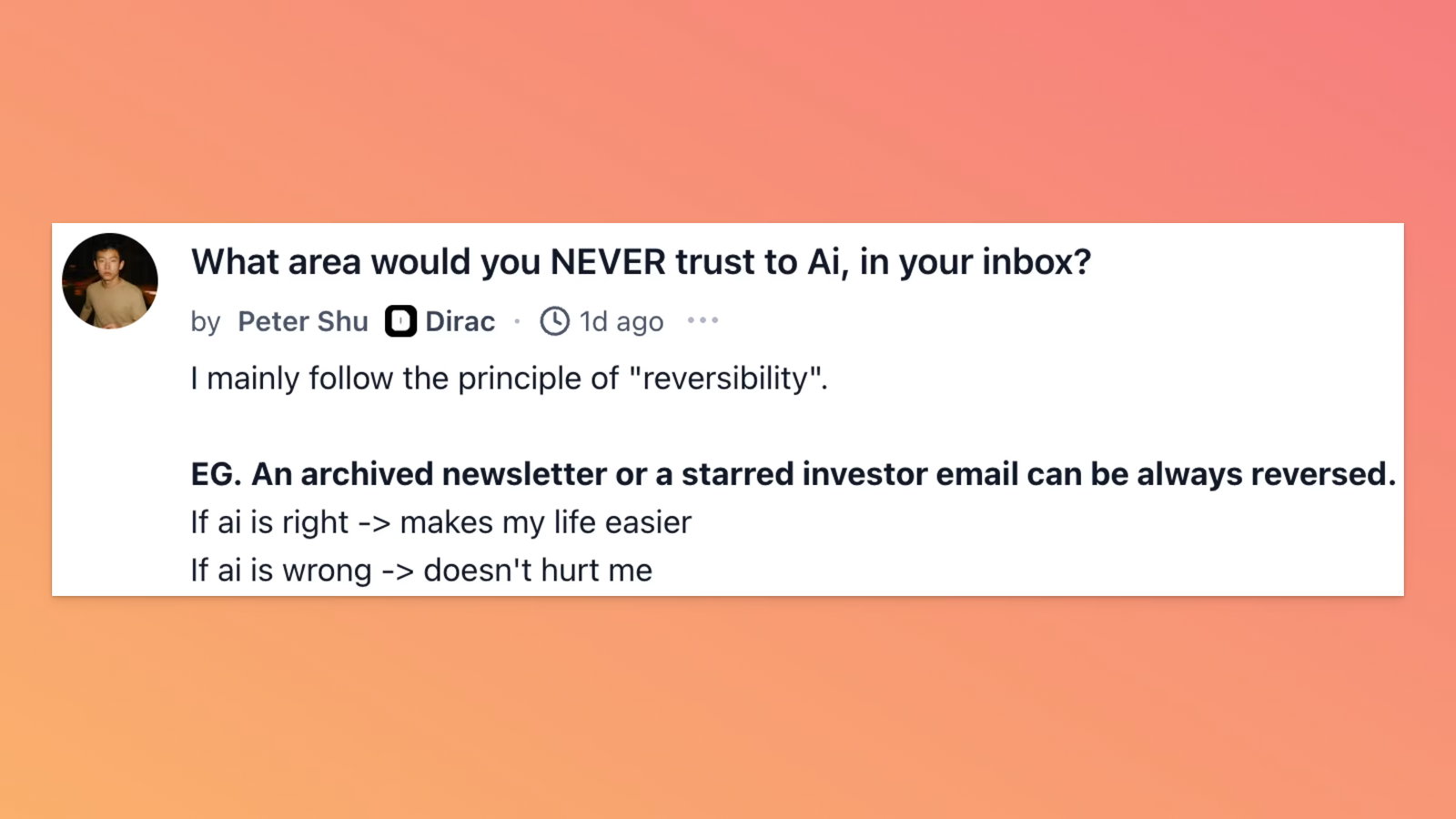
Peter (@peterz_shu) asked the forums which part of their inbox they'd never trust to AI. He asked on the right day.
The thread was more settled than you'd expect. Sorting, archiving, drafting: people were mostly fine with all of that. Actually sending something on their behalf: no. Shawn Idrees drew the line at having AI speak in his voice. Jerry Ng got analytical about it, breaking tasks into safe ones, risky ones, and ones that need a human regardless. Everyone came at it differently but landed in the same place.
"The send button still feels like a human responsibility." — Alistair James


 21 •
21 •
 Design Tools


