

gm legends, happy Wednesday.
In today's digest: a Civilization-style command center for AI agents, a screen recorder that does the editing for you, and a design director in Austria who got tired of bad tuners and just built his own.

Is this your brand on Milled? Claim it.

|
|
||
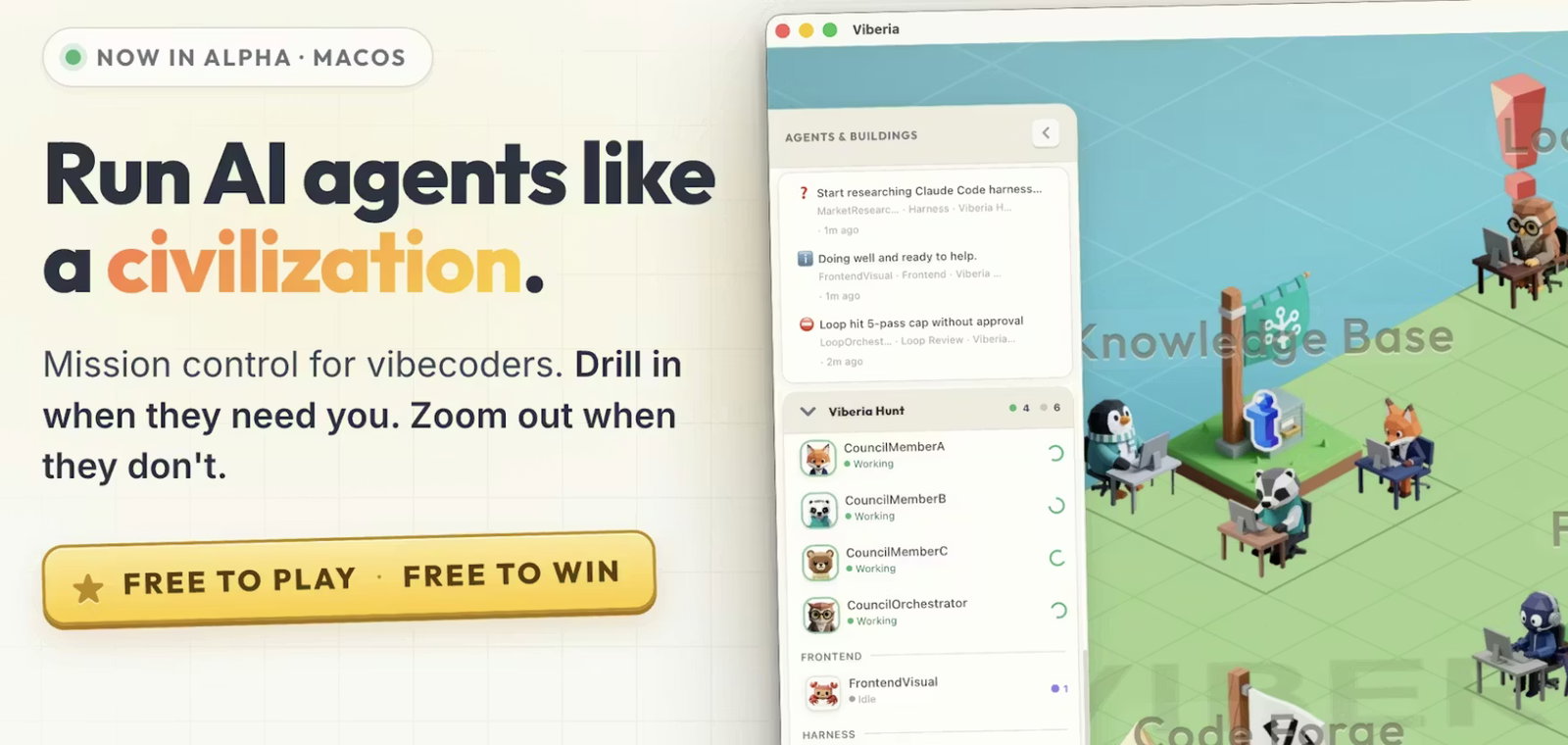
Viberia is what Emre Barut built after sitting with a simple question: if one person is going to run dozens of AI agents, how do they actually see what's happening? His answer is an isometric map where each agent shows its status in real time — blocked, thinking, done — and you zoom in to talk to whichever one stopped.
🔥 Our Take: The map is not the product. You can have ten agents beautifully arranged in a grid and still not know why half of them stopped. Viberia solves visibility, which is a real problem, but the harder one — agents confidently doing the wrong thing — doesn't get easier with a nicer interface. That said, if you're juggling parallel Claude sessions across terminal tabs right now, this is obviously better than that.
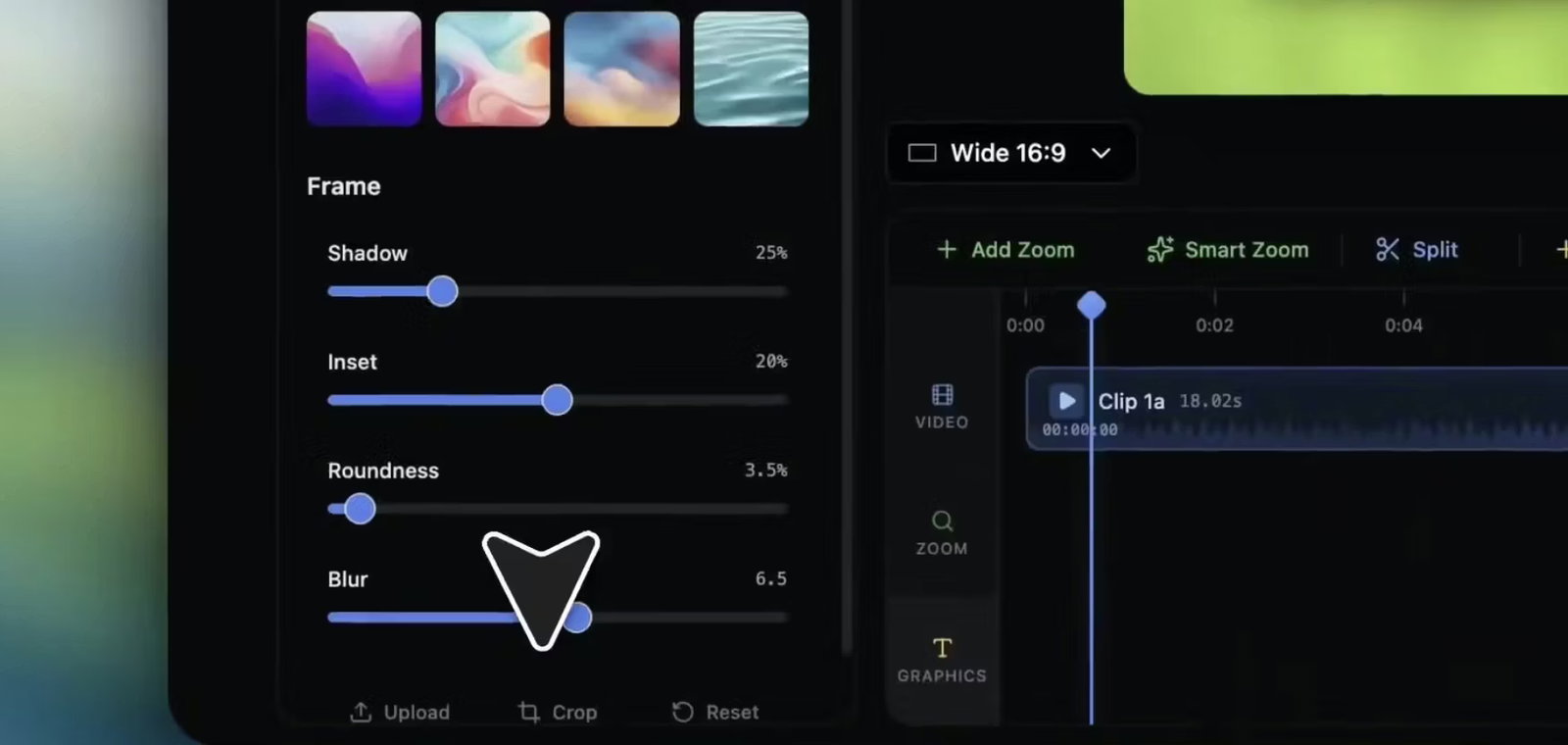
Retina auto-zooms on whatever you're clicking, smooths cursor movement into clean arcs, and exports 4K that looks like you spent time editing it. Mourtaza Ali keeps building tools to remove manual steps — Orbit, Listval, and now this. Free beta, no watermark.
🔥 Our Take: Screen Studio exists, does this, and has two years of polish on it. The only honest reason to try Retina right now is that it's free and Screen Studio isn't. If the auto-zoom fires at the right moments — Screen Studio's occasionally doesn't — that's worth knowing. Download it and see.
Inference should feel simple. Once AI hits production traffic, you're really managing routing, retries, observability, GPU bills running while nobody's home.
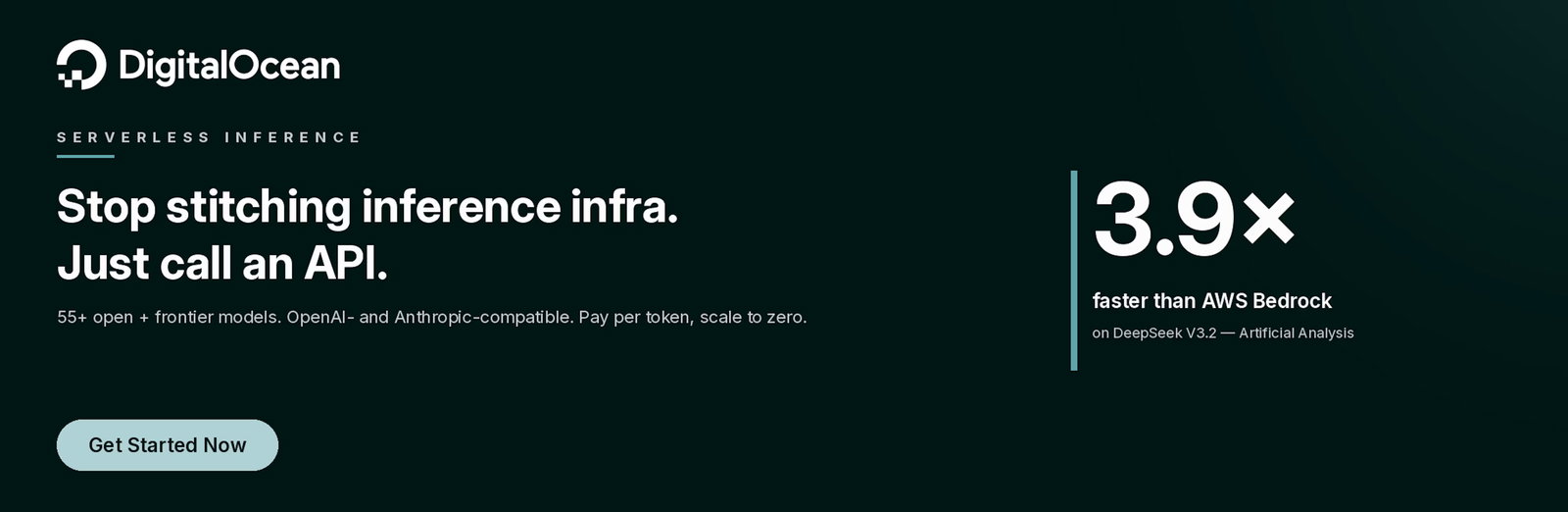
DigitalOcean Serverless Inference handles all of that in one API — OpenAI- and Anthropic-compatible, 55+ models including Claude, DeepSeek, Qwen, and Llama. Scale to zero when you're not using it. Pay per token when you are. VPC and zero data retention on by default.
230 tokens/sec on DeepSeek V3.2 — 3.9× faster than AWS Bedrock (Artificial Analysis). Runs on the same bill as your databases and Kubernetes. One less thing to reconcile.
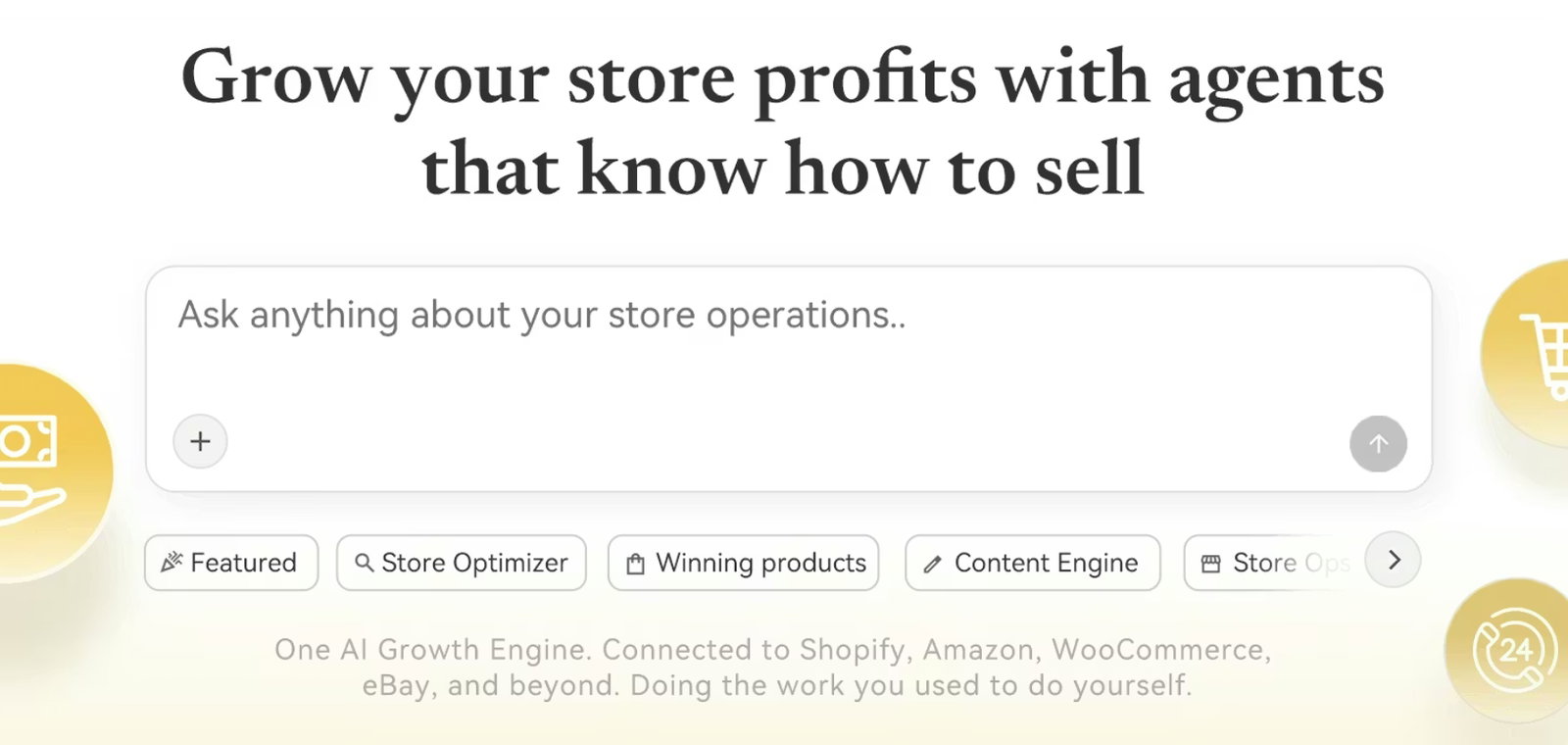
StoreClaw ships with 30+ preloaded agent skills — bulk metadata, SEO rewrites, product copy, pricing analysis — that execute inside your connected store (Shopify, WooCommerce, Amazon, eBay), with approval gates before touching anything risky. Steven Zhou built the approval layer into the first version, which says something about what happens when you ship agents on a live store without one.
🔥 Our Take: Most ecommerce AI is a recommendation engine with a chatbox in front of it. StoreClaw's actual bet is that the gap isn't more tools — it's encoded expertise. Thirty preloaded skills means someone had to decide what good store ops actually looks like and hard-code those decisions. Whether their version of "good" matches how your store runs is the only thing worth testing.
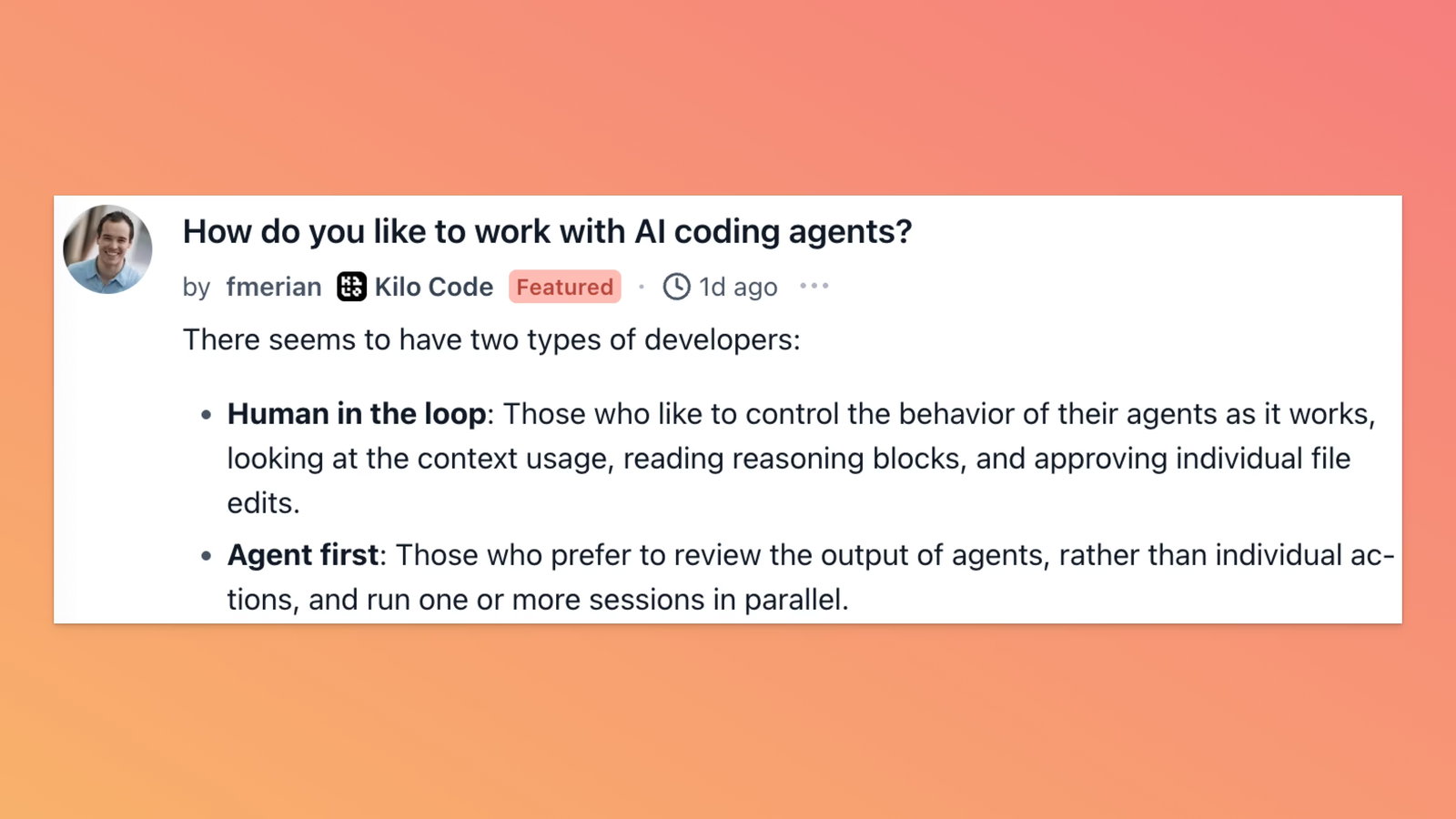
fmerian (@fmerian) from the Kilo Code team posted a poll after shipping their new parallel agents feature — asking whether developers want more control or are happy to step back. The result: 78% human-in-the-loop, 22% agent-first.
The debate that followed is less about preference and more about trust. Prad and Stan Kolotinskiy both say you need to understand what's breaking before you can fix it — agents that move fast without explaining themselves create debt you can't trace back. fberrez is on the other end, wanting to be "less and less in the loop." The gap between what the people building these tools expect and what developers actually want is the thread worth reading.
Jahnavi Thota put it cleanest: reliability and predictability are what determine how much rope you give an agent, not ideology.


 148 •
148 •
 Productivity


