Why? Despite the benefits of fuel cells, water vapour out the tailpipe and refuelling like a diesel rig, they just can't get the 'hydrogen' stations in place to re-fuel them.
Conversely, battery prices have dropped globally, letting manufacturers extend range without a proportional price jump, and the economic case for battery-electric heavy trucks keeps improving, according to the International Council on Clean Transportation.
Volvo - for one - is still betting on hydrogen because of faster refuelling, better cold-weather range retention, and higher energy density for long, heavy hauls where battery weight eats into payload.
But even the people building hydrogen trucks admit they need to lean hard into that "heavy load, long distance" niche to survive, because on price and infrastructure, batteries are simply outrunning them everywhere else.
So - batteries, mostly, are the future of moving freight. Which is a nice segue into a math problem we like to think about here at etee.
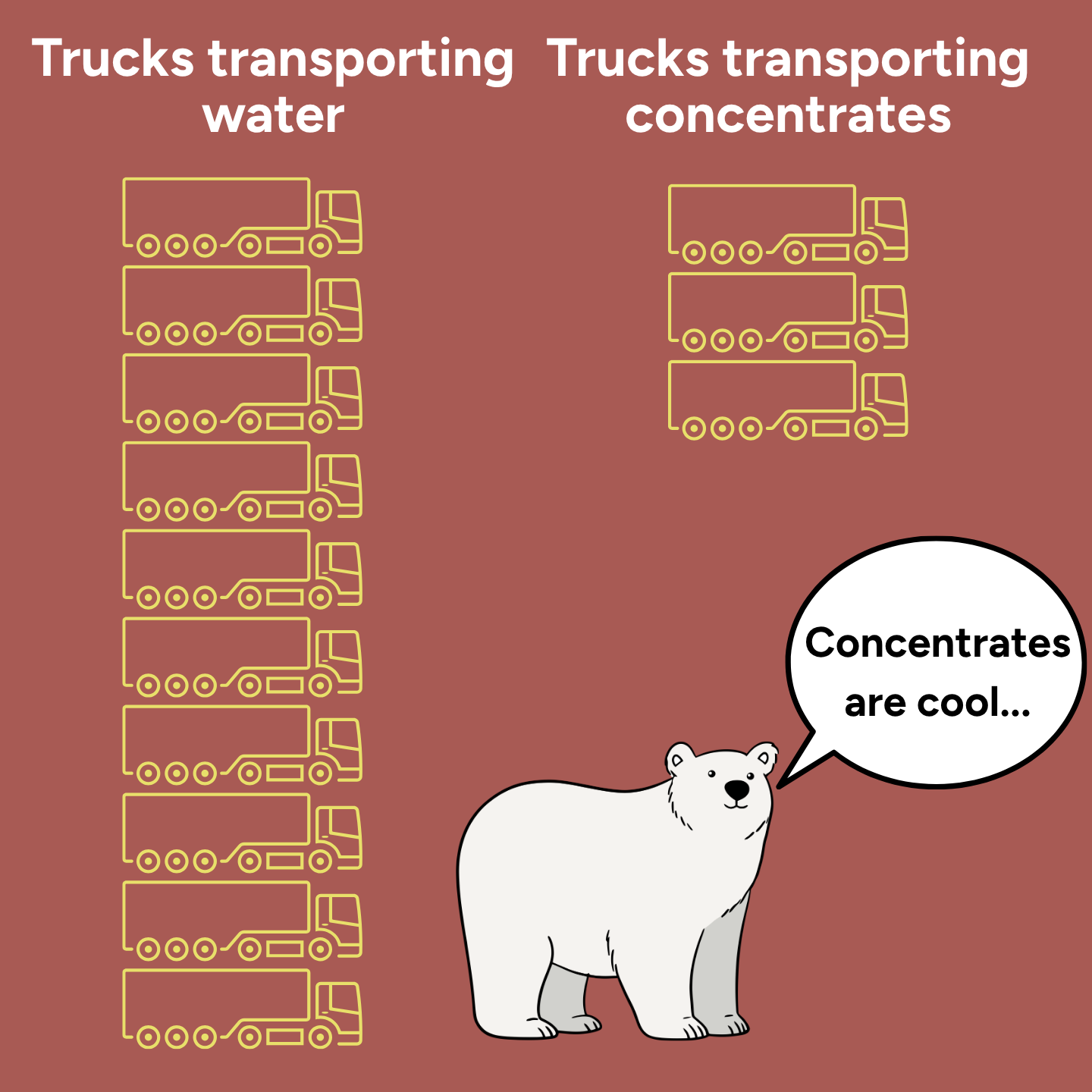
If every water-based product packed on a truck right now - cleaners, soaps, shampoos and.... most things in your pantry - were one-third the size and weight, we would only need 1 truck that currently requires three.
|