US · spartan.com

The Tour de France Isn't About Bikes

You already have your own mountain stage.


This email was sent

Is this your brand on Milled? Claim it.

You already have your own mountain stage.
 ͏ ͏ ͏ ͏ ͏ ͏ ͏ ͏ ͏ ͏ ͏ ͏ ͏ ͏ ͏ ͏ ͏ ͏ ͏ ͏ ͏ ͏ ͏ ͏ ͏ ͏ ͏ ͏ ͏ ͏ ͏ ͏ ͏ ͏ ͏ ͏ ͏ ͏ ͏ ͏ ͏ ͏ ͏ ͏ ͏ ͏ ͏ ͏ ͏ ͏ ͏ ͏ ͏ ͏ ͏ ͏ ͏ ͏ ͏ ͏ ͏ ͏ ͏ ͏ ͏ ͏ ͏ ͏ ͏ ͏ ͏ ͏ ͏ ͏ ͏ ͏ ͏ ͏ ͏ ͏ ͏ ͏ ͏ ͏ ͏ ͏ ͏ ͏ ͏
In today’s edition, Joe shares:
  • Why millions watching the Tour de France this week are really watching themselves.
  • The Stoic principle Marcus Aurelius used 2,000 years before Alpe d'Huez had a name.
  • Your mountain doesn't have snow. It's just as steep.
 
The Tour Isn't About Bikes. It's About You.

This week, millions of people will watch someone win the Tour de France. Most will think they just watched a bicycle race.

They didn't.

They watched one of humanity's oldest traditions. The voluntary pursuit of hardship.

Twenty-one days. More than 2,000 miles. Mountain passes that seem impossible. Bodies breaking down. Sleep disappearing. And yet, every morning, they clip back into the pedals. No one forces them.

That's what fascinates me.

The Spartans didn't train because life was hard. They trained because they knew life would become hard.

Marcus Aurelius wrote, "The impediment to action advances action. What stands in the way becomes the way." Not about cycling. About every wall you've ever stood in front of..

Every generation seems to forget this lesson. Billions get spent trying to eliminate discomfort. Air conditioning. Food delivered to the couch. AI that writes your emails. The world is building itself friction-free. Then anxiety rises. Resilience falls.

Seneca slept on the floor to remind himself comfort was temporary. Shackleton chose Antarctica. Junko Tabei chose Everest. They weren't searching for comfort. They were searching for themselves.

I felt it building this farm. Arms shredded, hands blistered, the year everyone told me it wouldn't survive its first winter. It did. Because I didn't quit on it when quitting would've been easier.

Psychologist Angela Duckworth calls it grit. Nassim Taleb calls it antifragility: some things get stronger from stress, not just survive it. Confidence doesn't come from affirmations. It comes from evidence. Evidence that you kept going when quitting was easier.

That's why the Tour matters. Not because you'll race it. Because you already have your own mountain stage. Rebuilding a business. Saving a marriage. Recovering from addiction. Building something everyone says is impossible.

Your Alps probably don't have snow. But they're just as steep.

Cyclists don't hope the race gets easier. They become the kind of people who can handle harder races. One mindset waits for better conditions. The other builds a better human. History rewards the second.

The question is: do you?

Because life isn't asking whether you're comfortable. Life is asking whether you're ready.

When the heat comes. When the climb appears. When everyone else gets off the bike. Will you?

Or will you discover the strongest muscle you own was never your legs. It was your will to keep going.

The Hard Way has never been about suffering for suffering's sake. It's about becoming impossible to break.

Today, the Tour climbs Alpe d'Huez. Twenty-one hairpins. 13.8 kilometres. An average gradient that doesn't forgive anyone. Spartan Ultra Morzine sits in those same Alps, same brutal vertical gain, same terrain that doesn't care about your excuses. You don't need a yellow jersey. You need one decision: show up and climb it anyway.

Got the nerve for Spartan Ultra Morzine? Find your own climb. Don't get off before the top.

See you on the climb.

Joe
 
THE CLIMB DOESN'T CARE HOW YOU FEEL

Mont Ventoux has broken riders for over a century. Steep. Exposed. No shade for miles. Nobody rides it because it's easy. They ride it because it's there, and because getting up it proves something a flat road never could.

 
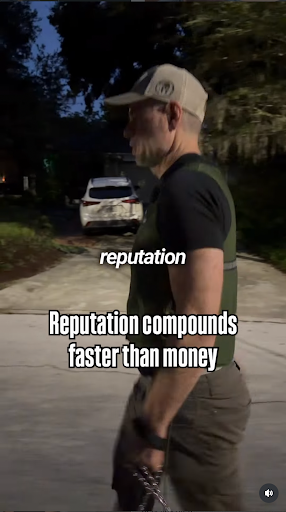
REPUTATION
CLICK TO SHARE
 
They Said It
"Shut up, legs!"
– Jens Voigt, professional cyclist
 
The Hard Way Podcast with Joe
 
THE HARDWAY PODCAST
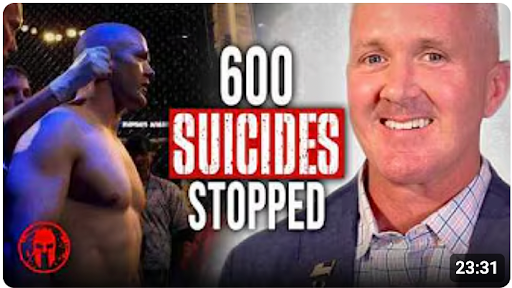
A Marine officer had a loaded Glock on the table and his finger on the trigger. His mother called at that exact second.
Lee Stuckey lived. He went on to build AHERO, which has served 13,000 veterans and stopped over 600 suicides in 16 years. He sits down with Joe to break down the four-pillar framework that rebuilt his life.
 
 
To keep receiving this newsletter, sign up here.
WHAT DO YOU THINK OF THIS NEWSLETTER?
MEH SOLID AROO!
TRAIN EAT APP TEAMS
Are you sure?

Lists help you organize the brands that you care about. Your lists are private to you.