US · stacksocial.com

The Big Bang left particles in your body right now

Plus, photosynthesis, now minus light.


This email was sent

Is this your brand on Milled? Claim it.

Plus, photosynthesis, now minus light.
͏ ‌   ͏ ‌   ͏ ‌   ͏ ‌   ͏ ‌   ͏ ‌   ͏ ‌   ͏ ‌   ͏ ‌   ͏ ‌   ͏ ‌   ͏ ‌   ͏ ‌   ͏ ‌   ͏ ‌   ͏ ‌   ͏ ‌   ͏ ‌   ͏ ‌   ͏ ‌   ͏ ‌   ͏ ‌   ͏ ‌   ͏ ‌   ͏ ‌   ͏ ‌   ͏ ‌   ͏ ‌   ͏ ‌   ͏ ‌   ͏ ‌   ͏ ‌   ͏ ‌   ͏ ‌   ͏ ‌   ͏ ‌   ͏ ‌   ͏ ‌   ͏ ‌   ͏ ‌   ͏ ‌   ͏ ‌   ͏ ‌   ͏ ‌   ͏ ‌   ͏ ‌  
The Futurist
Together With

Advertise   |  Talk to Us   |  Shop   |  Unsubscribe

Help us spread the word:
Send the sign-up link to your friends.

/discover
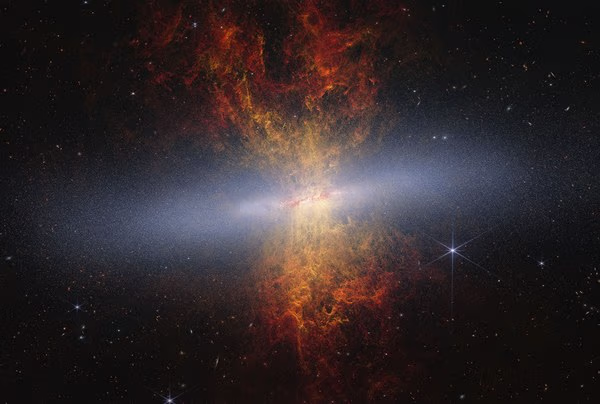
NASA's Webb pinpoints millions of stars within Cigar Galaxy | NASA

“Located 12 million light-years away and undergoing rapid star formation, edge-on spiral galaxy Messier 82 (M82) is a scientifically unique sight to behold, and now NASA’s James Webb Space Telescope has revealed previously unseen details. M82’s intense star formation, thought to be the result of a galaxy merger, will be a short-lived event in astronomical terms, estimated to last a few hundred million years in its entirety. This temporary phase of extreme star formation relative to the galaxy’s mass, as well as its location in the local universe, are among the factors that make M82, also known as the Cigar galaxy, a one-of-a-kind environment to study.”

NASA »
/innovation
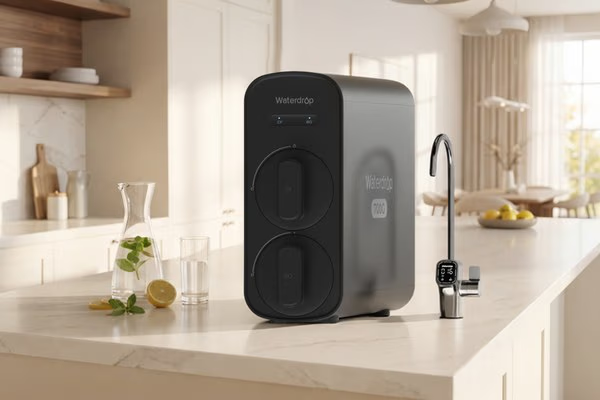
The science your tap water never had access to | Drink better water

Standard reverse osmosis (RO) works by pushing water through a semipermeable membrane — it removes contaminants, but also strips naturally occurring minerals like calcium and magnesium in the process. The G5P700A adds a remineralization stage that reintroduces those alkaline minerals post-filtration, which raises the pH and improves taste without reintroducing anything you were trying to remove. Eight filtration stages, 700 GPD flow, tankless design. On sale now for Prime Day at over 20% off. It’s not just cleaner water — it’s water that went through an actual process to get better. [Ad]

Drink better water »
/cosmos
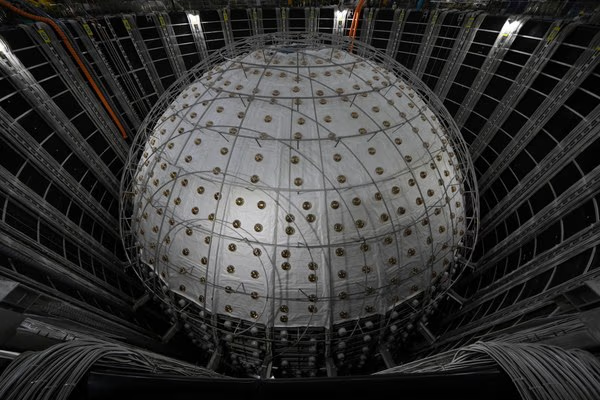
An underground detector in China unveils its first major findings about mysterious ghost particles | AP News

“A massive underground detector aimed at understanding the mysterious ghost particles in our universe released its first major results … The Jiangmen Underground Neutrino Observatory in China started collecting data in August with the goal of understanding neutrinos: tiny cosmic particles that date back to the Big Bang and whiz harmlessly through our bodies by the trillions every second. Yet they weigh almost nothing, making them difficult to sniff out. In a study … the JUNO team unveiled its initial findings from two months of data collection — including some of the most precise measurements to date of how neutrinos switch between three varieties, or flavors, as they zip through space.”

AP News »
/whoa
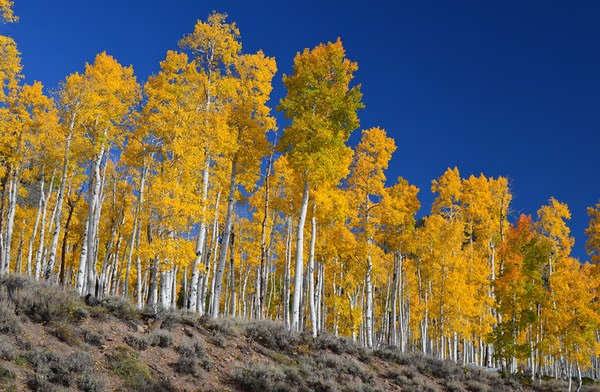
Listen to the sound of the most massive organism on earth | Nautilus

“The most massive known organism on the planet covers over 100 acres in Sevier County, Utah — it’s an aspen stand named Pando (Latin for ‘I spread’). While the stand may appear to be made up of individual trees, they’re actually roughly 47,000 clonal stems sent out by rootlike shoots beneath the soil. In other words, it’s an organism you can actually walk through — and thanks to experimental sound artist Jeff Rice, you can listen to it as well.”

Nautilus »
/flex
A lifetime Windows 11 Pro license for $7.97 (yes, we checked twice) | Get it before it's gone

This is not a typo, a glitch, or a sign that something has gone terribly wrong. $7.97 is genuinely the all-time lowest price we’ve ever seen on a lifetime Windows 11 Pro license — the full Pro tier, with BitLocker encryption, Windows Sandbox, Hyper-V, and Copilot baked in. One payment. One code in your inbox. Yours forever. Microsoft retail wants $199 for this. We’re not sure how long this lasts, but we’d suggest not thinking about it too hard. [Ad]

Get it before it’s gone »
/science
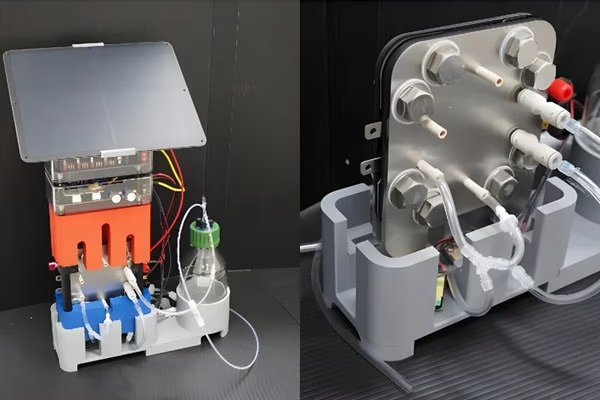
Artificial photosynthesis system produces 'solar-fuel' even in low light | New Atlas

“Unlike conventional solar systems, which are hampered by the Sun’s fluctuations and require backup systems to even them out, leaves can harness solar energy even in low-light conditions. Taking a step toward that leaf-like performance, researchers at Osaka Metropolitan University have developed an artificial photosynthesis system that produces formic acid from carbon dioxide and water using solar power.”

New Atlas »
/bites
/earth
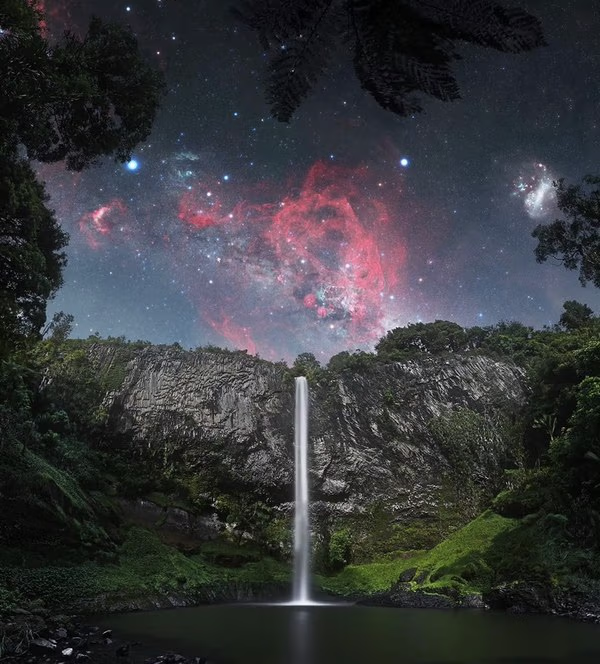
@galactic_kiwi on Instagram

Interested in having one of your social posts featured in The Futurist?

Get in touch »
Are you sure?

Lists help you organize the brands that you care about. Your lists are private to you.