Hi SWIISH Fam,
You may have seen a rise in the amount of news headlines recently sharing that bowel cancer rates in young people are rising globally. And it's a conversation most of us aren't having nearly enough.
Both Australia and the UK, along with other nations, have in recent years expanded their bowel cancer screening programmes to younger age groups. In Australia, the eligible age was lowered from 50 to 45. This is not a small shift. It's a signal that something is changing - and that we need to pay attention earlier than we used to.
Here's what the research consistently points to as one of the most protective things you can do: eat more fibre.
A comprehensive meta-analysis of prospective studies found that each additional 10 grams of dietary fibre per day is associated with approximately a 10% reduction in colorectal cancer risk. That's not a small number. And yet most of us aren't getting anywhere near the recommended daily intake.
Here's how fibre protects your gut. When it reaches your colon, gut bacteria ferment it into short-chain fatty acids - particularly butyrate. Butyrate is the primary energy source for the cells lining your colon. It maintains the intestinal barrier, modulates inflammation and regulates several pathways implicated in colorectal cancer development. In short - a well-fed gut is a more protected gut.
The problem is most people are chronically under-fibred. Not by a little. By a lot.
The good news is that getting more fibre doesn't have to be complicated. Aim to include at least one high-fibre food with every meal:
Legumes: lentils, chickpeas and black beans are among the highest fibre foods available. Add them to soups, salads or curries.
Wholegrains: swap white bread and rice for oats, brown rice or quinoa. Small change, big difference.
Vegetables: broccoli, Brussels sprouts and sweet potato are all excellent sources. Aim for at least 2-3 serves of vegetables daily.
Fruit: apples and pears are naturally high in fibre. Aim to get organic if you can, so that you can eat them with the skin on (where most of the fibre lives) but avoid all the chemicals and pesticides found in the skin.
Nuts and seeds: flaxseed, chia seeds and almonds are easy to add to smoothies, yoghurt or overnight oats.
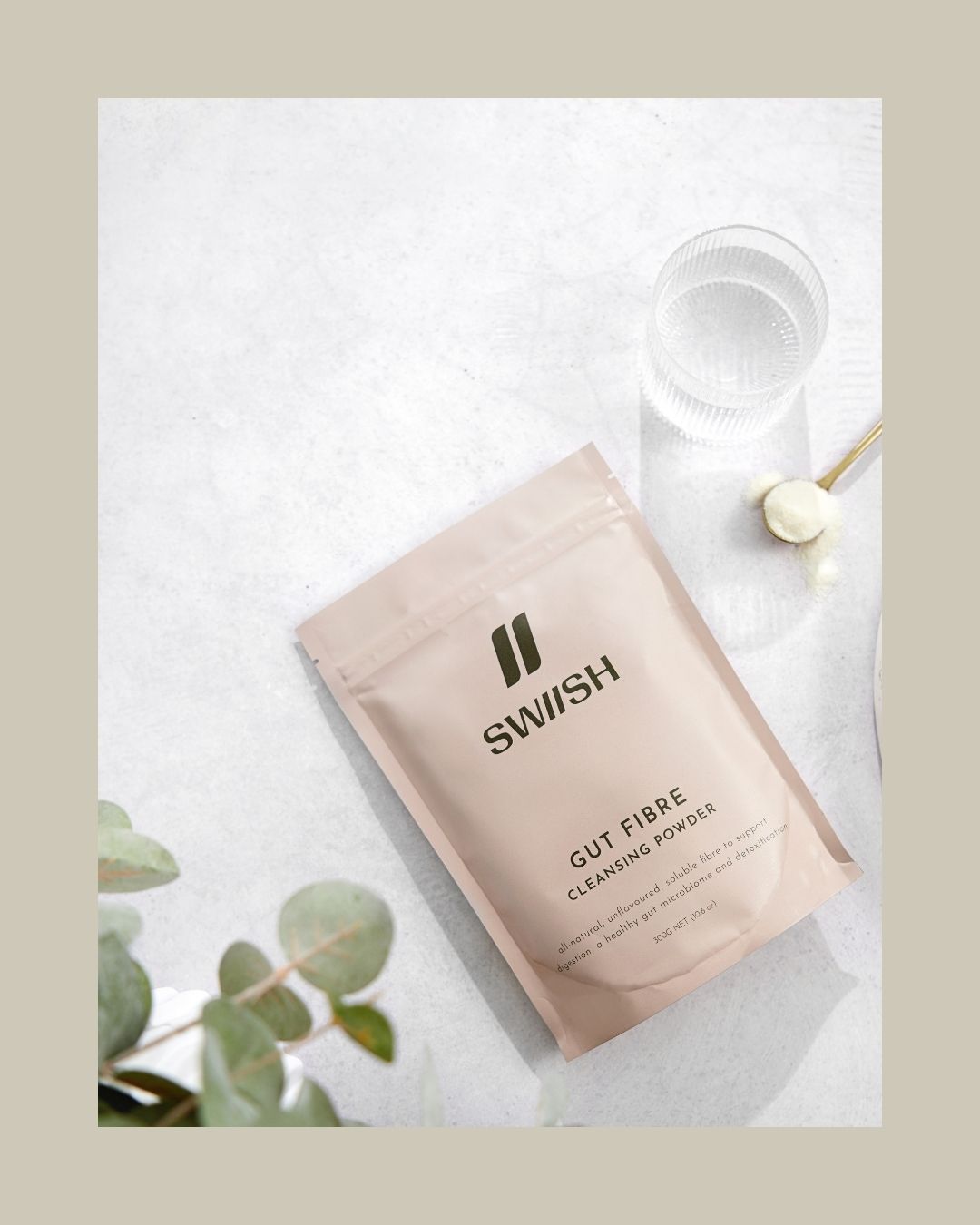
And if you're still struggling to hit your daily target - that's exactly why we made GUT FIBRE.
We know how widespread fibre deficiency is - and we wanted to make it as simple as possible to support your gut.
One serve daily, added to anything hot or cold. Completely tasteless, dissolves into whatever you're already eating or drinking.
This isn't about being alarmist. It's about doing one simple, consistent thing which really matters.
Maha x