Every product is independently selected by our editors. Things you buy through our links may earn us a commission.
|
|
|
This month: Book gossipers unpack the braided essay and its discontents, how Kate Riley’s search for the good life led her to a Christian commune, a new novel that marries tech and romance, and the August titles that are actually worth buying.
|
|
|
The State of the Braid Braiding used to be the gold-standard form for personal narratives. Does it still hit like it used to?
|
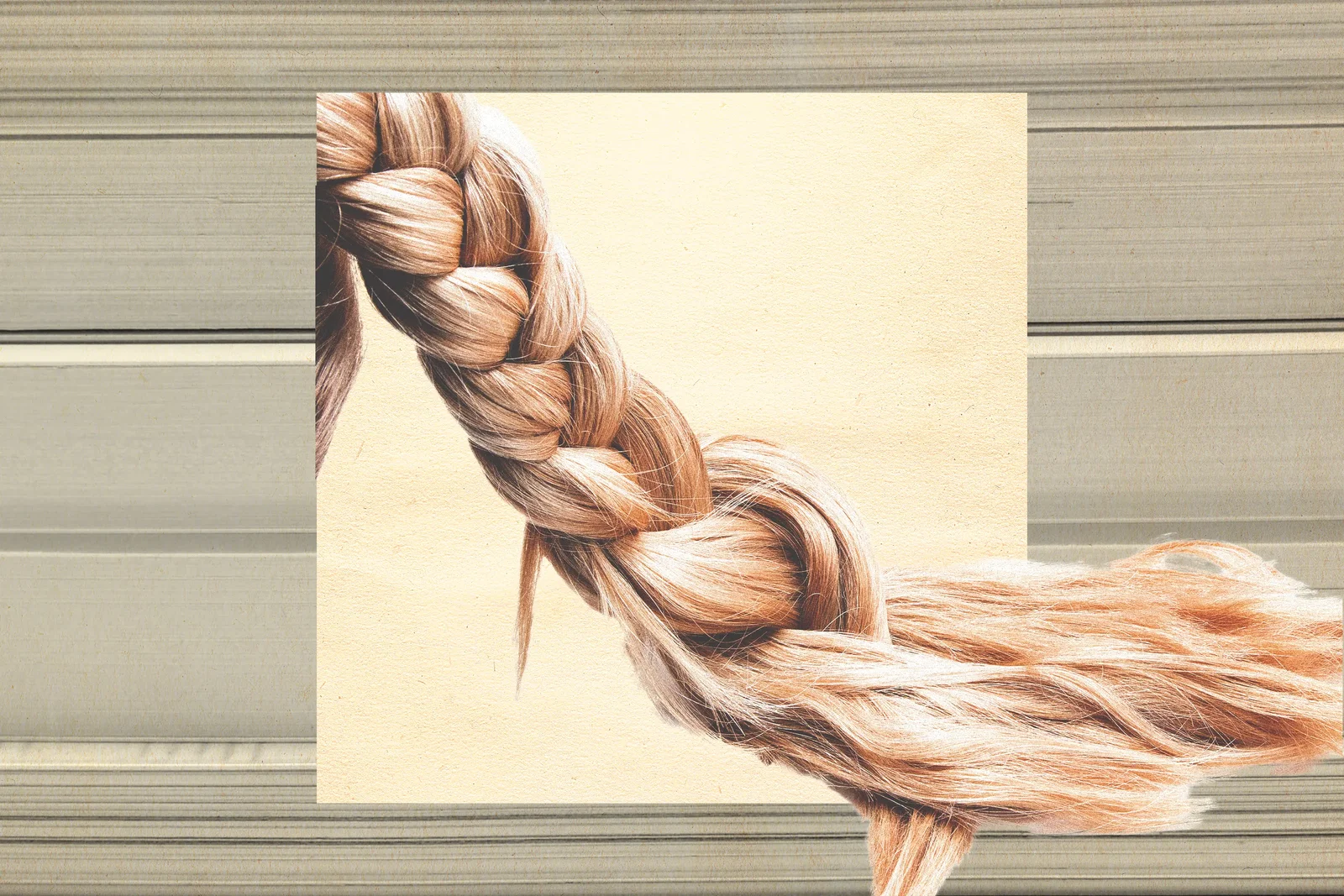
Photo-illustration: The Cut; Photos: Getty |
You usually know a braided essay or memoir when you see it. It has section breaks. Often, an excess of white space. Two or more threads or topics whose connection to each other feels oblique until it doesn’t. A sense of surprise when (like magic!) it all comes together. A wandering quality emphasizing, per the veteran essayist and author Brenda Miller, “what is unknown rather than the already articulated known.” In simpler terms, it can often feel like “the story of my breakup, now with more bird facts!”
I’m joking, but the braided essay can make an easy target. The form has been debated and playfully mocked online for years, and earlier this summer, Paris Review editor Sophie Haigney wrote on X that “One thing we must stop doing is ‘braiding’ things in essays.” Lily Meyer’s review of Catherine Lacey’s The Möbius Book in The New Republic blamed the book’s lack of cohesion on its unsuccessful braiding of Lacey’s childhood experiences with Christianity and the end of her toxic relationship. In Chloé Caldwell’s new memoir, Trying, she describes the mandate for a certain type of writer to adopt the braided form: “Whenever a woman writes a book with her personal story, she has to bring in an alternate element of nature and then her book will be more popular, because readers will feel smart. Hawks, stars, water/swimming, Greek mythology. If not, she has to bring in academic jargon.” I recently encountered the etymology of “hysteria” in a braided memoir — certainly a fascinating bit of trivia if you’re hearing it for the first time. But there, it felt frustratingly endemic to the braid: a writer going to the dictionary instead of making an urgent case for why I should be invested in their first-person story.
It’s not that the form can’t be sublime. Jo Ann Beard’s “The Fourth State of Matter” is the master-class example, and if you haven’t read it I won’t ruin it by telling you what it’s about. There’s the Leslie Jamison essay that alternates between her past eating disorder and her pregnant body’s relationship to food. Many of us still remember where we were when CJ Hauser’s 2019 breakup essay “The Crane Wife” went viral. Braiding used to be a gold-standard move in personal narrative, but more recent examples have left us lukewarm. Do we still need the braided essay? I gathered a brain trust of book gossipers to discuss.
We’ve seen recent examples of braided nonfiction books with The Dry Season, No Fault, and The Möbius Book. What about this technique worked in those books for you guys and what didn’t?
Cat Zhang: I think the recent slate of braided nonfiction that we're seeing aligns with the surge in divorce and marriage novels. All of the writers that you're talking about are of a kind — young, white, middle-to-upper-middle-class female writers who live in major cities — and part of the fatigue that you’re feeling might have to do with their similar reference points. When I was reading Haley Mlotek’s No Fault, I was like, “I don't really want the lit review of Phyllis Rose and Elizabeth Hardwick and the history of marriage — I just want to know what happened to yours.”
Emma Alpern: The memoir can be such a tawdry genre. You kind of expect to read something juicy, tragic, open. I think that it can feel a little bit vulnerable for writers and not literary. There's something about the braided memoir that is trying to insert some gravitas.
Madeline Leung Coleman: That is the problem for me with a lot of braided memoirs. So often it’s like, “Why are you even compelled to write a memoir? It doesn't really seem like you want to say anything about your personal experience.” But I think when it works, it really works, and that’s what people are going for every time.
A lot of the examples of braided essays that we've been talking about are about divorce or about death or loss in some way. Maybe that is because that kind of life occurrence is so difficult to really swallow in one big gulp, even when you're writing about it. So the braided thing becomes a way of tempering it even for the writer because it's too exposing.
Emily Gould: I want to interject my cynical business-of-publishing perspective. There's a huge market for memoirs written by celebrities. I cannot think of a single instance in which any of those are braided. There are also memoirs that are in the very small overlap of literary and commercial where you have superstars like Dani Shapiro or Mary Karr or Elizabeth Gilbert. They also don't have to braid. They can just tell chronological stories about things that happened to them in their lives.
Then you have everyone else, whose work is marketed — I'm putting the onus on the publishers rather than the writers — as literary. Literary is a marketing category. It's not a choice that people are making about how they think they could best tell a story; it's a choice that's imposed on them by the way that the industry works. To sell a memoir if you're not a celebrity, if you don't have a platform, if you're just a good writer and you want to write in the first person, you are encouraged to work within the braided form now because it is what sells. It also is what is perceived as lending gravitas to personal narrative. Personal narrative on its own is not enough. I obviously think that's a bummer.
C.Z.: An issue I often have with these braided essays and memoirs is that it feels like the writers actually haven't done enough emotional work and are using criticism and other people’s insights to cover that up. It’s very irritating when someone just drops in a quote from Sarah Manguso, and that's the paragraph. There's no additional analysis.
I think that the braided form often is a way to shortchange the necessary distance — call it emotional labor, call it introspection — that you need in order to tell a personal narrative in a compelling way.
That's why I think the form to me — having done a nonfiction M.F.A. where this is a good part of what we were writing — can feel young. There's a reason so many of the Google results for “braided essay” are teaching tools or writing prompts for greener writers. Not connecting dots could be read as being generous to a reader — you’re letting them decide what things mean. But at this point, I feel like you need to make a more urgent case for a personal narrative.
E.A.: Maybe there are just too many book deals.
C.Z.: Madeline, in our chats you mentioned Vivian Gornick and Hanif Abdurraqib as examples of people you think do personal writing well. Can you talk about what you think differentiates their work?
M.L.C.: Vivian is a fascinating person to read, not only because she's a genius but because we have been lucky enough to see some reissues of past work that she then comments on. Her new intro to The Romance of American Communism is kind of a personal essay about the process of writing it wherein she critiques her own writing.
What's so good about her personal writing is that by the time she has been doing it, she understands why she's doing it. She has a goal in mind, and she's using herself and her life as characters and tools toward an aim. She published an entire book about this, The Situation and the Story, in which she talks about how you actually need to have something that you're trying to say about an event, a bigger point, or at least a narrative you want to unfold.
Hanif’s 2021 book, A Little Devil in America: In Praise of Black Performance, is mostly made up of different forms of braided essays. He’ll write about some kind of cultural artifact, then situate himself as the receiver of the artifact, talking about how it's woven into his understanding of the world. He has a great essay that goes from Depression-era dance marathons — where people would dance themselves to death in the quest to try to win a prize because they were so desperate for money — to asking, “Why don't I see many Black people in those images?” to his own high-school dance experience and Soul Train. He's not oversalting with personal perspective.
In Hanif’s writing, it works. But a lot of the time this jumping around feels disconnected. It feels like the writer is avoiding something — like they’re trying to write a personal essay, then going down a Wikipedia hole. A lot of it feels unprocessed. It's missing both the exciting immediacy of fairly raw, new, experiential writing and the wisdom that's gained from reflecting on it over time. It's somewhere in this uncomfortable middle where it's just undercooked.
C.Z.: My background is in music journalism, and my favorite kind of music criticism is when people bring the personal into their discussion of an album. Our co-worker Bridget Read wrote an essay for Vogue about Robyn's Honey and her relationship with a friend who passed away who loved Robyn. The ache in Robyn's music was so much more present in that essay than in a straightforward review about who Robyn is, who she collaborated with, and what drum machines she used.
E.G.: I want to push back against the idea that something dramatic or momentous has to have happened in your life in order for you to deserve to write in the first person. The writers who I admire the most like Eileen Myles and Geoff Dyer are great storytellers who have really strong voices and who can make the quotidian into something more than itself. I don't think that you need to have fully emotionally processed or done the emotional work of figuring out what your story is before you start to write. A lot of times the process of writing is the process of figuring out what your story is.
It’s important to remember that the default first-person voice, the only voice that was heard in our culture for so long, was cis white men's voices. So all the stuff that we're talking about — marriage and divorce memoirs — it's still pretty new. I want to give people a little bit of grace for finding their way in this relatively newish landscape.
I completely agree that the process of writing is about figuring out what the story is that you're telling. But I think one problem with the braided form is that it allows you not to then go back and edit your story with that knowledge that you've gained. So you're moving forward with this form that has seams and you're like, “I figured it out once I got to the end.” There's a reason so many editors and teachers advise you to try restarting a new draft with where your last one ended.
M.L.C.: I don't want it to sound like I'm saying that you need to have an anvil dropped on your head before you're allowed to write a personal essay. But I also think that it's important to recognize when you maybe don't have the tools or the distance to write interestingly about mundane events. Most of the time Geoff Dyer has put himself in situations to write about — going places and meeting people in order to have material. He uses himself more as a character or an avatar for these explorations and he's very funny, which is what makes it work.
E.A.: With that first first wave of examples like Bluets or H Is for Hawk, the novelty was so striking. It kind of felt like a magic trick to see all the threads come together in an unexpected way. I wonder if part of what we’re responding to is that it stops working after a while. It's so prevalent now it doesn't have the same impact.
|
|
|
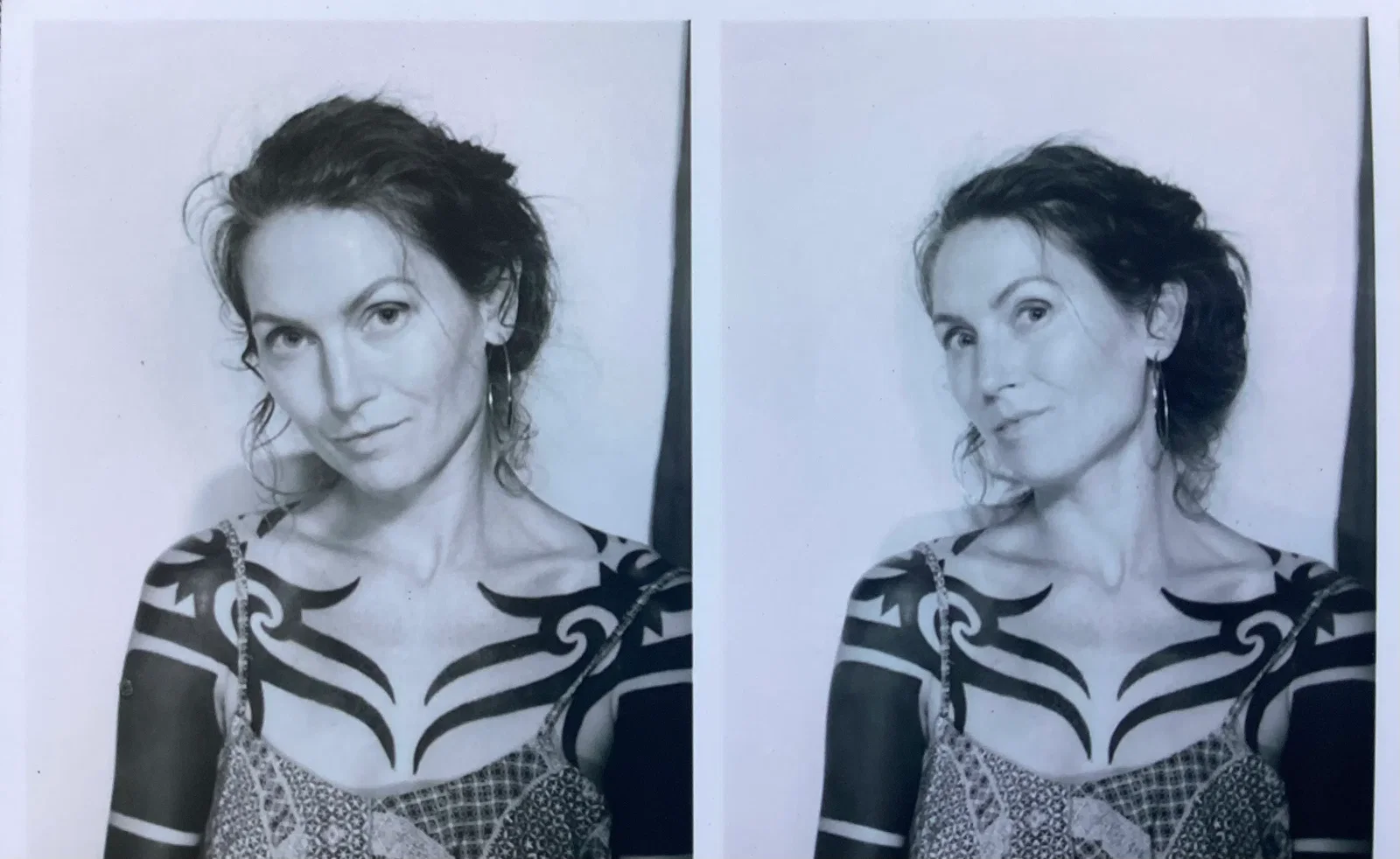
Photo: Courtesy of the author |
The day would begin at 5:30 or six. As a single woman living with an unrelated family, Kate Riley, a 25-year-old New Yorker who gave up city life for communal Christian living, would wake up and help get breakfast ready. She, the two parents, and their teenage children would gather at the table, where they might sing a song and say a prayer. Next was a part of the day called Start, during which everyone would do a chore unrelated to their regular chores — and then the regular chores would take up the next few hours. She might clean the cafeteria kitchen, or dig part of a trench, or work on landscaping.
Afterward was lunch; then, because she was so unused to the physical and social labor of the community, Riley was allowed the privilege of a few hours to be by herself. “I was, they quickly realized, overwhelmed by the metabolic demands of being around people,” she told me recently from her farm in Virginia. Later in the day, though, she’d be given something else to do. “They came up with a list of jobs for me because I had so few practical skills to offer.”
This is the world that inspired her first novel, Ruth, set within a Christian communal organization with outposts — in the book they’re called Dorfs — in several countries. (It sounds a little like the Anabaptist Bruderhof communities, founded in Germany in 1920 and expelled by the Nazis in 1937, but Riley demurs when I ask her where, exactly, she was living for the year she spent “going to grad school for scrubbing floors,” as she describes it.) Unlike Riley, the protagonist, Ruth Della Scholl, is a lifer, born within the community in 1963 Gracefield, Michigan. Possessions and money are shared, food meted out by committee depending on family size, clothing prescribed by those in charge of sewing. Questions like “Should children pray?” are discussed at three-hour sessions in the Meeting Hall, and major decisions are made by a set of elders headed by someone called the Servant and his wife, seemingly benign authority figures who appear to know what’s best for everyone.
Ruth is a granular portrait of a truly collective place that sometimes reads like a sidelong assessment of our lonely, technologically fractured time. It is also its own thing entirely. It’s full of small jokes, the kind traded over hot-cross-bun dough before breakfast: In a New York Times review, Dwight Garner said “I suspect it will become an underground classic of American folk wit.” A brief section might be about Ruth being assigned to edit down the community songbook, which “had grown bloated in recent years,” or it might describe a crushing period of postpartum depression or the appearance of a new community member, “a zealous toad of a man” from “a candle-making co-op in Yakima.” Like the best novels of everyday life, it’s strikingly ambivalent, folding in all the moral unclarity and dissatisfaction that even people who pray, sing, and labor without complaint might feel on a Tuesday morning. Reality inserts itself: A moment of private existential grief might be interrupted by an aimless discussion of geranium care. It can seem, alternately, like an injustice and a solace that Ruth is constantly being called away from her interior world to something outside herself.
|
|
|
Subscribe now to get unlimited access to everything New York, including subscriber-only newsletters, exclusive perks, the New York app, and more. |
|
|
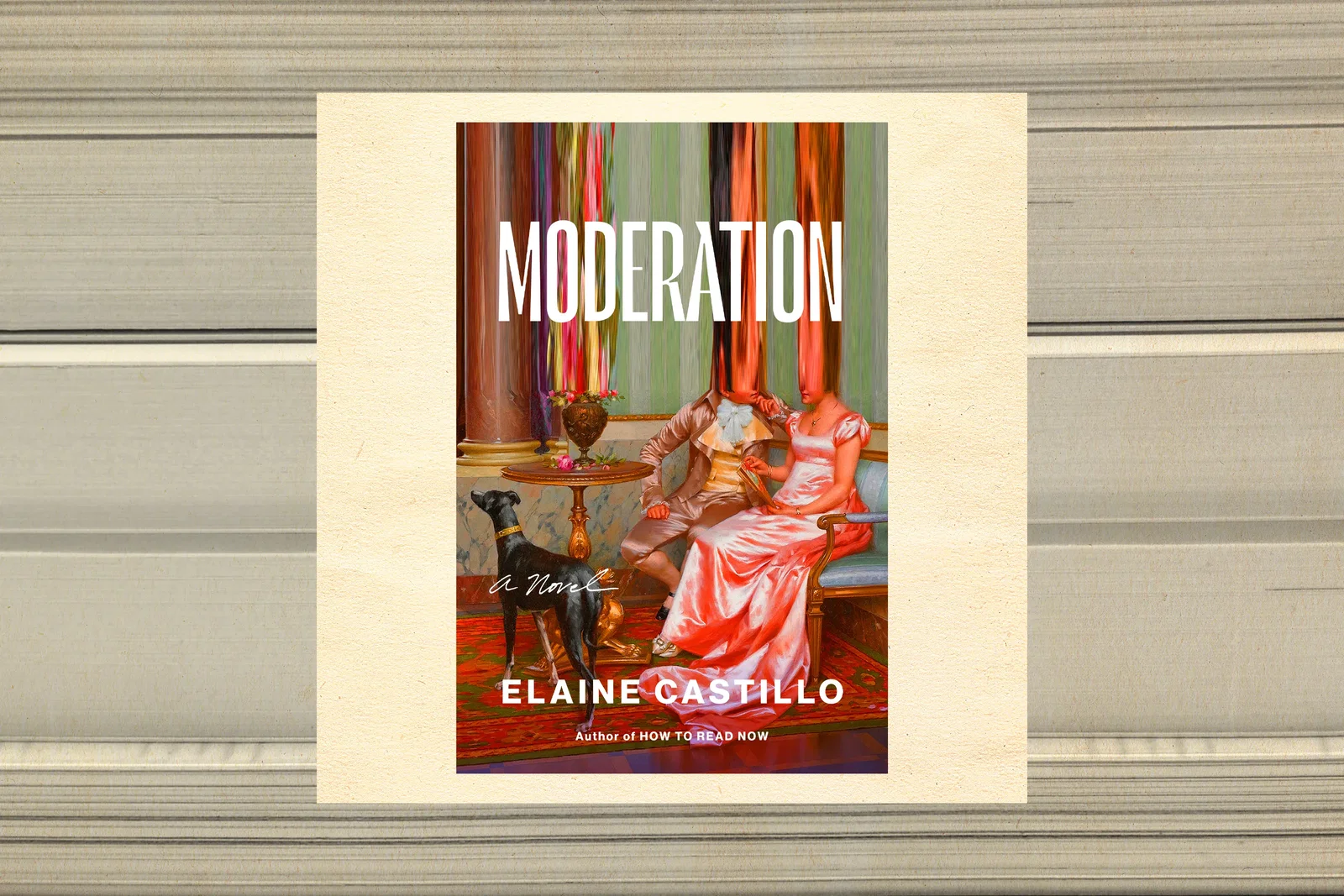
Tech Dystopia But Make It Romance Elaine Castillo breaks down her new genre-ambiguous novel.
|
Photo-illustration: by The Cut; Photo: Retailer |
Elaine Castillo never thought of Moderation as a novel about tech, despite the fact that its protagonist, Girlie Delmundo, spends her hours in a dark room working for a tech company to identify whether or not online videos feature sexual assault. Castillo instead conceived of her third book as a labor novel, one that imagined the lives of people like Girlie, a 30-something cool customer living in Las Vegas who is so good at keeping everything under the surface that she has somehow spent ten years in the same grim job.
And yet, Moderation transforms into a workplace romance novel. Girlie’s prowess as a moderator leads to an offer to work with William, an alluringly aloof and foreign new boss, in his virtual-reality world called Playground. There she clocks into a space built on hyperrealistic haptics and visuals of foreign cities and historical pasts: jousting knights and the Gauls and Romans laying into one another on the battlefield. As Girlie and William encounter each other in VR and IRL, the novel tips from tech dystopia into regency romance — a slow burn fueled by subtext, glances, and toeing professional boundaries.
For a novel largely set within a virtual landscape, Moderation insists on the material world — from Las Vegas’s suburban McMansions to Sephora packaging to the backdoor entrances of Vegas’s strip. I spoke to Castillo about her genre-challenging, often hilarious, and always sharp novel.
What inspired you to represent this kind of online labor and all the horror associated with it? You've referred to its practitioners as the frontline workers of the internet.
I have a cousin who worked at Facebook, and we kind of suspected that she was a content moderator. She withdrew from everybody and quit after two months. Many of those laborers are Filipino, which Adrian Chen’s 2014 Wired article talks about, though that landscape has evolved — Karen Hao’s Empire of AI talks about how a lot of content moderation is now done in Kenya or by AI. There’s a very clear racialized aspect of that labor, a colonial or imperial history of who does this type of cleanup work for a society.
I also saw links to my mom's work as a nurse or my dad working as a security guard for a computer-chip company in Silicon Valley, where I grew up. I was always aware that I lived there but that I came from people who were doing this peripheral labor that sort of upheld that society while never being central to it. I knew that I had to write about the exploitative nature of this work, but I also knew I didn't want to reduce a character like her to the worst thing that's ever happened to her. Why shouldn’t a laborer like this also be a Regency-era heroine?
Did you always know that this was going to be a story in which two characters fall in love at work?
In my initial sci-fi project, the characters fall in love in a therapeutic space. When I knew that Girlie was a moderator, I was like, “Oh fuck, it's going to have to be a workplace romance.”
This is my third book. I’ve realized that I can only write books if I feel diametrically or morally opposed to something in them. I think that's the grit that makes the pearl. In my first novel, I hated the fact that I was writing about an upper-class Filipina. She came from the class that exploited my mom's family. But when I was trying to write about characters who were closer to me, I was too protective of them, so I wasn't getting into the meat of their story. It's similar with this. I'm the first person to be like, “That's an HR violation!” and I'm not actually someone who reads or watches a lot of romance. So it's a challenge to me to confront some of those genre prejudices. Somehow the fact that it's an uncomfortable place for me ultimately is what makes it possible to write.
Girlie is not the type of character who would buy into romance plots either. She's also one of the more bold and specific characters that I've read in a long time — a bisexual, first-generation Filipino from a big family who loves watches, works hard, and is hot and knows it. How did you think about writing such a specific character while tapping into something universal?
I was recently joking about being tired of messy-girl fiction. We need eldest-sibling, highly competent, parentified, repressed fiction. I obviously am an eldest daughter, a parentified Virgo. But the facets of Girlie are related to what we were talking about earlier. Girlie has been in this job for ten years, and that is rare. What kind of person is able to do that? What kind of carapace does she have around herself that makes her so well attuned for that job?
I'm glad you brought up the watches. Girlie is hypervigilant about class markers because she uses that as a way to protect herself but also as a way to judge other people. The materialism of someone like her mom and her obsession with luxury bags is related to the kind of class-status chasing that gets them into the 2008 financial crisis to begin with. She's also inherited that love of material objects. For someone who is always spending her time looking at a stream of disembodied violence, how would something really old like mechanical watchmaking give her something to hold on to?
Her hotness was also actually an important aspect to her character. There's a certain kind of performative humility around beauty in fiction where it's like, “Oh, she wasn't aware that she was beautiful.” Sorry — as a currency in our society, you know how much money you have in the bank.
The book is very funny despite all of the darker and meatier themes that it takes on. Tell me about your comedic influences.
I'm really glad that you say that. That's almost the most important thing to me somehow because it's the nature of the films and books that I love. Park Chan-wook’s films are obviously violent, but they're also so funny. He’s definitely someone who understands that these things are so intertwined with each other.
One of the main uses of virtual reality in the book is to work through trauma, but the book doesn’t spend much time in Girlie’s past. I appreciated that subtlety. Is this a response to the trauma plot or an attempt to avoid the pitfalls of that narrative?
Even though I'm writing about dystopian labor, I don't want to reduce this character to dystopia, and I don't want to imagine her only as a tragic, exploited, victimized figure. She's also funny. She's also emotionally guarded. She also finds her boss hot, which is a problem. I wasn’t avoiding talking about trauma exactly, but I am also interested in writing about repair. That means imagining a story that isn't just unending harm and despair at the hands of tech or a community that doesn't fully see you or humanize you. How does someone manage to build a life and how do love and connection and vulnerability play into that?
|
|
|
The August Releases You Should Buy, Skip, or Put on Hold at the Library |
Dominion, by Addie E. Citchens
In Addie E. Citchens’s debut novel, two people are bound by the love of a boy — one is his mother, Priscilla, the other his girlfriend, Diamond. While Emmanuel is the focal point in these two characters’ worlds, the novel is really about them. Dominion is also about gender and class and agency and how the systems that trap us are also held firmly in place by its victims. And with all that, the book still manages to be deeply human. It’s clear that Citchens loves her characters, even the most malevolent, so you’re rooting a little bit for everybody until you, like everyone in Dominion, are forced to face the truth. Buy. —Tembe Denton-Hurst, writer, the Strategist
Dwelling, by Emily Hunt Kivel
This dystopian debut novel begins with a mass eviction that leaves all of New York City’s renters on the streets. Among them is our protagonist, Evie, who has spent the past ten years barely scraping by as a graphic designer. Her parents are dead, her sister is institutionalized, and she has no choice but to appear on the doorstep of a distant relative in the mystical town of Gulluck, Texas. Her arrival there marks a surrealist turn in the story: She moves into a shoe with the help of her cousin, who’s a real-estate agent, and meets a man who can make keys to fit any lock and grows carrots overnight by singing to them; slowly, she’s led to her unequivocal destiny. The novel's fairy-tale turn strikes a balance between magic and our increasingly dire times. Borrow. —Katja Vujić, social-media editor, The Cut
Seduction Theory, by Emily Adrian
At an upstate college with the country’s “sixth-best fully funded M.F.A. program,” glamorous memoirist Simone and her doltish but devoted husband, Ethan, are both professors, though he’s untenured. They’re obnoxiously happy in their marriage yet also tempted to stray — Ethan with his department’s secretary, Simone with her student Robbie. But should we trust anything we’re learning about them from this novel, since we’ve known from page one that Robbie has submitted it as her M.F.A. thesis project? The fun of teasing fictional fact from fictional autofiction is only one of the many kinds of fun this book has to offer. Adrian’s writing is sexy, stylish, and fearless about skewering sacred cows. Perhaps worth noting: The author herself doesn’t have an M.F.A. Buy. —Emily Gould, features writer, New York
|
|
|
-
On her Substack, Charlotte Shane wrote candidly about the ups and downs of publishing a book — and she even told us how many copies of her 2024 memoir have sold. She asked ten other authors about their publishing experiences, too.
- We could learn a thing or two from the Danish when it comes to tackling plummeting reading rates.
-
Virginia Giuffre, the Epstein accuser who died by suicide earlier this year, has a memoir out next month.
- Does “Dramione” mean anything to you? Not one but two Draco-Hermione Harry Potter fan fictions topped the New York Times’ fiction best-seller list last month.
- As it turns out, Livia Wood, the new associate fiction editor at The Drift, is the daughter of James Wood (yes, that one) and Claire Messud.
-
Read a heartbreaking excerpt from Elizabeth Gilbert’s new memoir, out next month, on The Cut.
- Good luck getting your hands on a Thomas Pynchon galley — the total number allotted to New York Magazine is two.
- Sally Rooney, we love you now more than ever.
|
|
|
https://linkst.thecut.com/oc/60bf85689b7a136e4b473b24ol6cg.lgu/c625d4b9
|
|
|
|