You should make it a point to see Jane Schoenbrun’s Teenage Sex and Death at Camp Miasma this weekend or sometime soon — it’s one of the brightest, funniest, and most surprising movies of the summer. The third feature from the director of We’re All Going to the World’s Fair and I Saw the TV Glow is a cross between Sunset Boulevard and Friday the 13th and stars bisexual icons Hannah Einbinder and Gillian Anderson. Einbinder plays an up-and-coming director who’s hired to reboot an old horror franchise and decides to bring back the film’s original final girl, Anderson, for one last job. Yearning (of a sapphic nature) ensues. As if that’s not a strong enough sell, Sarah Sherman is in the movie and she’s hilarious. Alison Willmore spent some time with Schoenbrun upstate (okay, in Chatham) to talk about their work, and I talked to Alison about how Schoenbrun makes the horny magic happen.
Teenage Sex and Death at Camp Miasma played better out of competition at Cannes than many of the films in the main slate. Why do you think it did so well at that festival?
It was a muted Cannes, not just in terms of the reception a lot of the films received but in terms of the type of films that were there. The Palme d’Or winner, Fjord, is this relatively constrained domestic drama about a family in a small Norwegian town. The runner-up, Minotaur, is similarly focused on the dynamic within a household where the husband is a local big shot and the wife is having an affair (it’s based on the Chabrol film that also inspired Unfaithful). Even Ryusuke Hamaguchi’s All of a Sudden, for all of its 196-minute run time, is mostly made up of scenes of two women talking. None of which are bad things, but I think it made Camp Miasma’s stylistic maximalism feel like a breath of fresh air. Even if it’s modest in budget, it’s a movie that takes such big swings in tone, visuals, and sheer audacity — it’s funny as much as it is raw and vulnerable. It’s also just very good.
You mentioned big swings in terms of budget, and you and Schoenbrun discuss how frustrating it was to get Camp Miasma made. Still, as an audience member, I was pretty wowed by what they pulled off: matte paintings, practical gore, etc. To what extent are those decisions dictated by budget versus aesthetic choices?
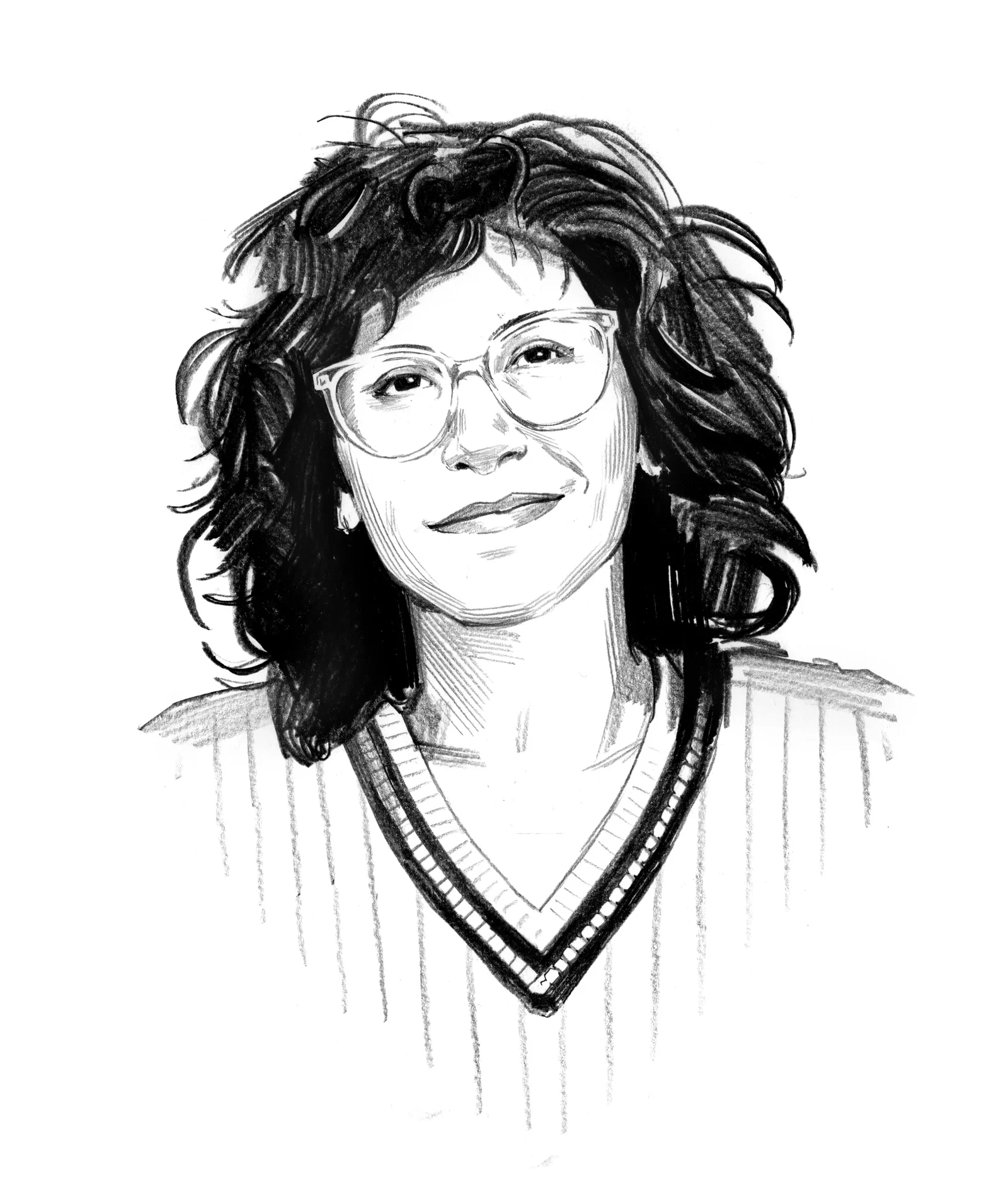
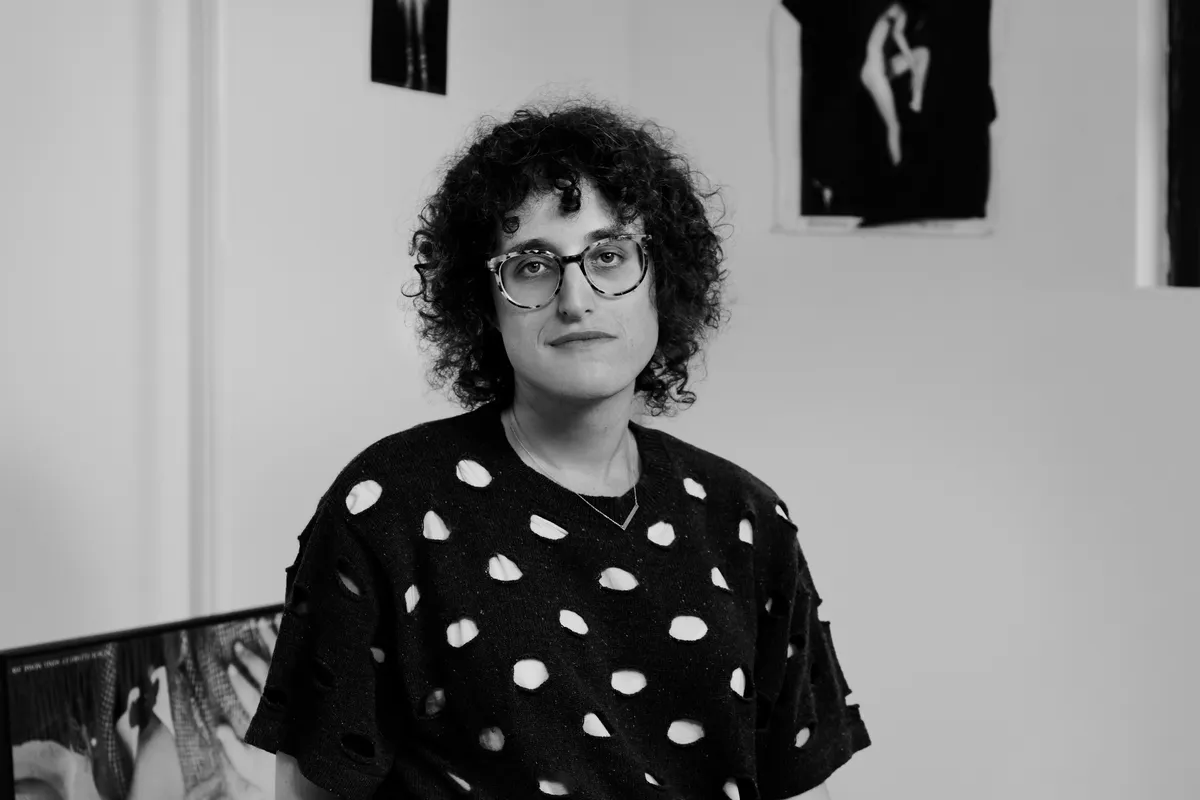
Schoenbrun had to correct me during one of our conversations — I’d referred to Camp Miasma as a bigger project than I Saw the TV Glow, their last feature, and they had to tell me that, actually, the budgets for both movies were the same. Camp Miasma does feel more expansive to me in terms of what it’s reaching for, which is something Schoenbrun credited to having worked with the same team over multiple movies now and having a crew around them who really knows how to make a lot out of a little. But I have to assume that part of that feeling is the result of Schoenbrun’s continued growth as a filmmaker and their sense of self-assuredness. They’re very pragmatic about a lot of things when it comes to getting stuff made, and that includes keeping things like potential budgets in mind when writing scripts. That’s also what makes their upcoming novel, Public Access Afterworld, so interesting in the context of their previous work — it’s like all their favorite themes and ideas turned loose on a grand scale.
I truly cannot wait to read it. They’ve had three films out in the last five years, they’re working on this trilogy, to say nothing of the growth and upheaval of their personal life. Did you get a sense of how Schoenbrun gets it all done?
The degree to which they’ve strategically compartmentalized their life feels like it’s key to how they’ve been able to operate in the industry so successfully — they’ll fly to L.A. to do five days of meetings, then go back to Chatham, where they live a life so removed from the business side of film that some of their friends may not actually be aware of what Schoenbrun does for a living. Or so they told me! But for all that, they’ve been incredibly productive; they’ve also had plenty of projects fall apart or take forever. They wrote, in what they described as an unhealthy manic burst, 1,600 pages of scripts for a Public Access Afterworld series that never came to be. It took three years from when they first asked Plan B, who held the rights to Black Hole, about doing an adaptation and when they actually won the pitch, a span of time that encompassed the entirety of their first big post-transition relationship. They keep a lot of irons in the fire, but they’ve also had to learn that when it comes to these projects, as they put it, “I can’t be in love with it until it’s safe to be in love with it.”
I don’t want to say too much about Miasma because people should really go see it, but it’s curious that it’s out the same weekend as One Night Only. Both movies are kind of like, “Everyone is horny, but no one is fucking.”
Yes, though it’s funny that Miasma is about a character who’s too in her head to enjoy sex and One Night Only is about characters who seem like they’d enjoy sex if they could have it but keep being all, No, I need to wait for an emotional connection. I also thought of that scene in The Invite in which — and I’ll try to step gingerly around spoilers here — one character is asked what she’d like from an impending sexual experience and can’t actually come up with an answer. There’s definitely some erotic constipation in the air. Sorry for that disgusting combination of worlds–slash–you’re welcome and no shame to anyone who enjoyed them!