This issue: An industry survey about the Booker and National Book Award nominees, an Annie Dillard memory, and a great September novel.
|
|
|
|
|
Senior newsletter editor, New York |
|
|
|
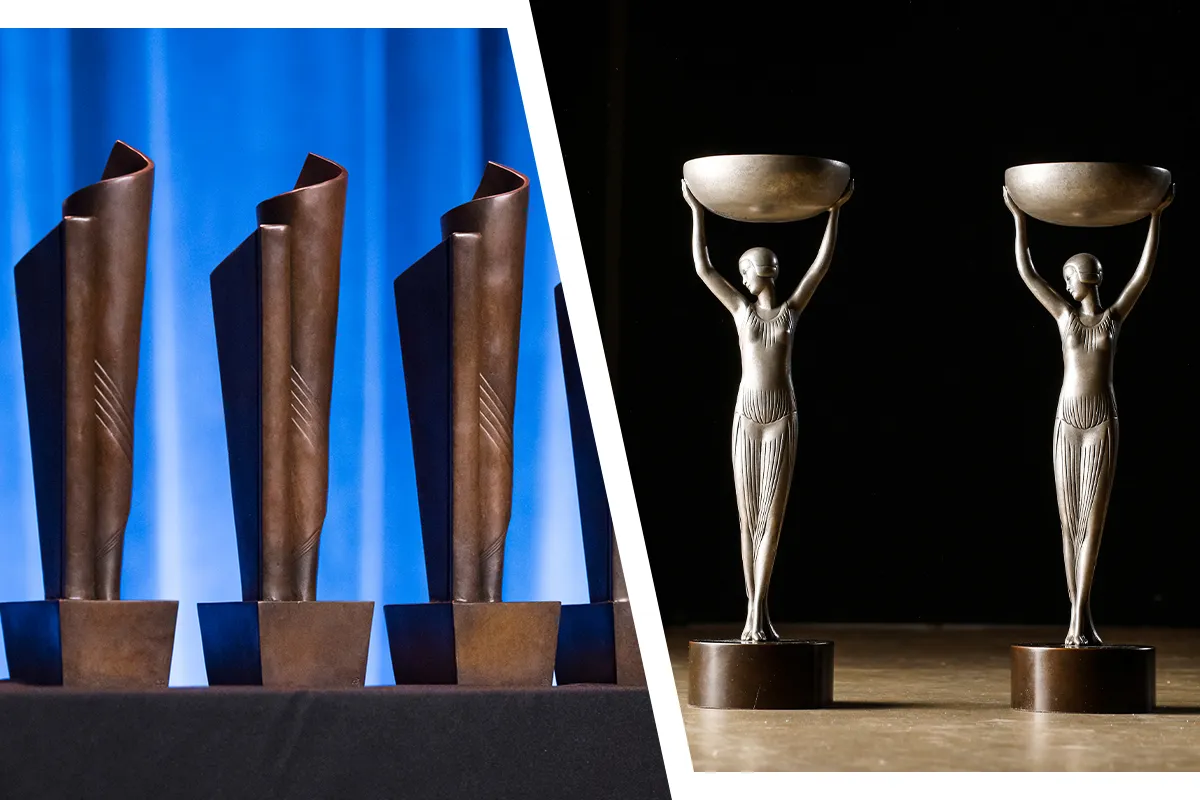
Eyes on the Prizes We asked some industry contacts to unpack the nominations.
|
Photo-Illustration: New York Magazine; Photos: Nathalie Schueller, David Parry for the Booker Prize Foundation |
|
|
|
-
“When I was a girl, I told my mother how desperately I yearned to one day watch the Booker Prize Shortlist YouTube livestream with paywalled, subscriber-only live comments on my iPhone. Although our colleagues on the other side of the pond seem to have a wider scope for independent literature than we do in the U.S., there are some glaring shared characteristics among the stories nominated this year … anyway … I regret to see Missouri Williams and some of the other risk-takers left off the shortlist. Marlon James is an extraordinary writer and I hope he will win (again).” —Naomi Falk, publisher of Crop Circle Press and founding member of Enigma Editions
- “I could have predicted the Booker shortlist a long time ago. It’s still exciting, but they cut a lot of cooler, weirder stuff. Marlon James feels like the overwhelming favorite. On the whole, I’m impressed by the range of books on the longlist.
As for the NBA nominations in fiction, I’m totally energized by them. This fall is probably the most jam-packed season of marquee authors that I’ve seen in a long time — James, Min Jin Lee, Kingsolver, Cline, Erdrich — but only a few were nominated while the rest were thrillingly unpredictable. It’s the type of selection I would associate with the National Book Critics Circle Awards or the PEN Awards. I don’t know what the shortlist will hold, but this is the least traditional fiction longlist in a very long time. There are two trans authors, and the last time we had a trans author on the NBA fiction list was the first time.” —a Big Five editor
-
“I love a fiction list that no one saw coming. I follow all of these Bookstagrammers and they all made their National Book Awards predictions and none of them even got close. Marlon James is really the only one who was expected to make the longlist for fiction and then actually did. To me, that just means that there are many good books that I, or we, haven’t gotten around to yet. When the nominee list is obscure, that means maybe a few more books will get some much deserved attention.” —Maris Kreizman, author and critic
-
“Sadly, I have not read a single longlisted book in any NBA category. I was surprised, because I do try to keep up with books that are present in the discourse: I read Lost Lambs, I read Strangers, I read Yesteryear, I read Life of M. I read Transcription. I feel like … the National Books Awards have got to build more of a bridge to the average upper-middle-class reader's tastes. They’ve got to occasionally nominate a book that we’ve actually heard of. Otherwise it’s so boring. Imagine if every year the Oscars were announced and you’d never even heard of any of the movies. Awards are meant to be a guide to a sophisticated reader who is trying to keep up with the best that our culture is producing. But this reader has a limited amount of time and probably only reads ten or 15 books a year. They’re not going to read a book solely because it’s been nominated for an award. To really be effective, an award nomination needs to be more of a nudge: Oh, this is a book I've heard about before, and now that it’s gotten this nomination, maybe I'll pick it up.
I also haven’t read any of the books that were on the Booker longlist, but I’ve at least heard of more of them: Helen of Nowhere, The Vivisectors, Switzy, and The Palm House were all extensively discussed in my online circles. So I do feel like they’re threading the needle a bit better.” —Naomi Kanakia, author and writer of the Substack Woman of Letters
- “I find it interesting that in the NBA translation category, the books written in languages that aren’t as ‘popular’ were published by indies rather than the big five, but this doesn’t feel like anything new … ! The big-five finalists are translations from Spanish and Norwegian (the latter being Knausgaard, no intro necessary), whereas the indie presses range from Chinese to Russian, Indonesian and Arabic.” —A literary agent
-
“To me, it’s a shame that the entertaining-in-a-deep-way Switzy didn’t make either the NBA longlist or the Booker shortlist. My money is on The Disappearers, but Louise Erdrich should perhaps win the Nobel this year, so why not a National Book Award? I thought Python’s Kiss was excellent. It’s hard to deny the awards have made a shift toward books about identity and Big Topics, but so many of the arguments about this (Bret Stephens, please stop) hinge on the idea of a halcyon past that didn’t really exist, one where judges had good taste unmediated by their time. Uh-huh. And I think its significance is a bit overblown anyway. I mean, last year saw North Sun, by Ethan Rutherford, on the NBA shortlist. (I liked it.) Though does a Moby-Dick–ish seafaring novel count as straight white male D.E.I.? —Emma Alpern, writer at New York
-
“I will refrain from weighing in on the state of American fiction, besides to say that I am happy that book reviews still matter in some form and I hope that the major newspaper which crowned one of these novels with an epochal accolade will invest more into actual criticism and move away from … book coverage as lifestyle coverage. That aside, I am really rooting for Rozina Ali, who is a brilliant journalist. Seasons of Fury, an NBA nonfiction nominee, is exactly the sort of nonfiction work that deserves its plaudits.
I often think the poetry category is fun because it allows for the most invention or surprise, but would it kill the NBAs to pay attention to the small presses where the most exciting poetry is happening? My favorite collection this year was The Fry, by Jacqueline Waters, which this newsletter’s readers should buy immediately.” —Kevin Lozano, writer and editorial producer for Bloomberg’s Odd Lots
-
“The NBAs are always a pay-for-play crapshoot with some hits and misses, the latter resulting in a cadre of disgruntled authors, agents, and publishers. The process is completely subjective, with winners determined by four rotational judges and one category chair — all well intentioned and generous beyond measure with their time, but just because you're a writer or bookseller doesn't make you a literary critic. And, of course, it always gets political, but no one will admit that. There are considerations beyond the merits of the respective books (has a writer been overlooked in the past, is the list diverse enough, do we have the right mix of big and small publishers, etc.)”. —Paul Bogaards, publicist
- “I can say that on the NBA nonfiction list, Wendy S. Walter’s A Dead White is a book I loved when it was on submission and that I can’t wait to read when it’s out — I hope it at least makes the shortlist. There should be more books like this one winning big prizes; the rest of the list feels appropriate but not adventuresome.
Everyone said the fiction list would be competitive, and it certainly is, and, obviously, Marlon James’s novel will be tough to beat. I was glad to see Passengers and The Renovation on the list and hope the shortlist isn’t just heavy hitters. I suppose Kin, by Tayari Jones, is a bit of a snub, though I didn’t read it. And Switzy, which my wife has read twice and absolutely loves, could’ve been on there. I’ll be reading that this fall. Totally overlooked this year was Afternoon Hours of a Hermit, by Patrick Cottrell, which is sad and brilliant and would’ve been longlisted in a different year. Also too bad for Gwendoline Riley (not eligible) and The Palm House, which I thought was terrific. And it didn’t get the shortlist for the Booker, either? Not fair! I’m already much more excited for the NBAs.
On the translated list, I’m rooting for Centroeuropa — what a brilliant book, and the win for Bellevue Press would be well-deserved. It does seem that The Witch, by Marie NDiaye, translated by Jordan Stump, which is on the International Booker list, should be on this list, too.” —Ben Schrank, publisher, Astra House and COO of Astra Publishing House
-
“I only care about literary prizes as an opportunity to gamble on their outcomes. I'm not aware of anyone offering odds on the NBAs, but I’m in London so I’ll probably put a tenner each on Emma Cline and Gwendoline Riley before the Booker shortlist is announced.” —Christian Lorentzen, book critic
Editor’s note: In a follow-up text after the Booker shortlist was announced, Lorentzen said, “Ladbrokes and William Hill weren’t giving odds so I didn’t bet.”
|
|
|
|
Subscribe now to get unlimited access to everything New York, including subscriber-only newsletters, exclusive perks, the New York app, and more. |
|
|
|
Annie Dillard Wrote Great Emails
|
|
|
|
I worked with Annie Dillard when I was an assistant at Ecco, the HarperCollins imprint that published her essay collection The Abundance in 2016. When we began the project, I was starstruck as a reader and fan, prepared to sound as professional and adult as possible in my dealings with the Annie Dillard. But Annie’s tone over email and on the phone was immediately friendly, chatty, and conspiratorial. She wanted to know what I thought, what I was reading, what did I do for fun, who did I want to be? It was a transformative experience, at an essential time, to be treated as an adult by someone like her. “You should have a huge salary and work from various Club Meds,” she once told me. I moved on the next year, but we kept writing for a bit after that. I saved many of her witty emails. The last time I asked her if she was reading anything good, she replied, “Anything seems good that has aged for 100 or more years and isn’t about New York.” —Bridget Read
|
|
|
|
A September Release Worth Adding to Your Home Stack
|
|
|
|
Exit Party, by Emily St. John Mandel
She’s done it again. In her latest novel, Mandel imagines a different dystopian world, this time marked by what remains, and changes, after the collapse of the United States. The book begins with ex-con Ari Walker adjusting to her first spring after nearly 20 years in prison. The world has changed as she joins her roommate Gloria at a party celebrating the recently lifted Los Angeles curfew. Things are normal until a copy of herself mysteriously appears and disappears and their friend Kareem vanishes altogether. Thus begins a journey exploring the resilience it takes to return to oneself when society is crumbling around you. Fans of Mandel will appreciate the sprinkle of characters from The Singer’s Gun and The Glass Hotel (the Mandelverse, if you will), but Exit Party is also the perfect accumulation of all the novels that came before; she has a haunting way of weaving objects and people across the most painstaking timelines, all while making the mundane everlastingly meaningful. Buy. —Ashley Wolfgang
|
|
|
|
If you're enjoying Book Gossip, forward it to a friend. Send tips, gossip, or feedback to [email protected]. |
|
|
|
https://link.nymag.com/oc/60bf85689b7a136e4b473b24scfgw.1ja/507c36d1
|
|
|
|
|