|
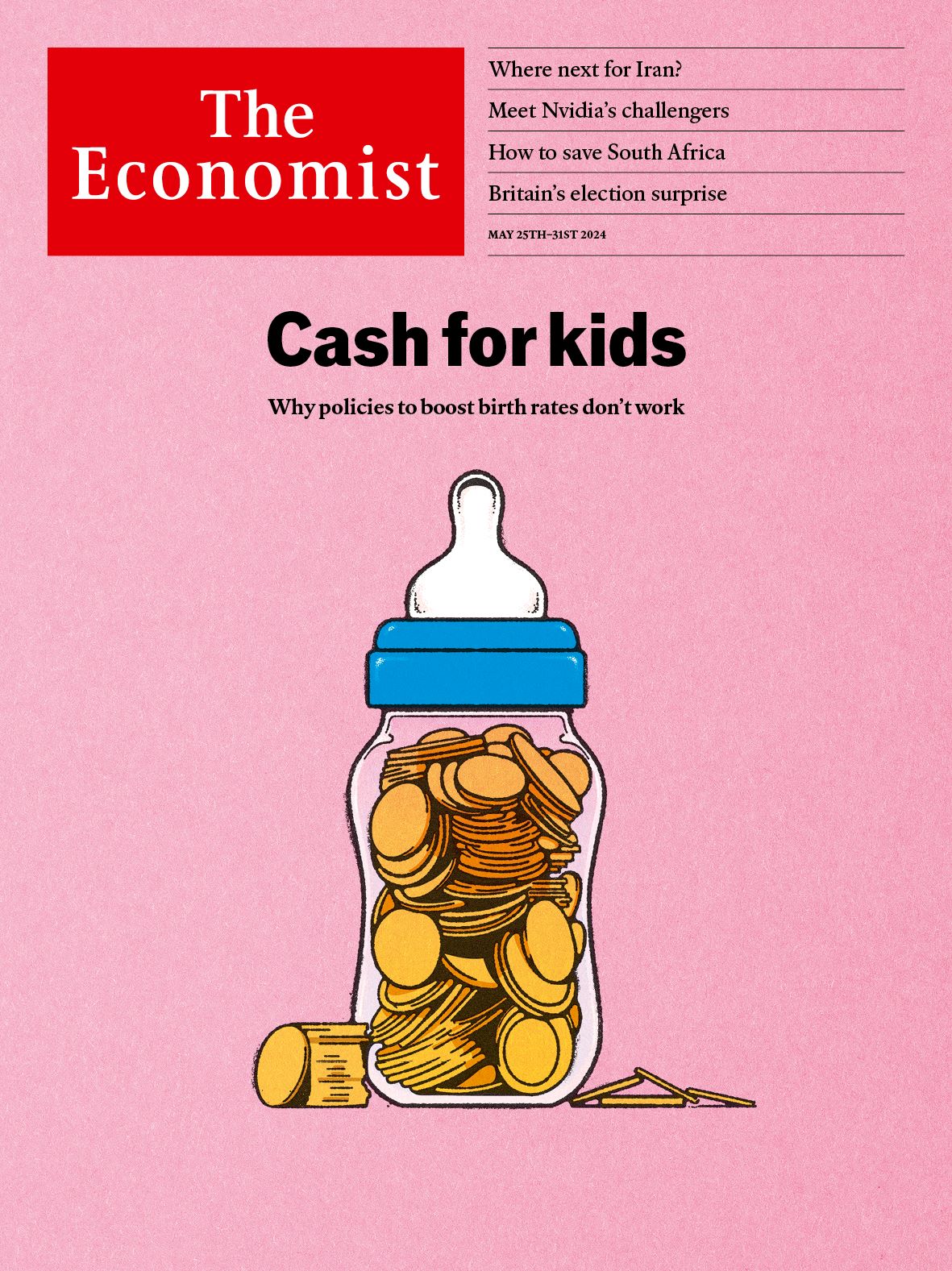
As birth rates plunge across the world, politicians are pouring money into policies that encourage women to have more babies. One common assumption is that falling fertility rates stem from professional women putting off having children. This is wrong: most of the decline is among younger, poorer women. In any case, governments would need to spend huge sums to bring many more births—more, certainly, than they could ever hope to recoup in future taxes. What, then, can policymakers do? As
our cover leader
in most of the world explains, many economies will have to adapt to the sweeping social changes that are driving down fertility rates. Welfare states need rethinking; older people will have to work later in life. One thing is for sure: it is a mistake for countries to try to spend their way to more births.
Our cover package in Africa and the Middle East this week explains why the election in South Africa on May 29th is the country’s most important in three decades. In 1994, when Nelson Mandela was elected as South Africa’s first black president, the mood was joyous. Yet
as our Briefing this week explains,
the question now is whether South Africa can reverse its perilous decline. After a creditable first decade, Mandela’s African National Congress has presided over economic stagnation, rampant crime, failing public services and epic corruption. Despite all the difficulties, we argue, South Africa
still has a fighting chance.
If you subscribe to
The Economist,
you can stay in the loop with all our coverage of Africa by
signing up to our new weekly newsletter,
Analysing Africa, which launches on May 28th.
|