|
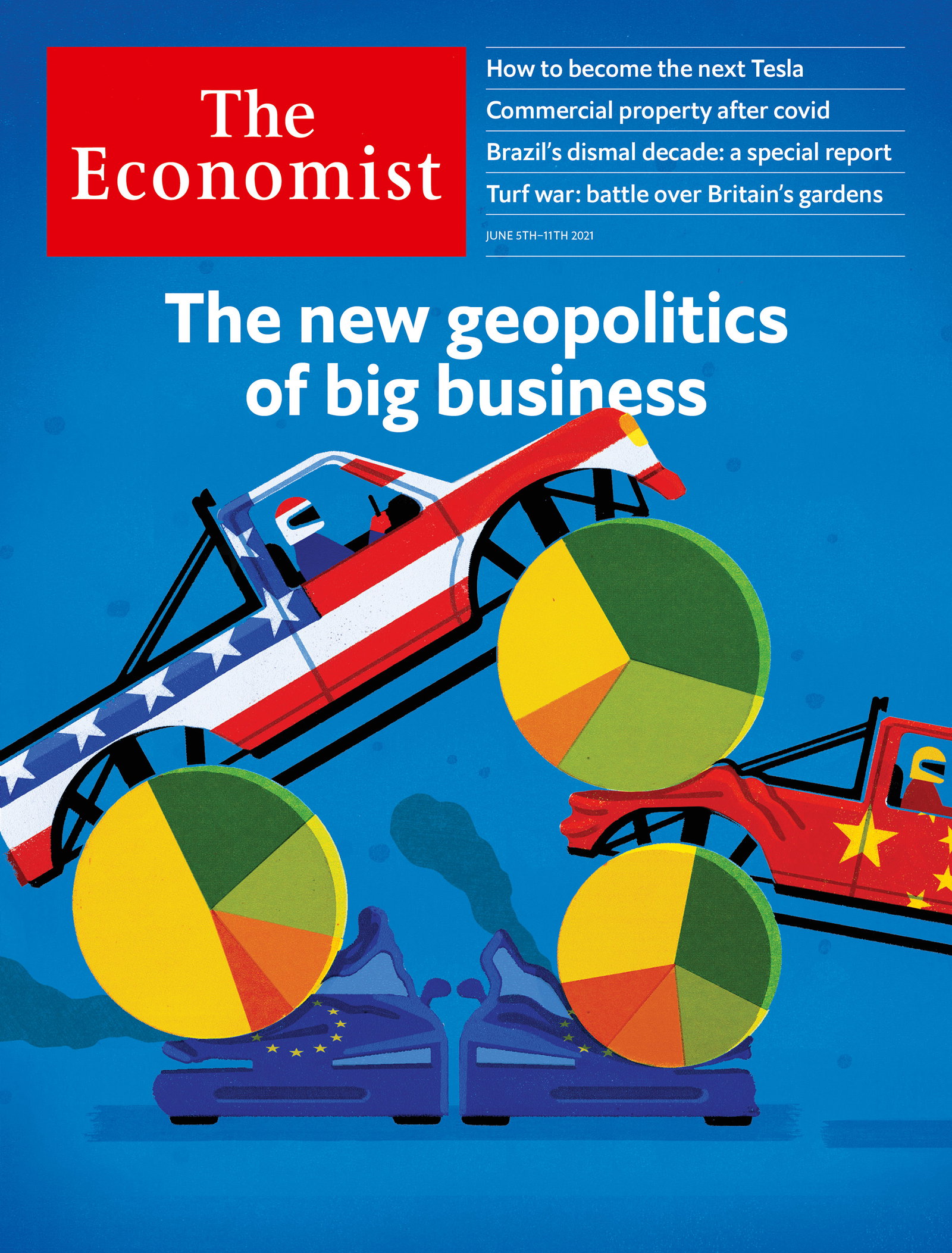
We have two covers this week. In most of our editions
we focus on big business.
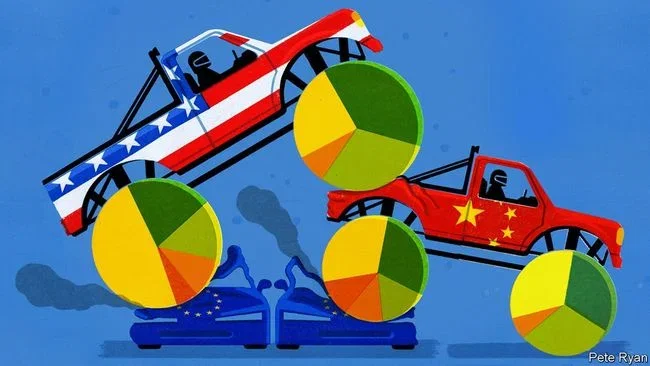
Just two decades ago, America was reeling from the dotcom crash, China was struggling with its Maoist past and Europe, with its new currency and a burgeoning single market, seemed on the threshold of something spectacular. Today America and, increasingly, China are ascendant, accounting for 76 of the world’s 100 most valuable firms. Europe’s tally has fallen from 41 in 2000 to 15. Of the 19 firms created in the past 25 years that are now worth over $100bn, nine are in America and eight in China. Europe has none. In themselves, big companies are no better than small ones. Even so, the right sort of giant company is a sign of a healthy business ecology in which big, efficient firms are created and constantly swept away by competition. It is the secret to raising
long-run living standards. The new geopolitics of business raises two important questions: why has it come about? And can it last?
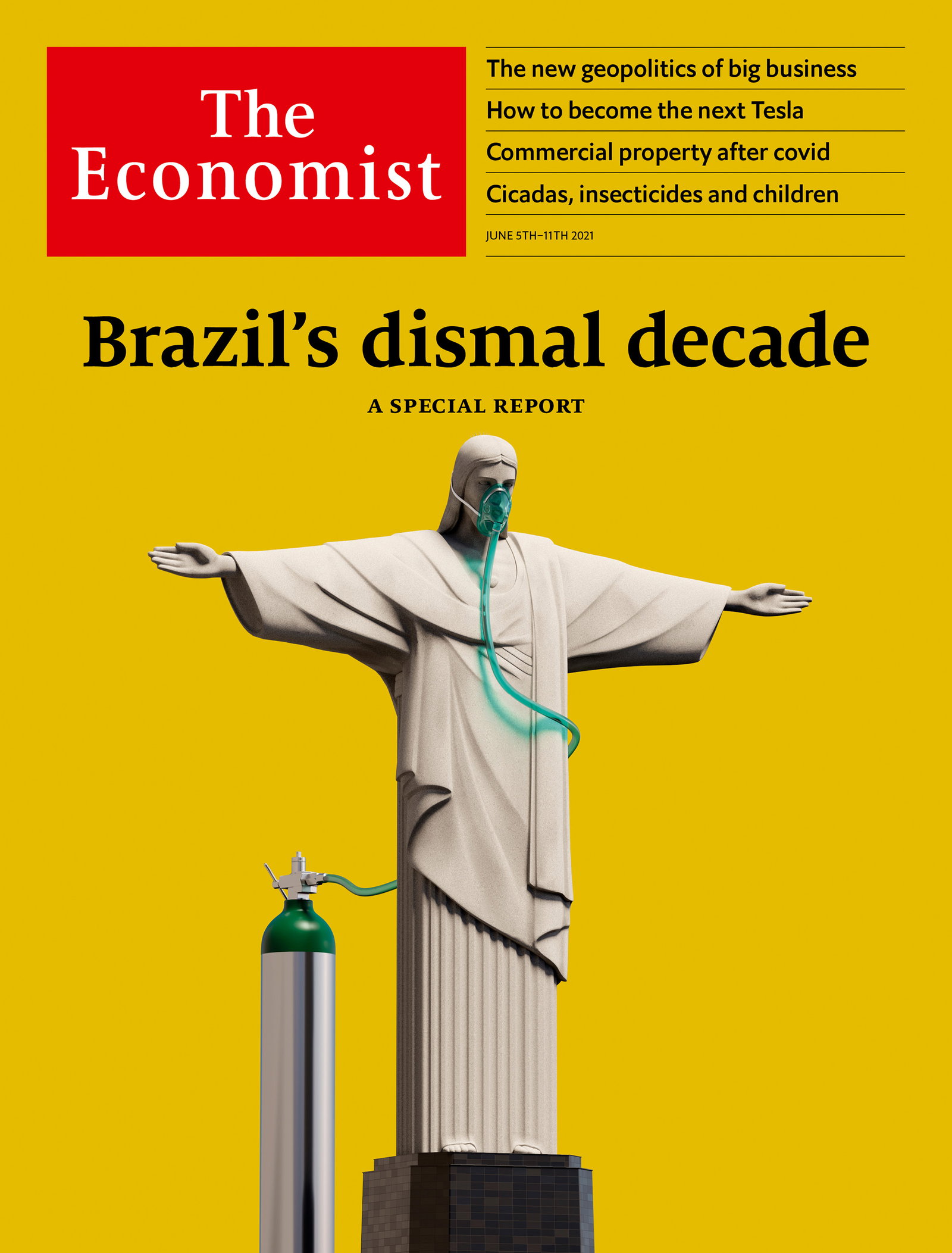
In our Latin American edition we report on
what has gone wrong in Brazil.
The country’s hospitals are full, favelas echo with gunfire and a record 14.7% of workers are unemployed. Incredibly, Brazil’s economy is smaller now than it was in 2011—and it will take a lot of strong quarters like the one reported on June 1st to repair its reputation. Brazil’s death toll from covid-19 is one of the worst in the world. The president, Jair Bolsonaro, jokes that vaccines might turn people into crocodiles. Unfortunately, the rot goes much deeper than a single man. During the commodities boom, the left-wing Workers’ Party, in office in 2003-16, gave in to short-termism and put off liberal economic reforms. In their efforts to shield themselves from the fallout of Lava Jato, a huge anti-corruption probe, politicians have resisted
reforms that would curb graft. And Brazil’s political system is a millstone that protects incumbents from voters and the courts. Brazilian democracy is more fragile than at any time since the end of the dictatorship. The country desperately needs reform.
|