|
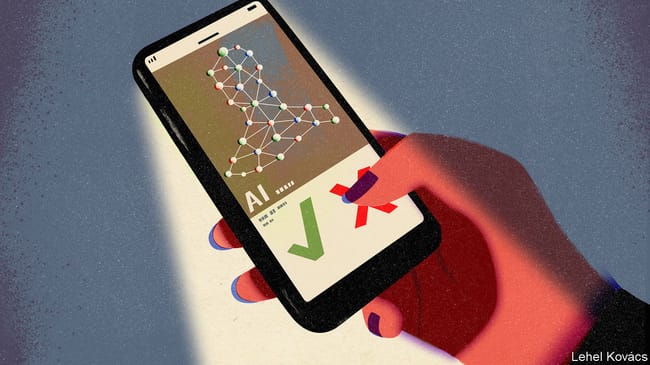
Turn your somnolent Sunday thoughts to the humble tractor. No one quite knows who invented it or when, but all agree that it took a surprisingly long time for such a productivity-enhancing device to make a mark. As late as the 1950s, fewer than half of American farms reported having the things. Looking at the sluggish rate at which firms adopt new technologies,
my colleagues suspect
that something similar may one day be said of artificial intelligence. Companies that grasp the opportunities of AI are likely to reap huge benefits; others (and their employees) may be left in the dust.
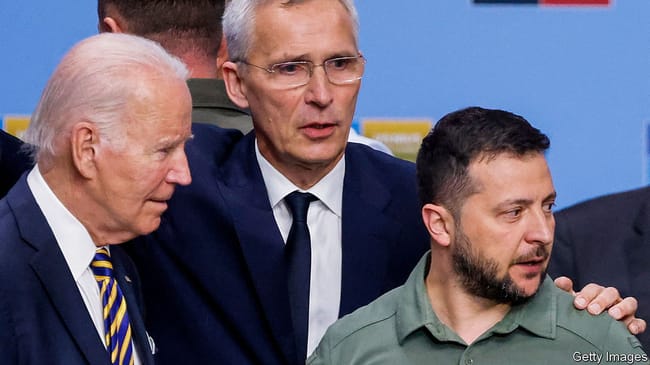
Diplomatic dust-ups threatened to upend the NATO gathering in Vilnius last week. But in the end
President Volodymyr Zelensky
left rather happier than when he arrived. Good,
we argue:
Vladimir Putin’s war has left NATO stronger (and, with Sweden set to join, bigger); Ukraine’s path to join the alliance has been eased; and, crucially, Western pledges to support Ukraine’s defence look set to endure (see our
new report
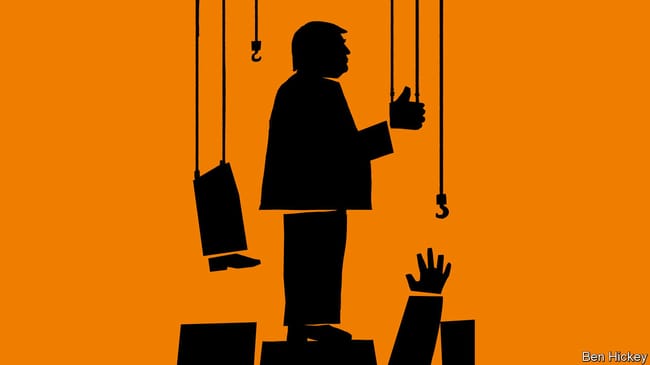
from Zaporizhia, a city close to the frontline—as well as to Europe’s largest nuclear power plant). This matters, not least to help protect against the global threat that a
second Trump term
would present.
China’s second-quarter GDP results, due tomorrow, will offer an important clue to the pace of the post-covid recovery of the world’s second-biggest economy.
Worrying signs
abound, from a
wobbly property market
to rocketing
youth unemployment
and a flirtation with deflation. Look out for our coverage.
Those seeking refuge from such gloom may be drawn to the
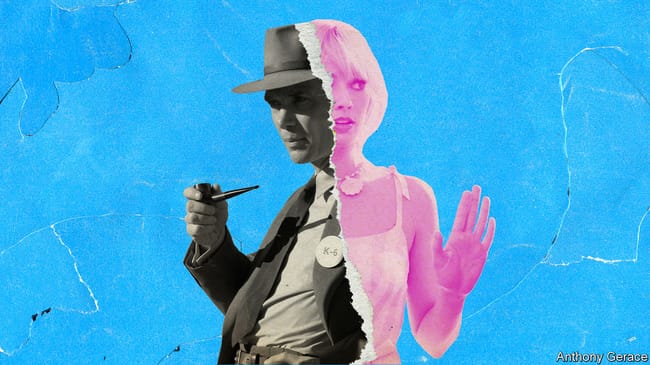
sparkly world of Barbie.
Those seeking more of it may instead flock to Christopher Nolan’s take on Robert Oppenheimer. Whether you incline to fantastic life in plastic, or to death, the destroyer of worlds, we hope you will enjoy
our view
on what the respective fortunes of the two films, to be released this week, will reveal about our times.
Elsewhere, we will be keeping an eye on Thailand, where a
young reformist’s efforts
to take office as prime minister look set to be stymied by the military establishment; Britain, where a
young prime minister’s
efforts to retain office look set to be damaged by voters in three by-elections; and Tesla, whose
slightly less young boss’s
efforts to ruin his reputation by running Twitter into the ground look set to be balanced by a strong set of results from his EV firm. (We will also be wondering what has happened to Qin Gang, China’s foreign minister, who has not been seen in public since June.)
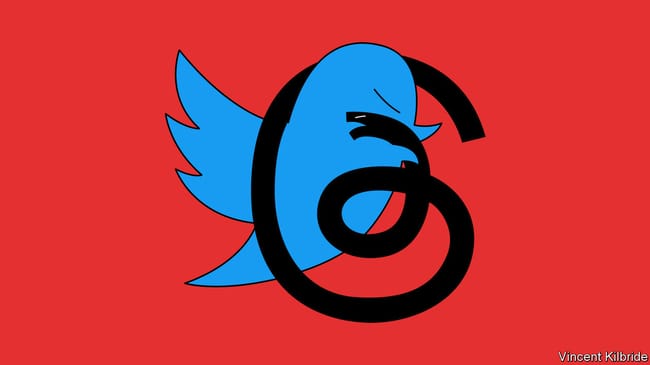
If you’re anything like me, your early forays into Threads, the
fast-growing Twitter-style app from Meta,
will have been met largely with branded jokes and platitudes from Instagram celebrities.
Our own account,
growing quickly, will help liberate you from the clutches of corporate memes and bronzed influencers.
On to your feedback. Joe Roach in Tasmania threatens to cancel his subscription the moment we allow AI to “directly generate content.” I’m happy to reassure you, Joe, that everything under the Economist brand (including this newsletter) will remain resolutely the work of flesh-and-blood humans. And Robert Townsend in British Columbia, alarmed by the American decision to
dispatch cluster munitions
to Ukraine, says the conflict looks “more and more like a war of Russia v USA—which happens to be occurring in Ukraine”. I was in Kyiv a few months ago, Robert, and I can report that that is certainly not how it seems to Ukrainians.
Which industries do you think will prove most impervious to disruption from AI models? We welcome your answers to this, and thoughts on anything else, to [email protected]. We’ll publish some highlights in next Sunday’s edition.
|








 Email
Email 


