‘For that fare, do I get to keep the taxi?’ |
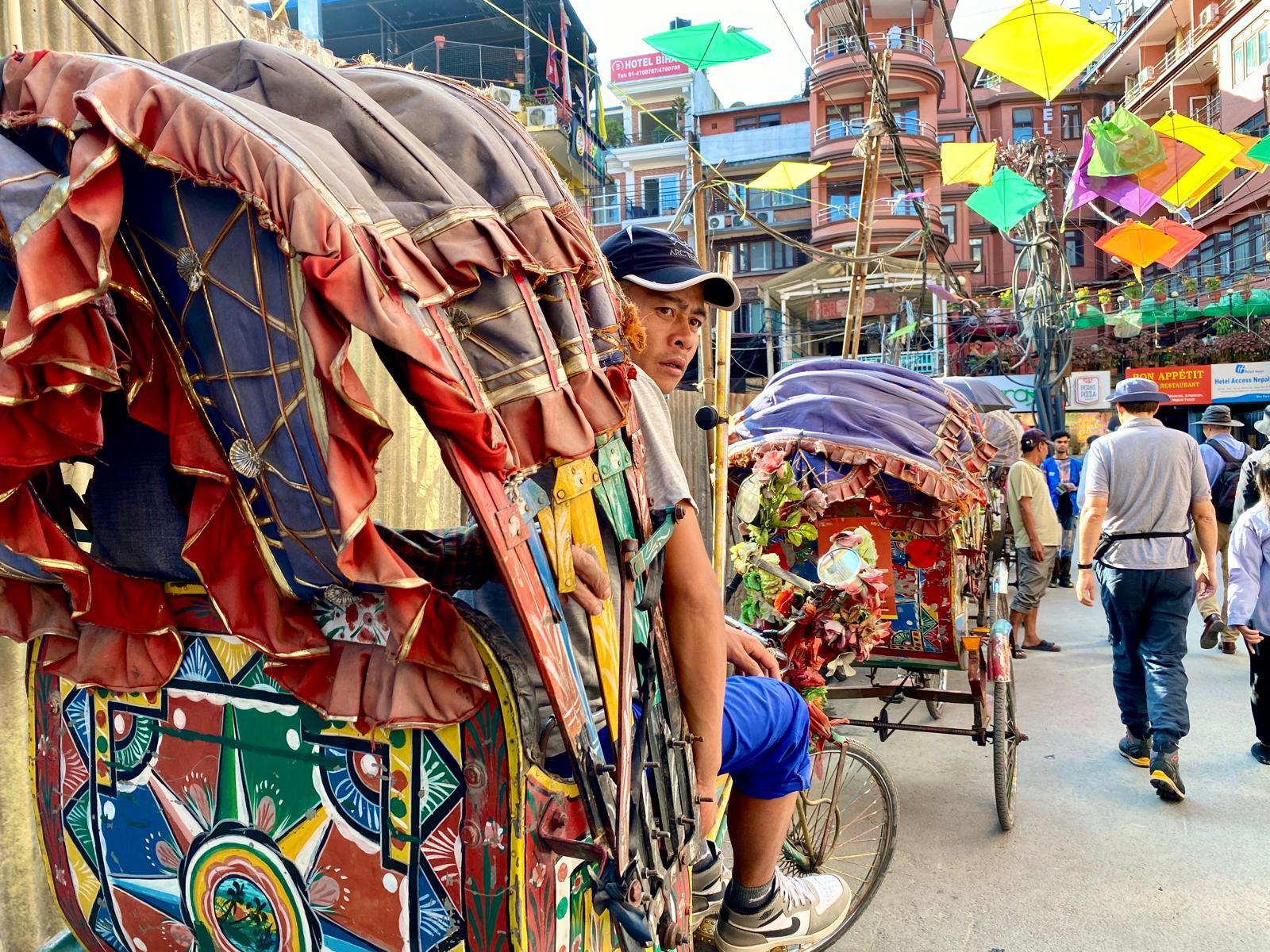
How much? Taxis comprise an important element of the transport universe. They cover the first or final miles of many trips. On-demand personal transport in a three-wheeled rickshaw or tuk-tuk is one of the joys of travel in Asia. Sometimes, though, you need a taxi for a long-distance journey. To reach my flight from Tbilisi to Luton last week, the only way to get from the Armenian-Georgian border to the airport was by taxi. The driver, who also chaperoned me through the frontier formalities, wanted only €60 (£52) for the 90-minute journey in a vehicle almost as old as he was. In contrast, at Bergerac airport in southwest France last year all my options ran out and the last taxi driver on the rank outside the terminal knew it. He could name his price for an hour’s run parallel to the Dordogne river in a fresh Mercedes. We, or rather he, settled on €200 (£173) to reach Castelnaud-la-Chapelle.
Small change compared with the figure quoted by my colleague, senior travel writer Natalie Wilson, as revealed on Tuesday’s travel podcast. On her first visit to Tuscany, Natalie needed to get from a nature reserve named Oasi Dynamo, north of Florence, to Panicale, southeast of Siena. How much, she wondered, for a taxi? “I thought, maybe naively that a two-hour trip wouldn't cost me the earth.” The figure: €1,000 (£870). “It was a bit too rural to hitchhike, unfortunately.” So Natalie spent a relatively modest €50 for a taxi down to Florence and navigated her way through the chaos of Santa Maria Novella railway station for a Trenitalia trip. “The journey was beautiful, and it made me so confused on why our trains are so expensive,” she says.
Conversely, I am constantly confused by taxi tariffs in Italy. Most of the fares are commensurate with the journey – but sometimes a trip of a few minutes can turn out to cost €30. And yes, that is according to the meter, spinning faster than than the Cern synchrocyclotron. Italy featured frequently among the responses to Natalie’s tale. Lee Marshall paid €200 for the 40-mile trip from Catania airport to Taormina after a British Airways flight delay meant he missed the bus. “Tried to claim back from the airline to no avail,” Lee reports.
James Boddie sent a screenshot of a €114 quote from Uber to take him just under a mile from Milan Malpensa airport to the Tribe hotel. “Caveats: hotel is other side of motorway and no pedestrian access from terminals. Time was 12.30am. Uber Black was the only option.” He settled for the €20 quoted by a local taxi. Marc Mills finesses the Italian connections with his experience on the half-hour trip at 4am from a hotel near Malpensa to the central station: a €285 quote from Uber, which he declined – instead paying a local taxi firm a non-negotiable €130. The moral: avoid the ends of the day if you can, and avail of Italy’s mostly excellent public transport.
|
|
|
|
Could rail Wi-Fi finally prove useful? |
|
|
|
Thousands delayed as Glasgow airport runway shuts |
|
|
|
Nonstop passengers to Sydney must wait a while longer |
|
|
|
Stateside stayaways as US tourism slumps |
|
|
|
Tourists expected to splash out on water in Italy |
|
|
|
Malaysia remains a bit of a mystery for many of us. But the country is having a well-deserved moment in the sun. |
|
|
|
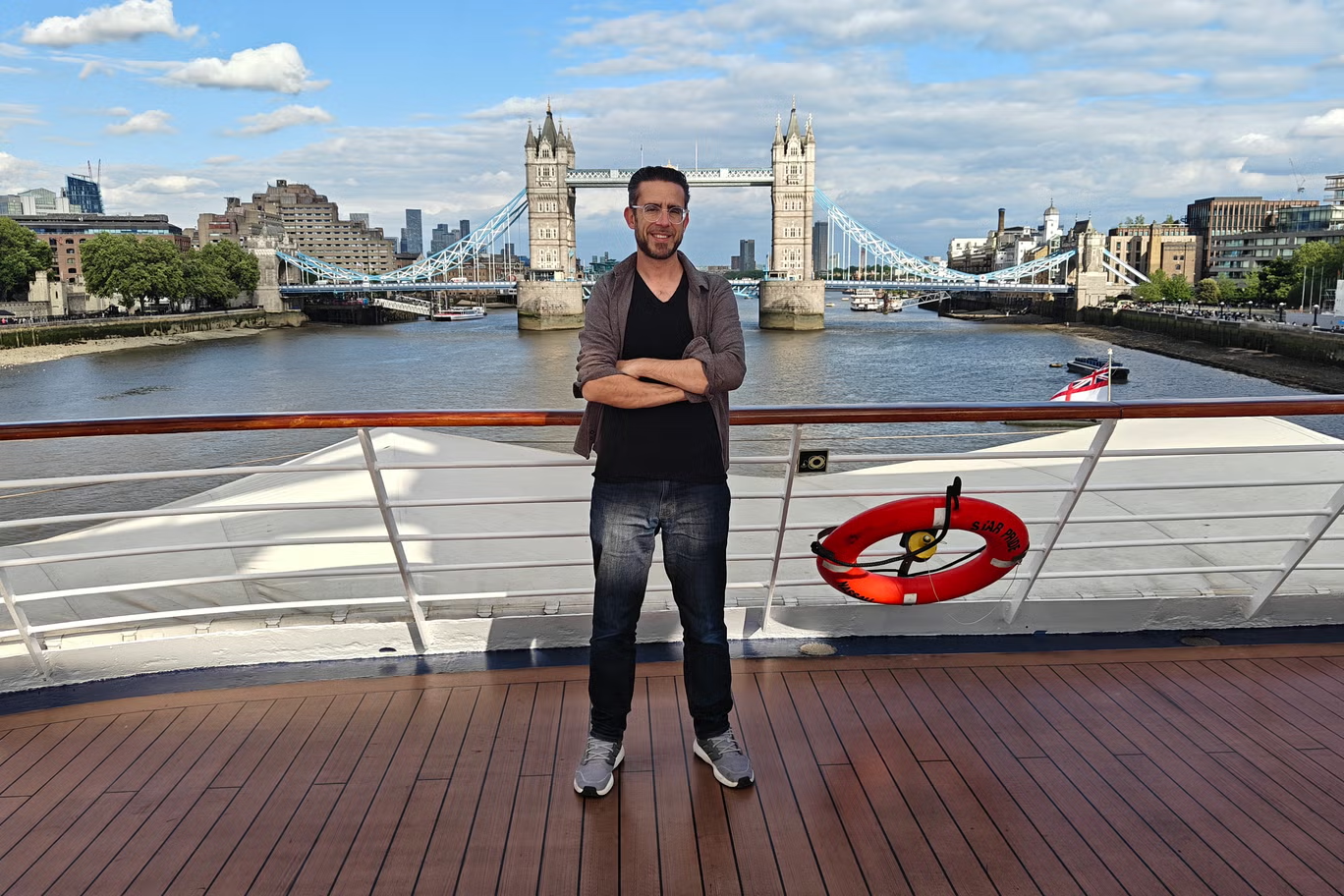
Cruise editor Marc Shoffman was one of the first guests to sail with Windstar in London. |
|
|
|
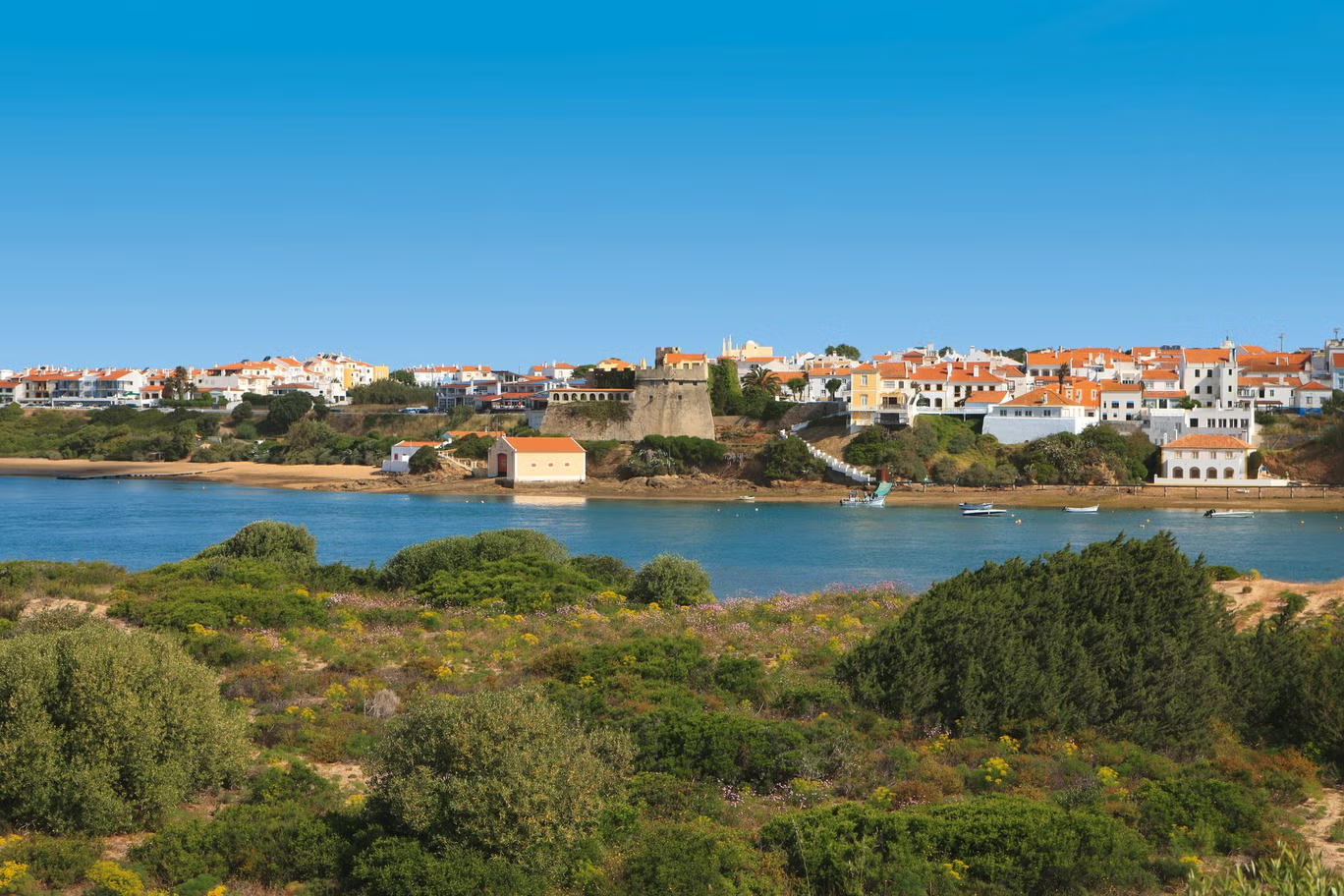
Rachel Ifans takes on a route from Porto Covo to Vila do Bispo in hopes of unlocking a love of point-to-point hiking. |
|
|
Spending more than three decades as travel correspondent for The Independent has been the privilege and pleasure of my life. Today, I must let you know, is my final day.
Since I started at The Independent 32 years (and 13 days) ago, almost every aspect of travel has improved. You are far safer travelling by air or rail today than in 1994. You can go to more places for less cash than ever before. Technology works wonders to smooth travel friction. But the two aspects that remain troubling are departures and arrivals. Aviation security is far more intrusive than before the horror of 9/11 and the threatened liquid bomb plot. And even once you are through the airport checkpoint, what awaits at passport control? Instead of being filed in the library of travel memories, along with paper plane tickets and payphones, border bureaucracy seems to be getting trickier by the day.
We did ask to become subject to the EU entry-exit system and, soon, the Etias “euro-visa”. But we were not expecting the Italian inquisition – by which I mean being asked repeatedly for fingerprints and facial biometrics on entry and exit, even if this unnecessary duplication means some people miss their planes. Ferry passengers do not have the same fears. The thousands of France-bound holidaymakers I saw queuing at Dover last weekend may have had to stew in their cars for hours (until the EES rigmarole was lifted to ease the gridlock), but they sailed away on the next available ferry. At 1pm today I will host an Ask Me Anything on the tangle of EU red tape that Brussels has presented to British travellers, as requested.
Airline passenger rights have improved markedly over the decades, at least in theory. But as Susan and David Hesketh found when they were abandoned by Etihad Airways at Abu Dhabi airport after a delayed flight from Manchester, the rules are not always followed fastidiously. They lost their holiday and many thousands of pounds – as did Lorraine Hincks, whose trip to India was scuppered by the ludicrously complex visa procedures imposed by Delhi.
As I head for the exit, a final reminder that we are living in the best of times for travellers, served by the world’s best and safest airlines and holiday companies. So make the most of now. I know my brilliant colleagues at The Independent – most of whom weren’t even born when I started – will thrive, and keep you informed online, on screen and with more Travel Insider newsletters. Thanks to them for being so great to work with, but most of all to you for making the journey. This newsletter will be in the safe hands of global travel editor Annabel Grossman from Sunday. Please give her a warm welcome!
|
|
|
|
Do you travel by Uber/Bolt/Lyft or local taxis around the world? |
|
|
|
This week, I want to know how you get around while on holiday. Are you calling a car service on platforms from Uber to Lyft? Or do you hail a local cab and pay by the taximeter? Vote by selecting the buttons above. |
|
|
|
|
Last week, I wanted to know if you were making the most of the Bank Holiday by travelling. The results were mixed. While 40 per cent of you were keen to make the most of your extra day off, the rest of you obviously wanted to avoid the crowds and stay home. |
|
|
|
Train trouble from Heathrow to Caithness |
Flying in or out of Heathrow airport in the next week? From today until Sunday there are no Piccadilly line Underground trains. Next week, Tube drivers plan to strike on Tuesday and Thursday, 2 and 4 June. The walkout will also affect some journeys on adjacent days. The Elizabeth line is the best alternative, and will not be hit by the strike. But on Monday, Tuesday and Wednesday late evening services to and from the airport will be reduced.
Scotland’s beautiful Far North Line will close between Dingwall and Wick for most of June (7-29) for £6 million of infrastructure upgrades. Replacement coaches and minibuses will operate.
|
Airport closure – and re-opening |
Coventry airport in Warwickshire will close permanently on 11 June after 90 years. The site is to be used as a gigafactory to make batteries for electric cars. For a time Coventry was the hub for the budget airline Thomsonfly and also hosted Wizz Air flights to and from Poland. Birmingham airport is just 13 miles west, and East Midlands airport 33 miles north.
Santiago de Compostela airport in northwest Spain reopened yesterday after five weeks of closure for runway resurfacing. The first flight to land since April was United Airlines from New York Newark – a new route for the summer to the Galician airport. UK links have resumed: Vueling from Heathrow and Gatwick, plus Ryanair from London Stansted.
|
|
|
The latest heatwave in Europe has had us all scrambling for ways to keep cool. I’ve rounded up the best portable fans for surviving the heat, whether you’re dashing around the airport or feeling stuffy on the plane. And if you want to keep your hands free, we’ve also found the best neck fans, which are ideal for travelling. Finally, if your budget stretches a little further, Sony’s new wearable air conditioner comes highly recommended.
When it comes to handy travel accessories, there’s plenty to choose from. Floyd’s travel kit looks the part and has enough storage space for your knick-knacks, such as charging cables, sunglasses and souvenirs. Or, for a more budget-friendly alternative, this bestselling £10 travel organiser from Amazon will keep all your cables, adaptors and other essentials neatly stored away.
And, on the subject of organisation, you can’t go wrong with a handy set of packing cubes. Our reviewer loved this vacuum set from Jaspacks, which helps compress your clothes and maximise luggage space. Or, for a bargain option, this set of four packing cubes costs under £10.
Moving from organisation to entertainment, if you need something to keep you occupied on your travels, a tablet is always a good option. This Lenovo tablet is a great size to take on your adventures and is currently reduced to £100. Or, if you prefer entertainment the old-fashioned way, Lonely Planet’s ultimate travel crossword book should keep you busy for hours.
|
|
|
Plan your next adventure for less with 20% off selected 2027 holidays with Riviera Travel. Choose from a collection of unforgettable experiences – from river cruising to worldwide tours and solo holidays for independent travellers. Every detail is covered – leaving you free to enjoy the journey. Learn more.
|
|
|
|
|
Enjoy a summer holiday for less at a choice of top UK locations including Devon, Cornwall and beyond. |
|
|
|
Love a last minute bargain? Stay from £54 when you book within 7 days of your arrival date, with new locations updated every week. |
|
|
I often read about spare track capacity on High Speed 1 from London, and that it should be opened up to allow competition through the Channel Tunnel. Whilst the track may have room, the departure area at St Pancras seems to be at maximum capacity already. People often have to stand in a crush or sit on the floor. Where are they going to cram these extra passengers? |
|
|
I am responding to your question from a very crowded London St Pancras International. I am also one of those calling for competition as soon as possible for Eurostar. The sole cross-Channel train operator is a well-run company with excellent staff. But it has a monopoly on the rail connection between the two biggest cities in western Europe – and prices its seats accordingly. As someone who is prone to booking late, I almost always fly between London and Paris: the last-minute fare on Eurostar is over £200, with airlines generally less than half as much. So I cannot wait for Virgin Trains to take on the incumbent from 2030.
Now the practicalities. St Pancras underwent a magnificent renaissance to become the Eurostar hub, but it could have been better “future proofed”; digging an extra level down would have provided acres more space for a relatively small investment . To be fair, no one imagined the British would decide to impose the EU entry-exit system on themselves, with all the extra space-hungry bureaucracy the EES entails. I am optimistic, though, that in the next few years smarter technological solutions will be found to deal with the extra red tape – primarily app-based advance registration. The space saved will go some way to accommodate the extra 50 per cent of passengers that, I predict, are likely to turn up once competition is properly established.
An easier win, though, is to utilise the vast waste of space in the arrivals area. Passengers are routed through a labyrinth that takes them down a level from the platform and expels them into the retail avenue running through the heart of St Pancras. Far better to allow passengers to exit at platform level, as happens at Paris Gare du Nord, and convert the arrivals area into departures.
|
|
|
Time travel to 1970s Germany on screen |
A new film, Köln 75, tells a landmark story for musical history: how Keith Jarrett’s The Köln Concert – the best-selling solo piano album in history – came to be. The improvisational jazz performer was cajoled to Cologne and onto the stage by a teenage promoter named Vera Brandes. But the movie, which has its UK premiere next Friday, 5 June, also transports the audience back to 1970s Germany: a war-weary land where much was changing. Cologne, Berlin, autobahns. This is proper time travel. Listen to the director, Ido Fluk, on The Independent’s daily travel podcast.
|
|
|
Latest lifestyle headlines from Bulletin: |
|
|
Join the conversation and follow us |
|
|
Please do not reply directly to this email
You are currently registered to receive The Independent's Travel newsletter.
To unsubscribe from The Independent's Travel newsletter, or to manage your email preferences please click here.
This e-mail was sent by Independent Digital News and Media Ltd, 14-18 Finsbury Square, London EC2A 1AH. Registered in England and Wales with company number 07320345
Read our privacy policy and cookie policy
|
|
|
|