|
|
|
|
Seven professional development lessons inspired by Napoleon Hill’s success principles.
|
Professional Development
The Career Advantage Nobody Teaches at Work
Most professionals focus on skills. High performers also develop the mindset, clarity, confidence, and purpose that turn skills into long-term success.
|
|
Technical skill matters. Experience matters. Education matters. But many professionals eventually discover that career growth is shaped by something deeper: how clearly they think, how confidently they act, who they surround themselves with, and whether their ambition is connected to purpose.
Inspired by Napoleon Hill’s success principles, here are seven professional development lessons that can help working professionals grow with more intention.
|
|
Lesson 1
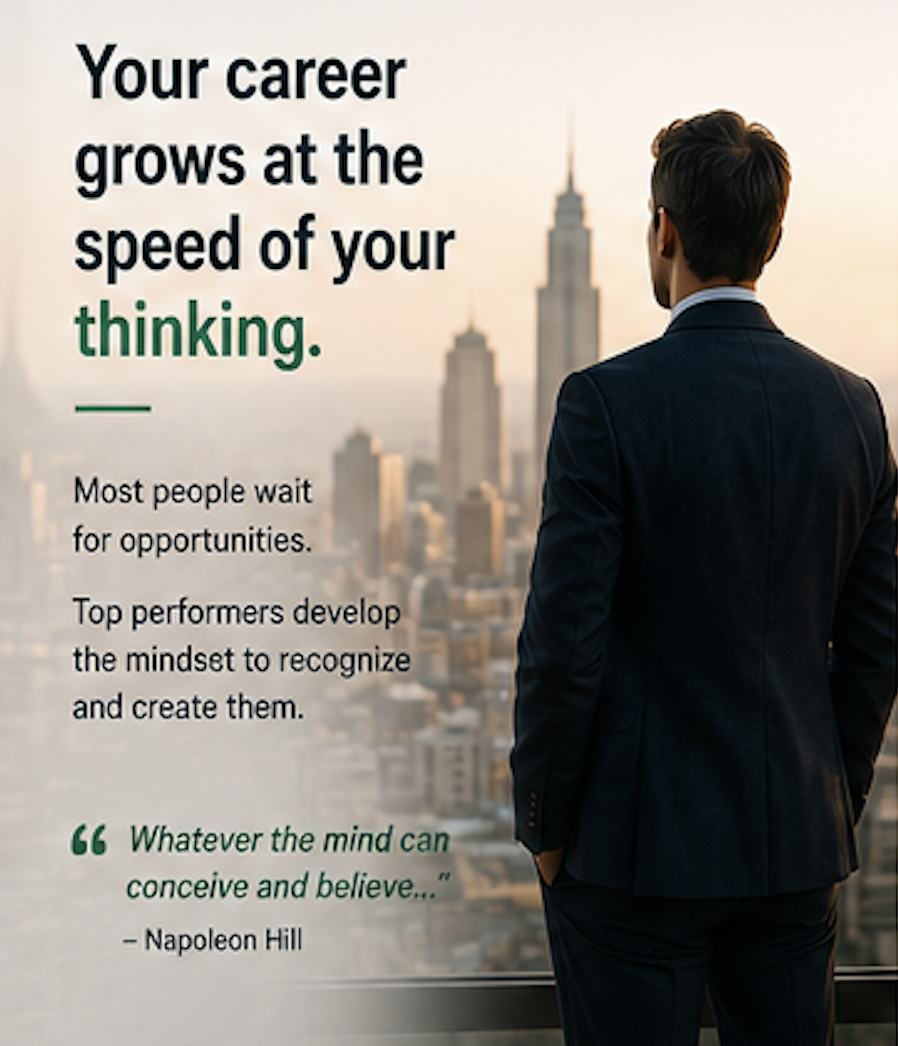
Your career grows at the speed of your thinking.
Your career rarely grows by accident. High performers do not simply wait for opportunities. They develop the mindset to recognize, prepare for, and create them.
The way you think influences the risks you take, the conversations you start, the confidence you project, and the opportunities you pursue.
Growth starts in the mind before it shows up in your career. |
|
|
|
Lesson 2
Clear goals outperform raw talent.
Talent is valuable, but clarity creates momentum. Professionals with defined direction tend to make faster decisions, stay focused under pressure, and build stronger confidence over time.
When you know what you are working toward, you stop reacting to every opportunity and start choosing the ones that align with your future.
Talent matters. But clarity often matters more. |
|
|
|
Lesson 3
Your network shapes your ambition.
Your environment influences your ambition more than most people realize. The people around you quietly shape your standards, thinking, expectations, and growth.
One of the fastest ways to grow professionally is to spend time around people who challenge you to think bigger, act with more discipline, and raise your expectations for what is possible.
The right circle can expand your vision before your circumstances change. |
|
|
|
Lesson 4
Fear keeps talented people invisible.
Many capable professionals stay quiet not because they lack intelligence, insight, or ideas, but because they fear criticism, rejection, or failure.
They hesitate to speak up, lead a conversation, share a perspective, or risk being misunderstood. Over time, that silence can limit their influence.
Confidence is not just personality. It is a professional skill that can be developed. |
|
|
|
Lesson 5
Burnout often comes from misalignment.
Burnout is not always caused by working too hard. Sometimes it comes from pursuing goals that no longer align with who you are becoming.
Many professionals climb ladders they never consciously chose. They achieve more, but feel less connected to the reason behind the achievement.
Success without purpose eventually feels exhausting. |
|
|
|
Lesson 6
Personal growth compounds over time.
Professional transformation is rarely the result of one dramatic decision. More often, it comes from small habits repeated consistently.
Reading Reflection Discipline Accountability
The results may feel slow at first, but over time, they create meaningful career leverage.
Small habits can become transformational when practiced consistently. |
|
|
|
Lesson 7
Success begins before the results are visible.
Long before success appears externally, it is being shaped internally through thoughts, decisions, habits, relationships, and purpose.
This is why professional development is not just about adding more credentials. It is about becoming the kind of person who can recognize opportunity, act with confidence, and grow with intention.
The inner work often comes before the outer achievement. |
|
|
The principles behind modern personal development still matter today.
Napoleon Hill’s teachings have influenced generations of entrepreneurs, executives, sales professionals, leaders, and achievers. For working professionals today, these principles remain a powerful reminder that career growth starts with clarity, mindset, purpose, and disciplined action.
|
|
|
|
|
|
|
|
|
|
|
|
|
|
|
|
|
|
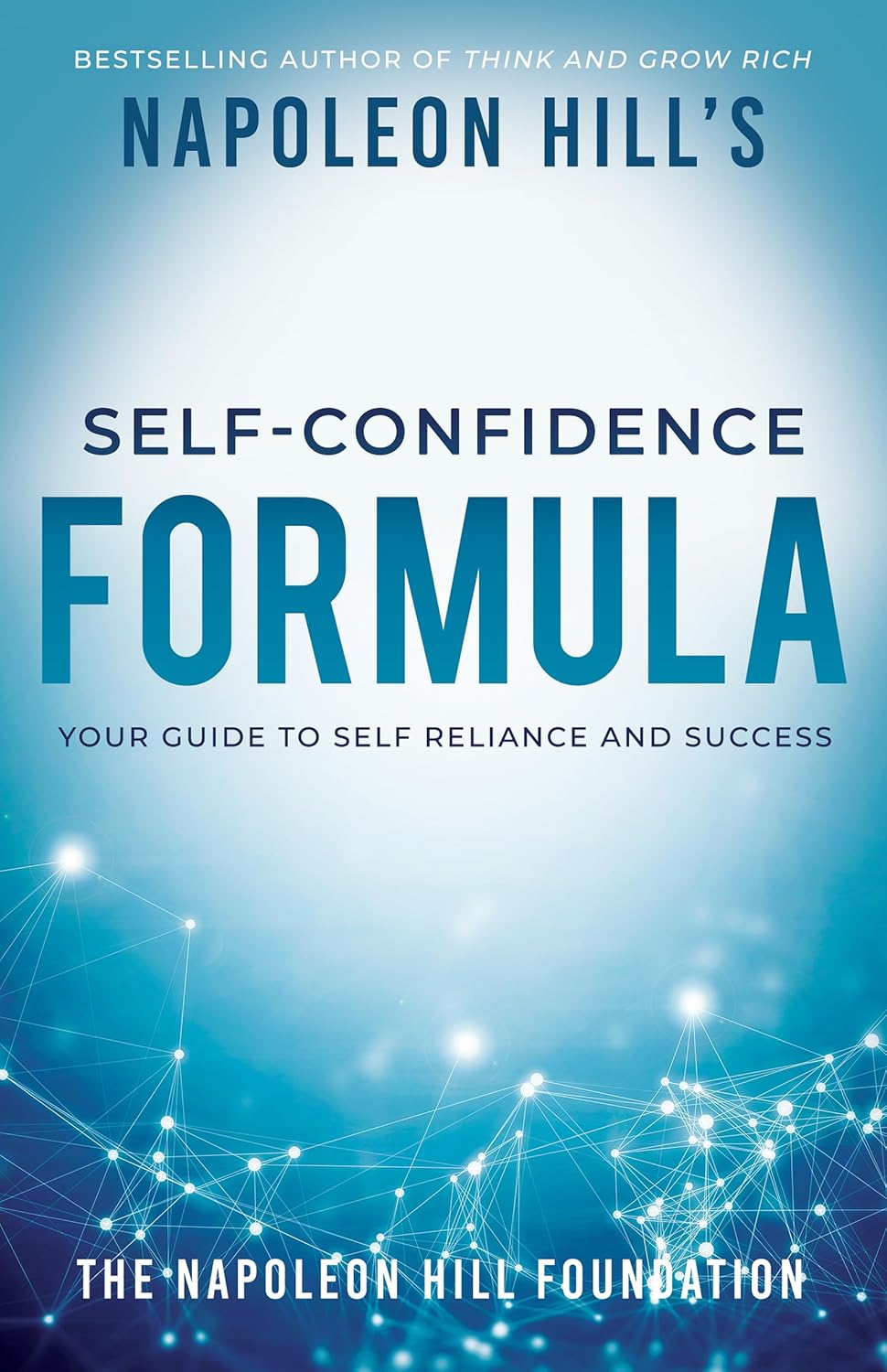
Napoleon Hill's Self-Confidence Formula: Your Guide to Self-Reliance and Success
Your formula to build a strong sense of self-worth so that you can better recognize opportunity, take action on your dreams, and enhance your resilience.
A lack of self-confidence is one of the greatest maladies of today’s world, one that is responsible for the rampant helplessness, lack of self-control, aimlessness, procrastination, and despair that characterize modern society. But as the venerable steel magnate Andrew Carnegie emphasized to Hill, “Confidence is a state of mind, necessary to succeed, and the starting point of developing self-confidence is definiteness of purpose.”
The time for self-doubt and self-criticism is over. Your faith in yourself and your abilities determines whether you fail or succeed. Napoleon Hill’s Self-Confidence Formula enables you to boost your self-confidence through the application of Hill’s strategies for controlling your thoughts. By implementing these principles, you will not only be able to operate at a higher plane of thought and action—attracting more opportunities, gaining influence, and strengthening relationships—but you will also be able to instill this critical quality in others.
Napoleon Hill’s Self-Confidence Formula gives you the keys to success and fulfillment by equipping you to:
unlearn fears, insecurities, and limitations acquired in childhood and adolescence condition your mind to believe in the certainty of your success take bold, confident action on your definite chief aim conquer your inferiority complex through the mastermind principle build the self-reliance and self-esteem of today’s youth
You are now on the journey to confident, purposeful living. As you implement Hill’s principles, you will cultivate a state of mind primed to accept the abundance reserved for you.
Order your copy on Amazon today!
|
|
|
|
|
|
|
|
|