|
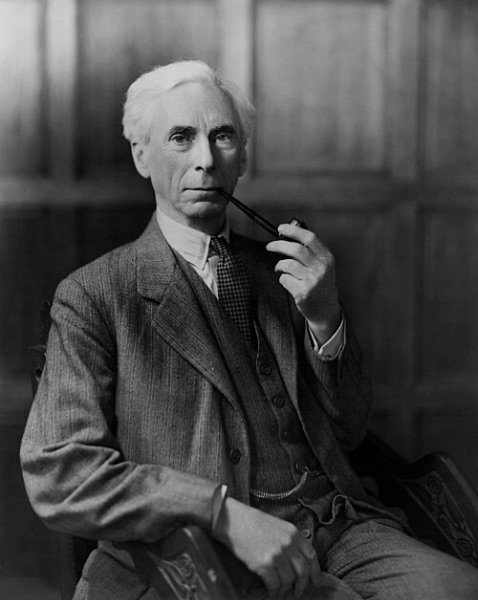
Having opposed the politics of rearmament during the 1930s, Russell qualified his pacifism for the sake of World War Two, recognising that the Nazis posed an unprecedented threat which could only be met militarily.
But afterwards, Russell continued his antiwar agitation.
He denounced the British-led invasion of Nasser’s Egypt in 1956 as an imperialist farce. And during his final years, Russell was a leading voice of global opposition to the U.S. invasion of Vietnam.
He quit the U.K. Labour Party in 1965 over the mere possibility that its government might send troops to Southeast Asia in support of the American war, and he led calls for the prosecution of those responsible for war crimes in Vietnam during the 1960s.
His very last public statement before his death on 2 February 1970 was to condemn Israel’s aerial bombardment of Egypt during the so-called ‘War of Attrition’ of 1967-70.
Since 1945, opposition to war now also meant opposition to nuclear war, and Bertrand Russell was the best-known anti-nuclear voice of the early Cold War.
He worked with global luminaries like Albert Einstein to demand nuclear disarmament during the 1950s, and in the U.K. Russell co-founded the Campaign for Nuclear Disarmament (CND) in 1957.
In 1967, Russell was once again jailed, fifty years after WW1, this time for his role in a mass anti-nuclear demonstration in London.
Throughout his life, Russell spoke up for peace and democracy when it was most difficult to do so, and history vindicated him more often than not.
|