|
|
|
|
|
The Secret History of Women's Football
Lily Parr was a lesbian icon and working-class hero during the first Golden Age of women's football in Britain...
By Pete
|
|
Radical history doesn’t always go in straight lines.
Over recent years, there's been a huge boom in women's football in England, with the Lionesses winning the European Championship in 2022 and 2025 and reaching the World Cup Final in 2023.
But women's football - or 'soccer' as you call it across the pond - actually has a deep history in Britain.
A hundred years ago, the women's game was growing rapidly and had tens of thousands of fans. The future looked bright.
Then, in 1921, a reactionary Football Association (FA) banned women’s football outright, in a calculated strike against gender equality in interwar Britain.
No one represents that first Golden Age of women’s football better than Lily Parr.
|
|
|
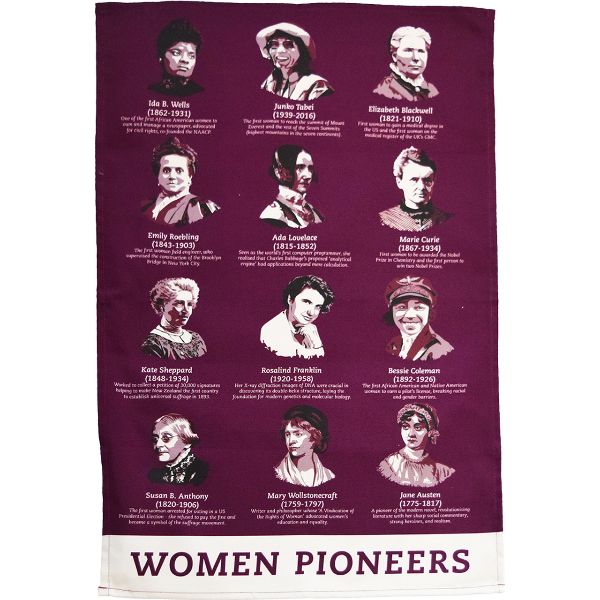
At Radical Tea Towel, we're all about celebrating pioneers from history who so often have been written out of the narrative
|
|
|
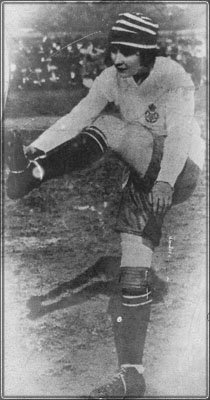
Born on this day in 1905, Parr was a pioneering woman footballer, LGBTQ icon, and working-class hero.
She was born in the mining town of St Helens, near Liverpool.
Parr began playing for a local women’s football team, St Helens Ladies, in 1919.
And her talent on the pitch didn’t go unnoticed. In 1920, she was signed by Dick, Kerr’s Ladies team – named for the locomotive and tramcar manufacturer Dick, Kerr & Co.
Based in Preston, a working-class textile town in Lancashire, Dick, Kerr’s was one of the biggest teams in the country.
Preston was a prestigious place in the football world. It was home to Preston North End, the first ever English football champions and FA Cup winners.
Dick, Kerr’s Ladies were set up in 1917 when women’s football was booming in Britain, occupying the space left by men who were away on war service.
Like the men’s game in this period, women’s football was embedded in working-class communities and politics.
In the years of economic downturn after WW1, the team used its ticket sales to raise money for impoverished local workers, including unemployed miners.
|
|
|
Parr allegedly had a 'kick like a mule'
|
|
|
This was the exact type of working-class solidarity that the British political left was developing in these years, leading to the General Strike of 1926.
And Dick, Kerr’s, with Lily Parr as their star player, was able to raise a huge amount of money for the cause because of their popularity.
In a landmark game on 26 December 1920 at Everton’s stadium Goodison Park, they drew a full-house crowd of 53,000 spectators.
Dick, Kerr’s were at the forefront of a radical social transformation in Britain, turning the crisis of the war years into a new vision of egalitarian culture and politics.
But it was all too much for the bourgeois suits at the Football Association.
They saw their role as disciplining the working-class riff-raff who found enjoyment and excellence in football, and stamping out any radical implications of the sport.
So, the growing popularity of women’s football, allied to the radical working class, was a major threat for the FA.
In response to the Goodison Park game, they simply banned women’s football outright.
On 1 January 1921, women teams were forbidden from using the stadiums or facilities of Association members like Everton.
|
|
|
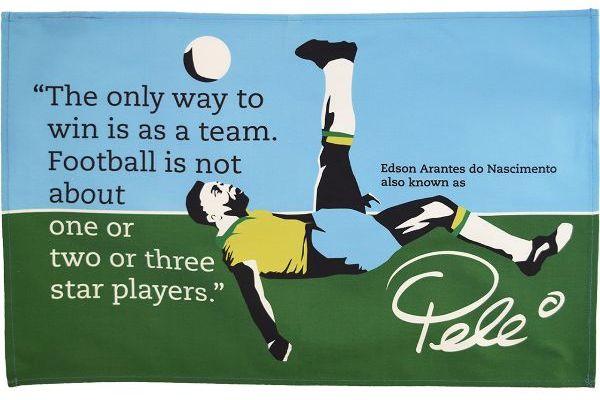
This one's for all the soccer fans out there, celebrating a player who inspired millions across the globe
|
|
|
Of course, women like Lily Parr resisted.
She continued to play for three decades after 1921, touring overseas to dodge the FA ban.
Even after Dick, Kerr’s & Co. disowned the team, they reformed themselves as Preston Ladies and played on.
But the damage was done.
The FA ban ruined the women’s game financially, as intended. It killed off the possibility of sustained, professional women’s football – which had been imminent in 1921 – for another century.
Parr had a career in nursing, but played football for several decades until retiring from the game in 1951.
Parr was also a lesbian, living openly with her partner Mary.
She died in 1973, just two years after the FA was at last forced to lift its ban on the women’s game.
Thirty years later, Parr became the first woman to be inducted into the English Football Hall of Fame.
Radical history doesn’t go in straight lines. We’ve often been here before. And the modern boom of women’s football isn’t so much pioneering as a renaissance.
|
|
|
|
|
|
|