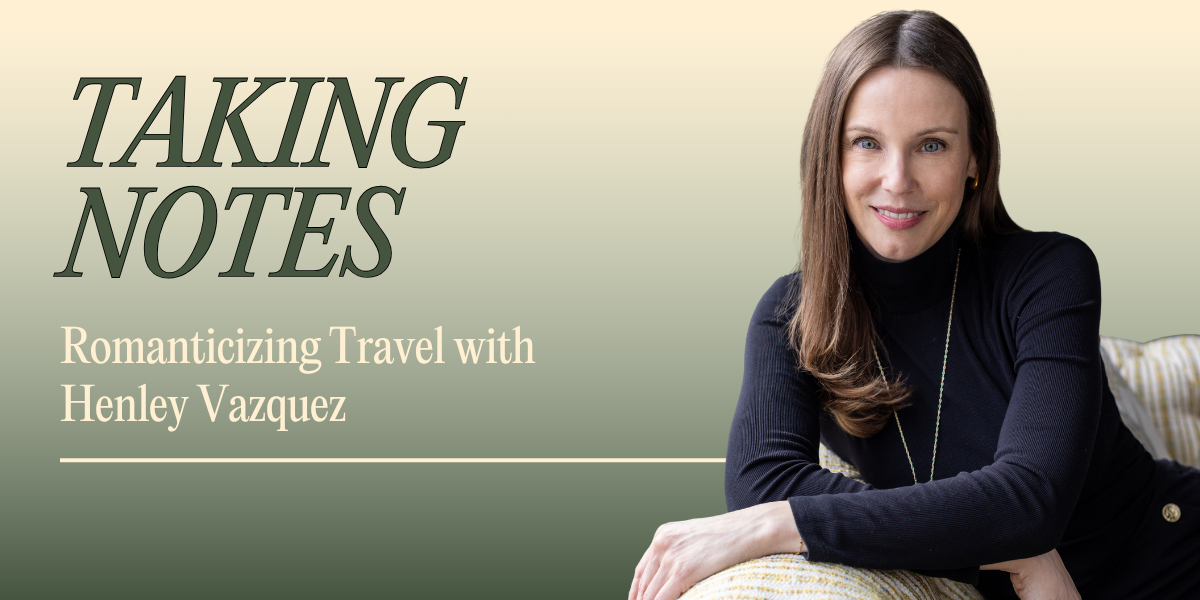
There’s nothing worse than spending months planning a trip only to come home needing a vacation from your vacation. Enter Henley Vazquez, the travel expert helping people travel smarter. As the co-founder of Fora Travel, Henley has reimagined what it means to book through a travel advisor, blending insider expertise with modern technology and a community-driven approach.
From the luxury travel trends taking over summer 2026 to the one upgrade actually worth splurging on, Henley shares her best advice for planning an unforgettable trip and bringing a little more curiosity into every itinerary.
Can you tell us about how you started Fora and what you saw was missing from the market?
When my co-founder Evan and I first sat down, our vision wasn't about disruption for disruption’s sake. It was 2021, post-pandemic travel was starting to surge, and we saw a heavy interest in entrepreneurship, plus a dislocation of labor. I had spent my career as a travel advisor, and we knew that booking with an advisor was the best way to travel. This was an obvious industry to offer opportunity, but the traditional travel agency model was built on outdated tech and high barriers to entry.
How has storytelling shaped the way you’ve built the brand?
Travel is emotional—people remember how a place made them feel, not just where they stayed. The same is true for building a brand and a community. We’ve grown largely through advisors sharing their real experiences, perspectives, and recommendations in ways that feel personal and trusted. That authenticity matters more than polished marketing ever could.
What separates a truly great hotel experience from an average one?
The most memorable places I’ve stayed are about the people, not the polish. It’s the staff member remembering your tea order on day two, the concierge who steers you toward the tiny neighborhood restaurant instead of the obvious hot spot, the housekeeping staff who replaces your almost-empty toothpaste. I also think the best hotels have a strong sense of place, a feeling of being connected to where you are—whether that’s through food, design, or events. Travelers want something they couldn’t replicate anywhere else.
What are the biggest summer travel trends you’re seeing for 2026?
The appetite for travel this summer is strong. Despite everything happening in the world, we’re seeing steady year-over-year growth in both domestic and international travel. We are seeing some specific spots emerge. Italy is definitely having a moment—Rome is our top-booked European city right now for summer travel—while those staying closer to home are still crossing borders, but heading north to explore the Canadian Rockies as well as Montreal. And they’re spending more time on the road, with the average trip length pacing two days longer than last summer.
Wellness continues to evolve beyond traditional spa vacations. Travelers want movement, nature, longevity treatments, sleep optimization, thermal bathing, hiking, meditation—experiences that help them come home feeling better than when they left. We’re also seeing a huge rise in “soft adventure” travel. People want excitement, but with comfort layered in: luxury safari lodges, high-end ranches, expedition cruises, hiking trips with incredible food and hotels waiting at the end of the day. And interestingly, cruises are having a major luxury renaissance. Iconic brands entering the space, like Orient Express and Four Seasons, have completely changed the perception of cruise for many travelers who previously swore they’d never step foot on a ship.
What’s one travel upgrade that’s actually worth the splurge—and one that isn’t?
Worth it: Hotel upgrades. People tend to over-focus on flights, but you spend far more time in your hotel than you do in the air. Not worth it: Overpacking your itinerary. So many travelers try to optimize every second of a trip, only to come home exhausted.
What’s your go-to strategy for avoiding tourist traps while still hitting the “must-see” spots?
Timing changes everything. I’m a huge believer in seeing iconic places, but doing them strategically. Go early, stay late, or approach them through someone local who understands how to experience them well.
What’s one travel habit that instantly makes someone a better traveler?
Curiosity over comparison. The travelers who have the best experiences are usually the ones who stay open instead of trying to force a destination to match what they saw on social media. Be willing to talk to people, change plans, wander a bit, try the unfamiliar things on the menu, and spend time somewhere that isn’t “viral.” But equally important: Pack your patience.
What’s your advice for people who want a luxury-feeling trip without a luxury budget?
Prioritize where luxury matters most to you personally instead of trying to make every single aspect of the trip feel high-end. Sometimes that means flying economy but booking the beautiful boutique hotel. Sometimes it means traveling slightly off-season when rates drop dramatically, but the experience is still incredible. People underestimate how much thoughtful planning impacts perceived luxury. Great restaurant reservations, smart routing, and having insider recommendations can make a trip feel far more elevated without necessarily spending more money.