Putting up a building is an act of faith in the future. You’d think the people who do it might be more comfortable planning for the future of their family businesses. Often that isn’t the case, and we’ve covered succession problems for years. But this issue has three stories of handovers that are actually going well.
For Ian Bruce Eichner, a longtime New York City and South Florida developer known for being unafraid of conflict, figuring out the future of his Continuum Companies started with lunch with his daughter, Alexandra, who at that time was working as a consultant.
“What’s the agenda?” she asked him. “There’s no casual lunch with you.”
Without officially calling it succession (Bruce is as present as ever), Alexandra has been climbing the ladder for more than five years. South Florida Bureau Chief and Senior Reporter Katherine Kallergis writes a portrait of Alexandra on the cusp of completing the first development she’s been on from start to finish.
Alex Witkoff became Witkoff Group CEO abruptly when the founder, dad Steve, joined the Trump administration in January. Alex’s brother Zach had also left for buzzier pastures — in his case, a crypto venture — shortly before.
As reporter Sheridan Wall writes, Alex had been training for years at the family company. Witkoff Group is behind some of the most ambitious projects we cover in Miami and New York, like One High Line and the Shore Club, and Alex, co-CEO with Steve for two years, is not unprepared. But he holds his cards close to the chest. “Perhaps his way is emblematic of a new generation rising in the ranks, one born to privilege, educated in the Ivy League and steeped in the idea of protecting a legacy created by someone more bombastic,” Wall writes.
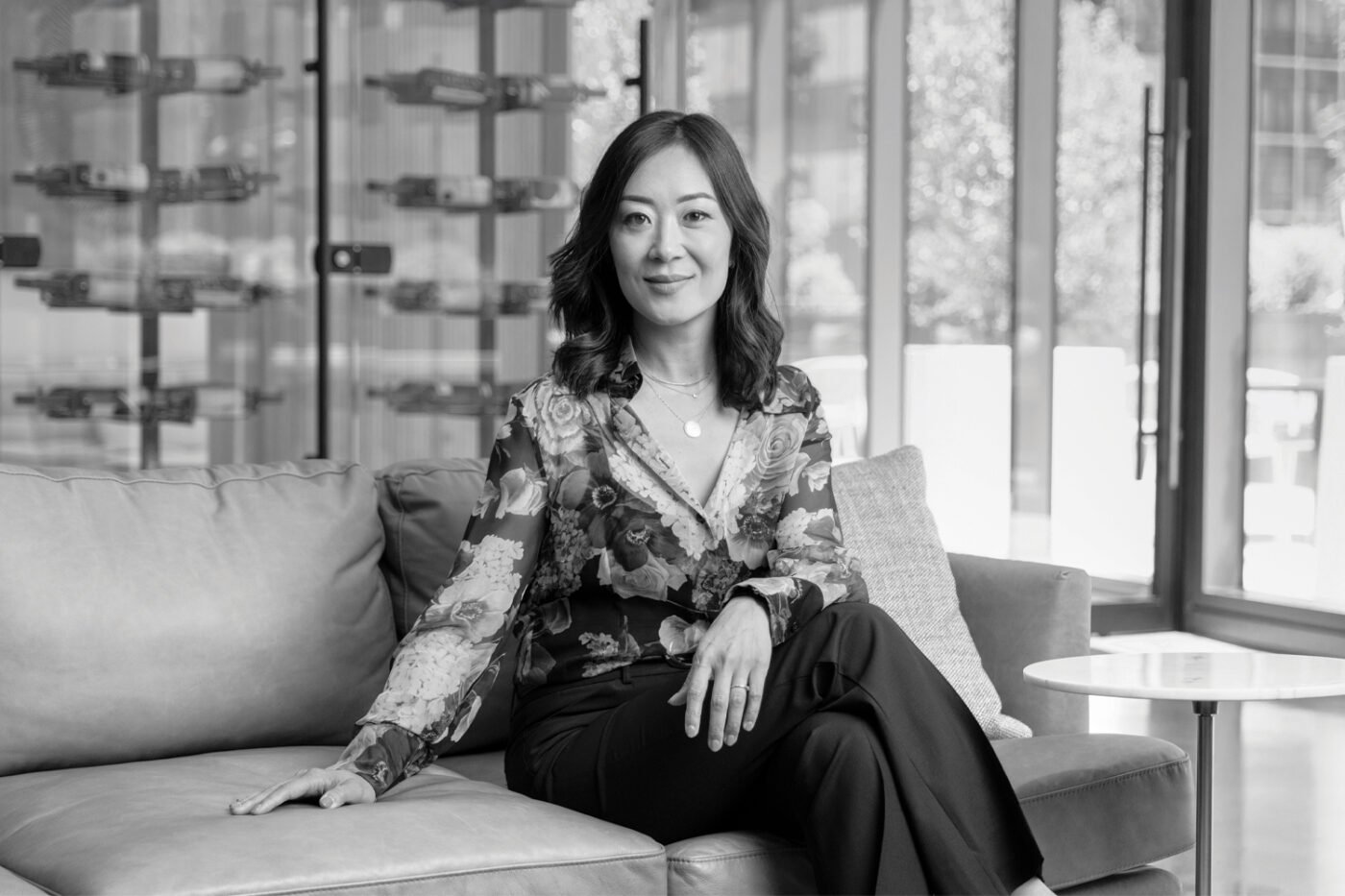
The third is Jaime Lee, CEO of Los Angeles’ Jamison, who works with her parents and brothers at the family’s development firm. In this month’s The Closing column, she tells Senior Editor Lauren Schram her siblings would probably describe her as “bossy, maybe hyperbolic.”
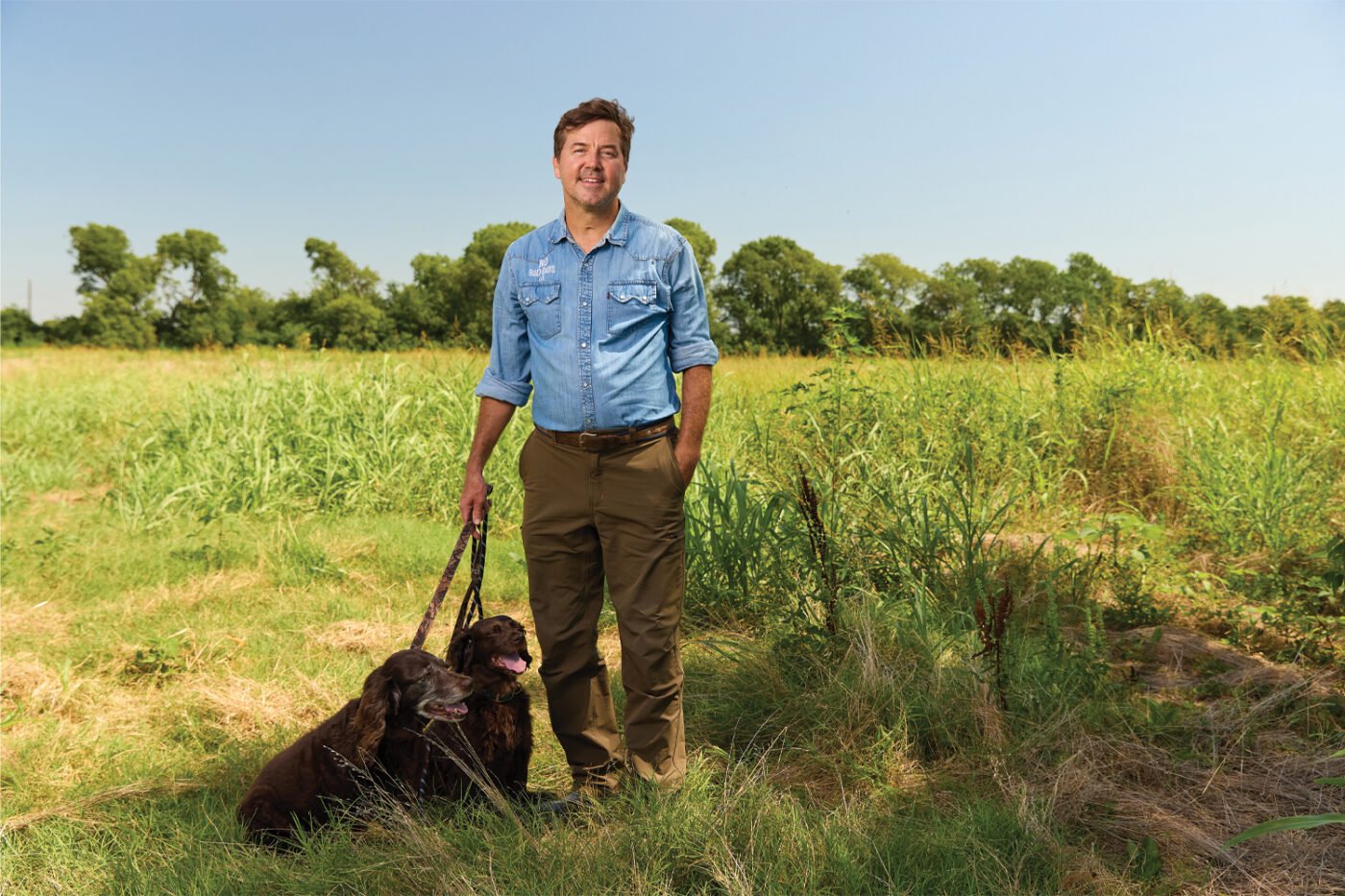
Zoom over to North Texas, where the clairvoyant planner turned out to be a former Mavericks player named Ray Johnston. After his basketball career ended, Johnston became a country singer and then got into real estate.
He’s not unique in knowing that the Dallas-Fort Worth metroplex, whose population now matches New York City’s, was headed north. But Johnston managed to buy, add necessary infrastructure to and sell much of a 140-acre parcel just outside the nation’s fastest-growing city, a place called Princeton, in a way that makes it look like he had a crystal ball. In his first contribution to the magazine, reporter Isaiah Mitchell catches up with Johnston, whose aw-shucks nature belies strong business connections.
Inside the magazine, you’ll also find rankings of San Francisco brokers and brokerages, as well as Hamptons brokerages.
The whole point of placing a bet is that you don’t know what will happen next — but you win the money if you get it right. In our cover story, Senior Reporter Kathryn Brenzel sits down at the table with the developers in the running for the three state licenses for downstate New York casinos. Bids came in at the end of June, with victors to be picked in December. But as Brenzel reports, players might be hedging their bets more than they’ve let on, and losing might yield other wins.
August cues the end of summer, and we have our last batch of dedicated Hamptons coverage, which includes Jake Indursky’s profile of architect Thomas Juul-Hansen, who’s building what will be the most expensive spec home ever listed on the North Fork of Long Island. Kate Hinsche digs into agricultural land policy, making sense of a contradiction: The cheapest land in the Hamptons produces the most expensive fruit.
Late on a Monday at the end of July, a gunman entered Rudin’s office tower at 345 Park Avenue and killed four people: police officer Didarul Islam, security guard Aland Etienne, Rudin associate Julia Hyman and Blackstone executive Wesley LePatner. We followed the story as it happened and sought answers to hard questions about security in buildings that have always felt like cloisters. You can trust we’ll continue to stay ahead of the news on this, but what I keep thinking about is the futures stolen, for no reason, at a place of work.
Thanks for reading the issue.
|
|
|
|
Editor's Note
Cara Eisenpress
Managing Features Editor
|
|
|
If you’re interested in receiving future magazine issues in print, sign up for our annual subscription. Save $20 OFF with promo code: MAG20 |
|
|
NYC’s major developers are betting they’ll win casino licenses. But what if they don’t? |
There are eight firms competing in perhaps the most contentious real estate project the city’s ever seen, and New York is finally set to choose three for downstate casino licenses by the end of the year.
In May, Related Companies and Oxford Properties abandoned their plan for a $12 billion casino in Hudson Yards. By dropping the casino bid, they were able to secure a zoning change to build a little less housing than originally planned and avoid paying outright for a $2 billion platform over the railyards, which they need to develop.
As the contest heads into its most critical stage and five contenders prepare for defeat, other teams have followed suit in revealing backup plans. But not all the developers have their chips on plan B. Some are steadfast that for their sites, it’s casino or bust.
|
|
|
|
What happened to Brandon Miller’s portfolio after his death? |
A new white brick office building sits vacant on a neglected corner of East 121st Street and Third Avenue in East Harlem, its front doors locked on a recent Friday. Six miles south, orange construction barricades and a chain link fence surround another boutique office development that is nearing completion and now seeking tenants.
These two buildings appear to be all that’s left of Brandon Miller’s family-owned real estate development company, Real Estate Equities Corporation, a year after his tragic death.
Miller’s July 3, 2024, suicide at his estate in the Hamptons exposed not only a personal drama but a tangled web of debts and real estate deals gone bad.
|
|
|
|
Meet Alexandra Eichner, next in line at the Continuum Company |
It all started with lunch. Developer Ian Bruce Eichner took his daughter, Alexandra, to the Little Beet in New York. About halfway through the meal, he made the ask. Would she consider working with him for a six-month trial period?
Alexandra moved to South Florida from New York and became the on-the-ground deputy for all of the company’s condo projects. Now president of Continuum Florida, she is about to complete the first development she’s been involved in since its inception — La Baia South Residences.
Whereas some major real estate players seem to believe they’re immortal, ignoring succession planning, Eichner, 79, is taking seriously the idea of training his daughter, 37, to run his 1,000-unit, $3 billion condo portfolio.
|
|
|
|
Hamptons’ top brokerages navigate dragging market, uptick in competition |
Even though the Hamptons can feel like a million miles — and dollars — away from the rest of the market, its residential scene couldn’t avoid the same pitfalls as the rest of the country.
The year was off to a hot start for the brokerages that rule Out East, but that was cut short by tariffs, stubborn interest rates and political instability.
A number of firms managed to post improved numbers from June 2024 to June 2025, as the top 10 brokerages racked up $10.2 billion across 2,580 deals — up from $7.3 billion across 1,830 deals in the previous 12-month period.
|
|
|
|
Subdued son: At the Witkoff Group, CEO Alex Witkoff plays by the rules |
Alex Witkoff isn’t like the other real estate heirs.
He's early in his career but no novice. Now that his father, Steve Witkoff, is Special Envoy to the Middle East, the son’s decade-long schooling at the family’s development company, the Witkoff Group, is apparently over.
Alex is a real businessman, a father’s dream — smart, prepped and trained for a job leading expensive top-of-the-line projects in the nation’s most competitive markets — and thus far he’s managed to sidestep the spotlight, keep disasters out of the press and avoid embarrassment.
He thinks of development largely in terms of dollars and cents, he said in interviews, and though sources say his passion comes through in the creation of top-tier projects, Alex doesn’t appear to be in it for the glory.
|
|
|
|
The developer reshaping the fastest growing U.S. city |
Ray Johnston needed 26 handshakes.
The former Dallas Maverick and current country singer who entered real estate as a side hustle scored some prime land right outside Princeton, Texas, just before it came to be recognized as the fastest-growing city in the country. To sell to a homebuilder and turn a pro-grade profit on the first major deal of his real estate career, all Johnston needed was for neighboring property owners to approve easements for sewer lines.
That meant persuading 26 homeowners, many of whom had moved to Princeton precisely to avoid subdivisions, to let Johnston build.
|
|
|
INTERVIEWS WITH REAL ESTATE TITANS |
CEO of Los Angles-based Jamison talks sibling dynamics at work, encountering racism and meeting President Joe Biden |
It’s all in the family at Jamison, a developer based in Los Angeles’ Koreatown that has become the name to know for office-to-residential conversions.
Jaime Lee is the public face of the $6 billion real estate company, which her parents co-founded in 1994. Her father, David Lee, also an internist, is now chairman. Her mother, dentist Miki Nam, oversees the firm’s accounting department. They named the company for Jaime, the oldest of their four kids, and she was promoted to CEO in 2020.
Jamison has a portfolio spanning 18 million square feet, including 33 multifamily buildings with 6,600 units in the city of Los Angeles, as well as office, retail and medical properties throughout Southern California. Assets include the 1.8-million-square-foot Equitable Plaza and the World Trade Center office complex. Jamison also has 2,000 residential units under construction.
The Real Deal talked to Jaime in a conference room at the company’s 428-unit Opus rental building in Koreatown, about the family business, racism and parenting.
|
|
|
|