FOR TRD DATA SUBSCRIBERS | TOP STORIES OF THE WEEK |
|
|
|
You’re enjoying free TRD Data access |
You’re receiving The Data Drop, a subscriber exclusive briefing on the numbers shaping real estate — from deal activity and development trends to rankings, permits and market signals.
Subscribe to continue receiving this newsletter and unlock TRD Data’s live transaction feeds, interactive maps, dashboards, property records, data-backed reporting and more newsletters.
|
TRD Data is The Real Deal’s real estate intelligence platform for tracking deals, development, permits and market trends in one place. |
|
|
|
Welcome to The Data Drop by TRD Data, a weekly look at the numbers shaping real estate.
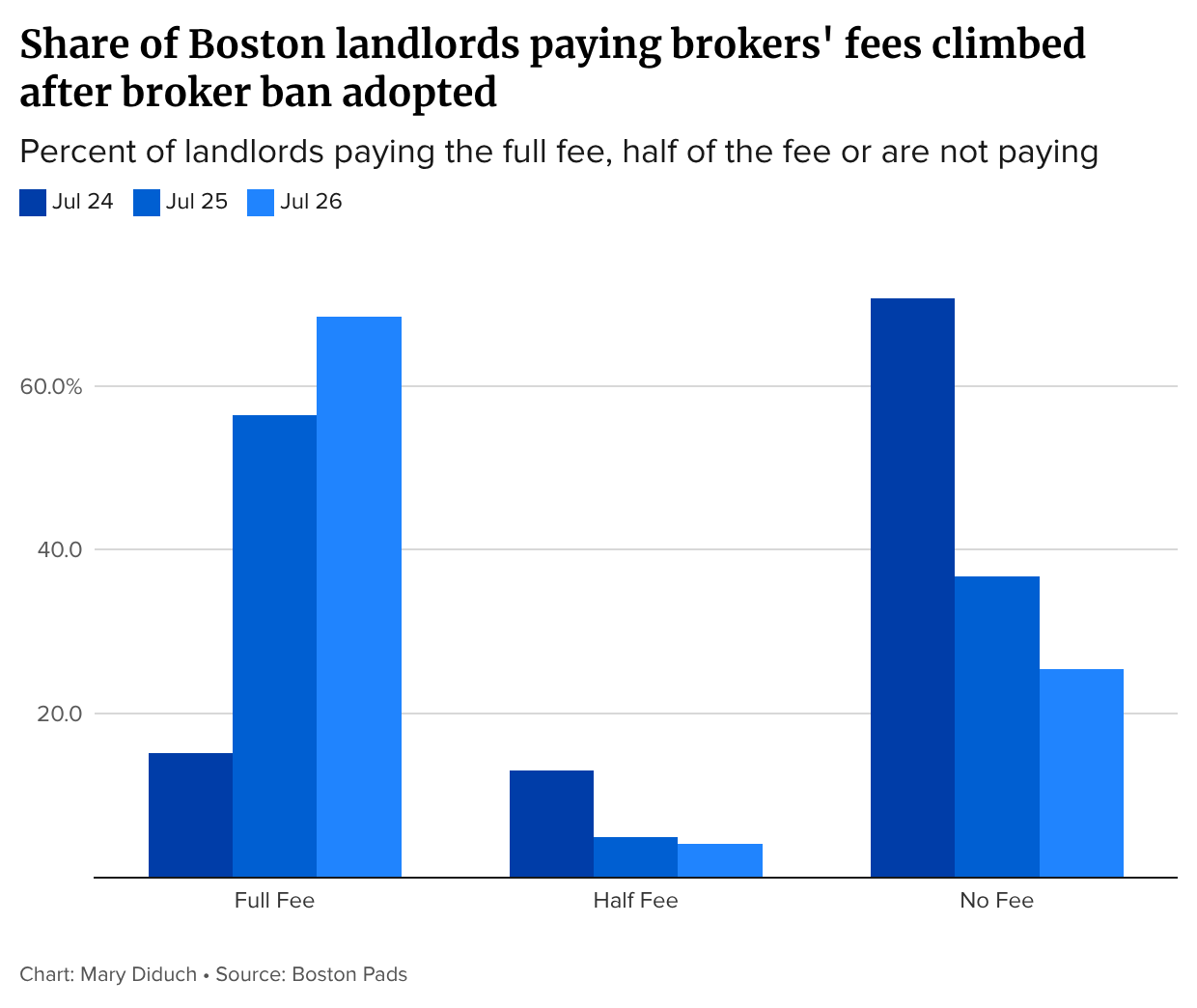
It’s been a year since Massachusetts adopted a statewide law that prohibited apartment landlords from passing along the fees their rental brokers charge them to their tenants. The legislation is similar to New York City’s FARE Act, also enacted last summer, which led to skyrocketing rental prices.
In Boston, the story is more complicated. The city has seen rents tick up this summer, but not by a whole lot — certainly not anywhere near the increase New York saw after the passage of the FARE Act.
Boston landlords had been absorbing the change months before it went into place, one analysis found. At the same time, other forces shaping the market — namely, a drop in international students amid a change in federal policies and rhetoric — have increased the share of apartments up for grabs, potentially tempering price growth.
|
|
|
|
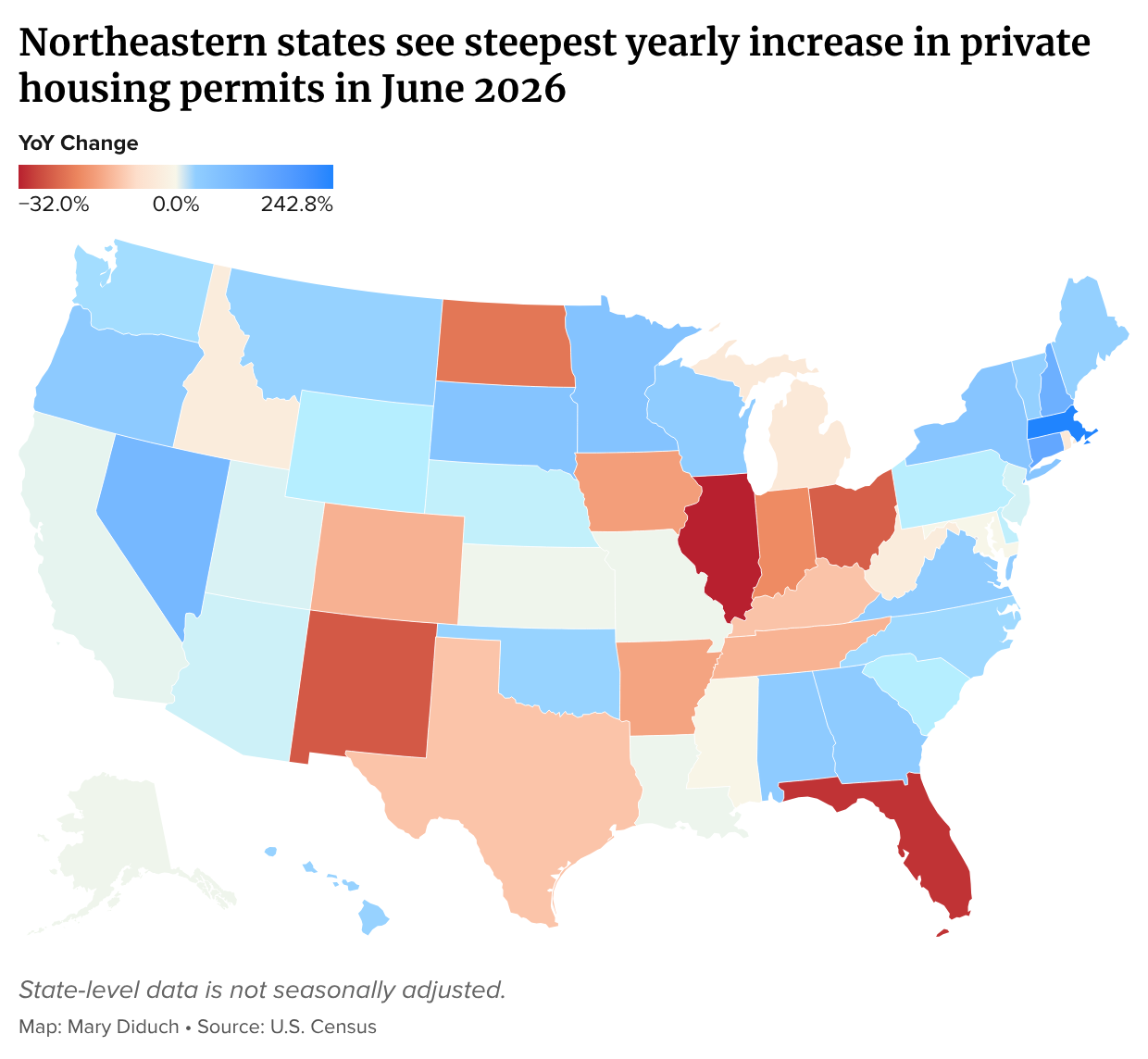
Housing construction is down nationwide — but not in the Northeast.
The region has long suffered from a lack of inventory, and several Northeastern states posted the country’s steepest increases in approved private housing permits in June. Massachusetts was at the top of the list, with a year-over-year climb in greenlit permits of 243 percent.
What about the South? Builders by no means are stopping home construction in the Sun Belt, where it has long been a favored region for developers; Texas and Florida, for instance, saw the highest overall number of approvals in the country. But a glut in inventory has triggered a pullback in the region.
|
|
|
|
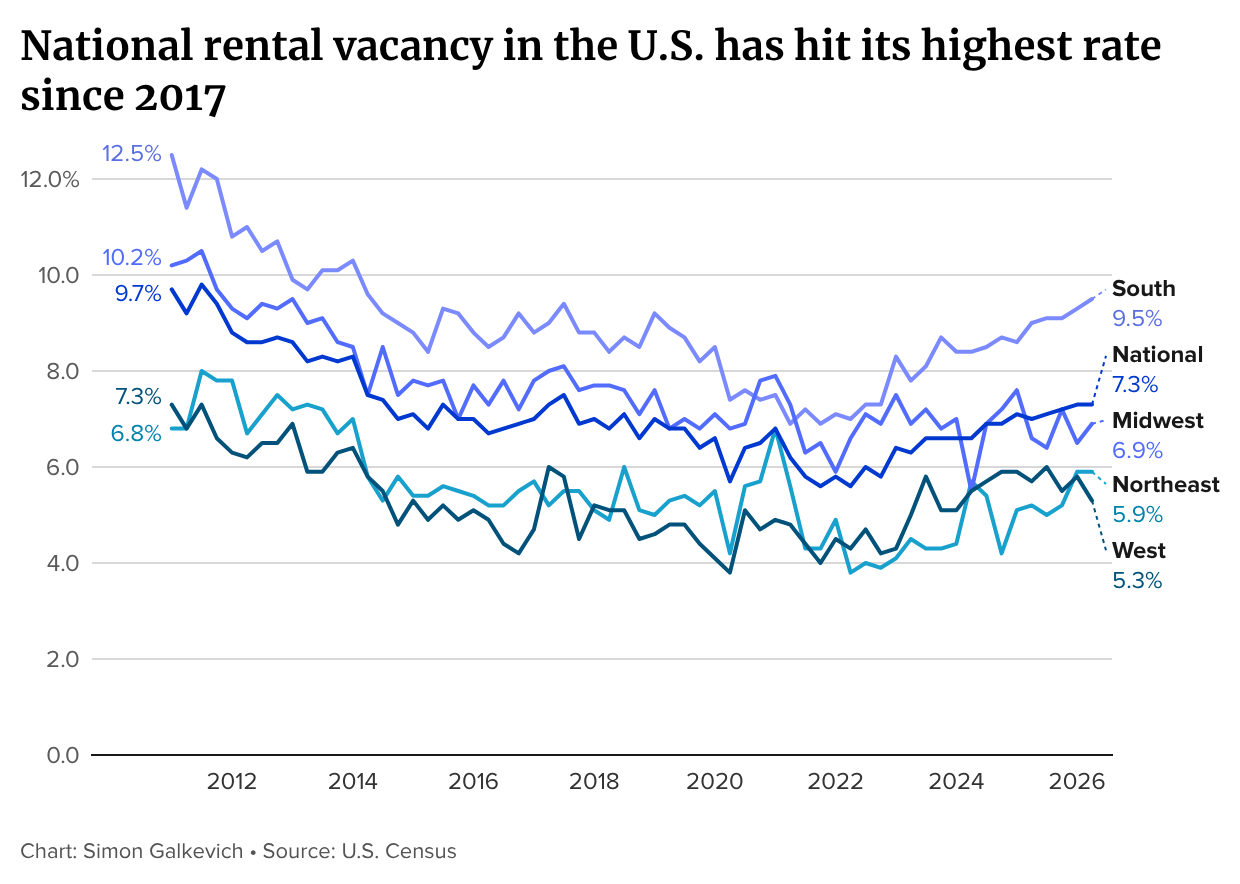
The share of empty apartments across the country hit its highest level — 7.3 percent — in nearly a decade in the second quarter, according to recently released figures from the U.S. Census Bureau.
The South, the Northeast and the Midwest recorded annual increases in the second quarter of the year. The West was the sole region with a drop.
What this means: The market is now much more renter-friendly, according to economists, giving tenants more negotiating power than they had seen in years and forcing landlords to grant more concessions.
|
|
|
|
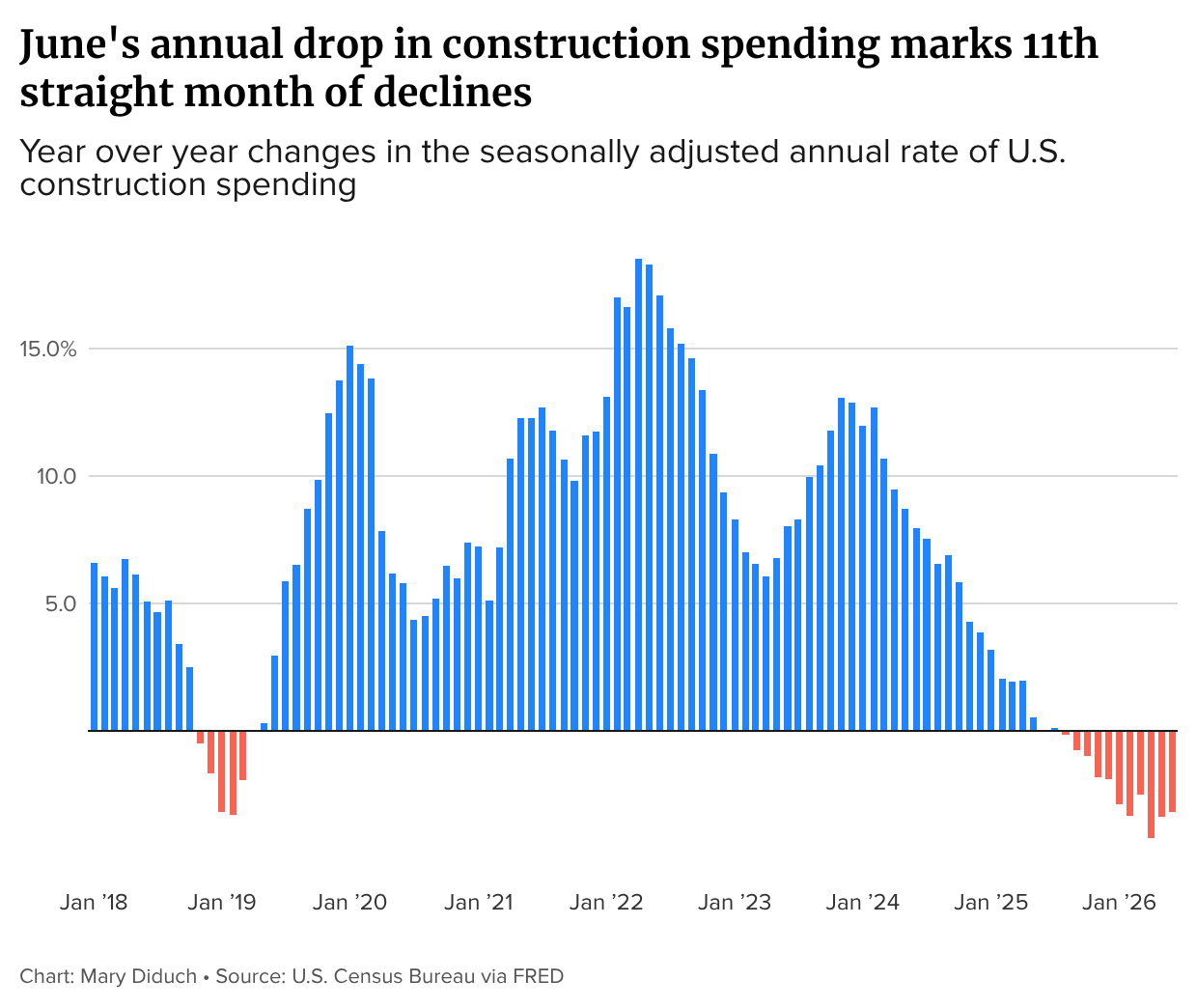
High interest rates, a lack of skilled labor and ever-increasing materials costs are not helping the U.S. construction industry, which just saw another monthly decline in spending.
If the country’s construction spending continues at the pace seen in June, the U.S. is set to spend $2.17 trillion on construction, a 3.2 year-over-year drop, according to the U.S. Census Bureau.
One major bright spot is data centers: private spending on building data centers, thanks to the rise of AI, skyrocketed 46 percent year over year.
The big picture: By many measures, the economy is in a good place — which means, in theory, builders should be building. But that isn’t happening. The pressures the industry has been contending with for years continue to make it harder to make deals pencil, and, therefore, projects to get off the ground.
|
|
|
|
Priciest home sale listing in the U.S. over the past seven days on Zillow, excluding vacant lots
The most expensive home on the market is at 58 La Gorce Circle. The 8,800-square-foot mansion has seven bedrooms, eight and a half bathrooms and 100 feet of water frontage.
|
|
|
|
🧠 Stat of the Week: $750B |
That’s how much JPMorgan plans to shell out on housing initiatives over the next decade a represents a 40 percent decade-over-decade increase in the firm’s housing capital deployment. JPMorgan’s plans include financing 1 million affordable units. |
|
|
|
The Real Deal’s August magazine issue is live! And that means so is the latest ranking from TRD Data. This month, the team ranked the top residential brokerages in the Hamptons. See who’s No. 1 — and who didn’t make the cut — here.
|
|
|
|
|