|
͏ ͏ ͏ ͏ ͏ ͏ ͏ ͏ ͏ ͏ ͏ ͏ ͏ ͏ ͏ ͏ ͏ ͏ ͏ ͏ ͏ ͏ ͏ ͏ ͏ ͏ ͏ ͏ ͏ ͏ ͏ ͏ ͏ ͏ ͏ ͏ ͏ ͏ ͏ ͏ ͏ ͏ ͏ ͏ ͏
͏ ͏ ͏ ͏ ͏ ͏ ͏ ͏ ͏ ͏ ͏ ͏ ͏ ͏ ͏ ͏ ͏ ͏ ͏ ͏ ͏ ͏ ͏ ͏ ͏ ͏ ͏ ͏ ͏ ͏ ͏ ͏ ͏
|
|
|
There’s been a huge shift during my lifetime in how we talk about mental health. When I was growing up, it was rarely discussed. Friends who struggled with anxiety or depression often did so in silence, and admitting to a problem was widely seen as a sign of weakness.
It’s painful to think about how much isolation that silence caused and how many relationships were strained or broken
because people felt they had to suffer alone. The less we talked about mental health, the more powerful the
stigma became.
Over time, our culture began to change. Starting in the 1970s, mental health became part of a broader public conversation. Schools introduced programs, workplaces began paying closer attention, media coverage expanded, and public figures helped make the issue more visible by sharing
their own struggles.
All of that has helped make it easier for people to ask for help. Today, resources like crisis hotlines and support groups are more accessible than ever. The stigma has lessened somewhat, too, and that progress is worth recognizing.
But there’s still more work to do. That’s why Mental Health Awareness Month in May remains so important. It serves as a reminder to keep the conversation going and check in on the people we care about.
|
|
Why the work continues
An estimated one in five adults experiences mental illness each year. The causes are complicated and often interconnected, including substance abuse, trauma, financial stress, workplace pressure, and the ordinary challenges of life that can become overwhelming when carried alone.
Loneliness deserves particular attention because it can both contribute to mental health challenges and serve as a warning sign that someone is struggling. In recent years, social isolation has become an epidemic across generations and genders. Adults over 45 report
higher levels of loneliness than they did just a few years ago. Younger people are struggling as well, and men now report loneliness at slightly higher rates than women.
Research has also shown that social isolation is linked to a greater risk of depression, anxiety, and other serious health conditions. That tells us something important: Connection is part of how we stay well physically and mentally.
|
|
Ways to support mental well-being
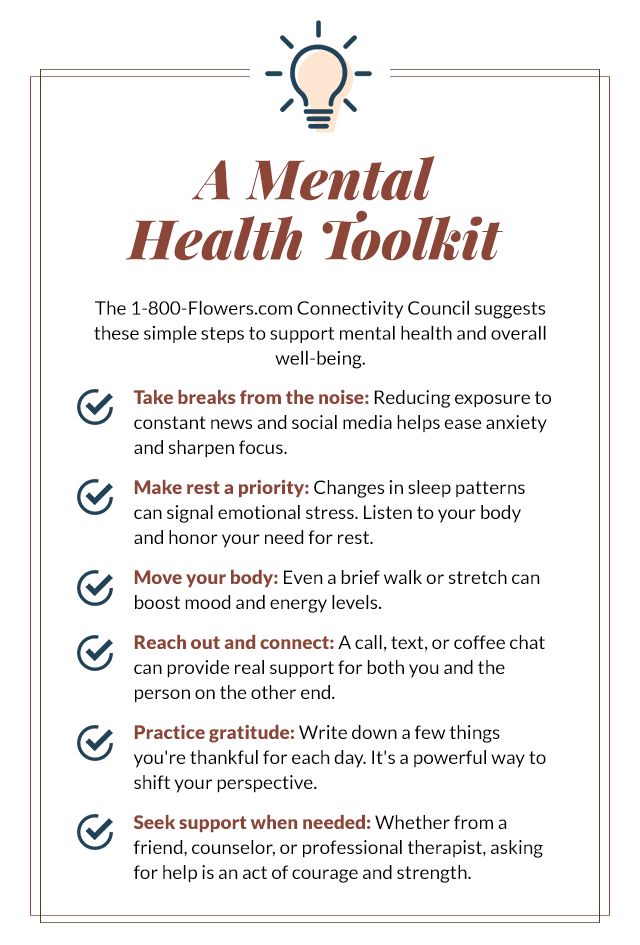
Each of us has a role to play in supporting mental health. We may not be able to solve every challenge someone is facing, but we can reach out, listen, and remind people they do not have to carry their burdens alone. All we have to do is use our power of connection.
Small actions can make a big difference. A phone call, a text, an invitation to coffee, or a simple “How are you doing?” — asked with enough patience to hear the real answer — can help someone feel seen, supported, and less alone. Those gestures can lift our spirits, too.
|
|
And don’t forget your own mental well-being. Reflecting on what gives life meaning — whether through work, personal growth, or community involvement — can guide you toward stronger relationships and a greater sense of fulfillment. Showing appreciation, offering support, and engaging in meaningful conversations can all help.
What’s more, these qualities reinforce one another. Strong relationships, for example, can build resilience, while a sense of purpose can deepen connections and motivate meaningful action.
Mental Health Awareness Month starts a conversation that deserves to continue well beyond May. Every time we reach out or ask for help ourselves, we push back against the silence that has left too many people suffering alone.
All the best,
|
|
In this week’s episode of Power & Impact, I speak with John Donovan, the former CEO of AT&T Communications, about what it takes to lead when technology is changing the ground beneath our feet.
John had a front-row seat to some of the most important technological shifts of the past several decades, including the rise of fiber communications, smartphones, and cloud computing. One of his most important insights is that real innovation happens when an idea reaches customers at the right time and helps them do something better.
That lesson feels especially relevant today. As AI reshapes the workplace, leaders cannot promise that every job will stay the same. What we can do is invest in people, help them learn, and build cultures where curiosity and continuous improvement become part of the daily rhythm.
John offers a simple formula: Try to do your job a little better each day, do something kind for a teammate without expecting credit, and carve out a little time each day to improve yourself.
Change may be unavoidable, but how we meet it is still up to us. As John says, the future will belong not only to those who understand the technology, but also to those who keep learning and bringing others along.
|
|
50 Years In: Pushing forward the hard way
As 1-800-Flowers.com marks its 50th anniversary, I’ve been thinking less about milestones and more about the moments that have helped shape our story. This week, I want to share one from the early years, when the business was young and getting home after a late night at the shop could become its own kind of adventure.
One Saturday night 50 years ago, Marylou and I left the shop around 11 p.m. and headed home to Bellerose, Queens. She was pregnant at the time, and we were driving a white Ford Econoline van that had already seen better days.
Somewhere on the 59th Street Bridge, as we came over the rail yards into Queens Plaza, the van stalled completely.
I spotted a gas station at the bottom of the hill and told Marylou we needed to switch places. She climbed into the driver’s seat while I got out and pushed the van over the crest of the bridge. My plan was simple: gravity would carry us downhill, and she would steer us into the station beneath the elevated train tracks.
The good news is we made it. The bad news is that we clipped one of the support pillars on the way in and ripped off the entire right rear side of the van.
At the time, moments like that didn’t feel unusual. When you’re building a business from scratch, there’s always something breaking down: a truck, a refrigerator, a delivery schedule, or even your own energy. You improvise, solve the problem in front of you, and keep moving because there really isn’t another option.
Looking back now, I realize those years taught me something important about resilience. Most businesses don’t survive 50 years because the road is smooth. They survive because people keep pushing forward together, even when the engine stalls halfway across a bridge.
|
|
How will you make the most of summer?
Summer has a way of arriving slowly and then moving too quickly. One minute we’re talking about Memorial Day, and before long we’re counting the weekends left before school starts and the rhythm of fall
begins to return.
That’s why I’ve been thinking about how we can be more intentional with these weeks while we still have them. Maybe it means one more dinner outside, one more walk after sunset, one more visit with friends, or one more afternoon when the phone stays in another room and the people in front of us get our full attention.
Some of my favorite summer memories are simple ones: family gathered around a table, grandchildren running in and out of the house, a last-minute trip for ice cream, and the pleasure of sitting outside a little longer than usual because no one is in a rush to be anywhere else. Those moments don’t always announce themselves as important while they’re happening. Only later do we realize they were the season’s real gifts.
So I’d love to hear from you: How are you planning to make summer last? Are there traditions you’re holding onto, small rituals you’re bringing back, or people you’re making a point to seeing before the season slips away?
Share your story, and I may include it in a future edition of the Celebrations Pulse.
|
|
|
Related articles that caught my eye
|
|
|
|
|
|
|
Written by our Founder and Chairman, our Celebrations Pulse letters aim to engage with our community. From sharing stories to welcoming your ideas, we want to help you to express, connect, and celebrate the important people in your life.
|
|
|
|
|