|
͏ ͏ ͏ ͏ ͏ ͏ ͏ ͏ ͏ ͏ ͏ ͏ ͏ ͏ ͏ ͏ ͏ ͏ ͏ ͏ ͏ ͏ ͏ ͏ ͏ ͏ ͏ ͏ ͏ ͏ ͏ ͏ ͏ ͏ ͏ ͏ ͏ ͏ ͏ ͏ ͏ ͏ ͏ ͏ ͏
͏ ͏ ͏ ͏ ͏ ͏ ͏ ͏ ͏ ͏ ͏ ͏ ͏ ͏ ͏ ͏ ͏ ͏ ͏ ͏ ͏ ͏ ͏ ͏ ͏ ͏ ͏ ͏ ͏ ͏ ͏ ͏ ͏
|
|
|
I still remember the sound of summer when my kids were growing up: the screen door banging shut all day long as they raced outside to grab a baseball glove or popsicle, hop on a bike, or just disappear into the neighborhood until dinner.
Back then, those constant trips through the door were the sounds of curiosity and adventure. Every family probably had its own version of this soundtrack, with sprinklers clicking across the lawn and the laughter of kids stretching every minute of daylight.
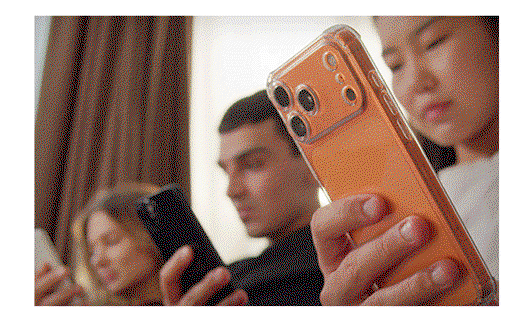
Today, I wonder how much of those sounds have been replaced by the chirps and chimes of our devices. The moment there’s a lull, many of us reach for our phones. We rarely give our children — or ourselves — the chance to notice the world around us.
This shift, and what we lose because of it, came into focus during a conversation at Worth Media Group’s recent Living Well conference. What I heard there helped me understand why putting down our phones is so difficult, and why summer may be one of the best times to try.
|
|
Where our attention goes
Listening to the discussion, I realized this wasn’t just a story about children, but about all of us. How often do we instinctively reach for our phones while waiting in line, sitting on the porch, or even sharing a meal?
Dr. Nicholas Kardaras, a renowned psychologist and bestselling author, offered a comparison for this behavior:
“For adults, smartphones increasingly function like cigarettes once did — we instinctively reach for them to reduce anxiety or fill every idle moment. Whether every instance qualifies as addiction is debatable, but it’s certainly an unhealthy dependence.”
If adults struggle to resist that pull, it’s worth wondering what constant screen time means for children whose brains are still developing. “That’s one reason we’re seeing unprecedented youth mental health problems and what many describe as a loneliness epidemic,” Dr. Kardaras said.
Psychologist Dr. Dale Atkins, an author and expert on
relationships, emphasized what screens often replace: human connection. She said:
“Today, many of us have relationships with our devices instead of relationships with each other. Children need adults who listen, make eye contact, engage in genuine conversation, and are fully present.”
She added: “Being attentive means putting the phone down, looking at the person you’re speaking with, and being fully present.” Whether we’re talking with a spouse, a friend, a grandchild, or a neighbor, that’s what meaningful connection looks like.
And perhaps that’s what all of us — not just children — have been seeking all along.
|
|
Summer’s greatest gift
Dr. Kardaras explained why our devices are so difficult to resist. Dr. Atkins described what happens when we spend time outdoors and how that differs from endless scrolling and vibrating notifications. As she said:
“Nature doesn’t require our directed attention. Looking at clouds, listening to birds, or simply noticing the wind is enough. It allows us to experience what researchers call soft fascination.”
Dr. Atkins calls this “green time,” the kind of attention that comes naturally when we’re outside instead of constantly reacting to emails and notifications.
In the process, we notice more, think more clearly, and discover solutions that seemed just out of reach a few moments earlier. After all, it’s often during a walk, while tending the garden, or even standing in the shower that fresh ideas appear and problems get solved.
|
|
Listening for summer again
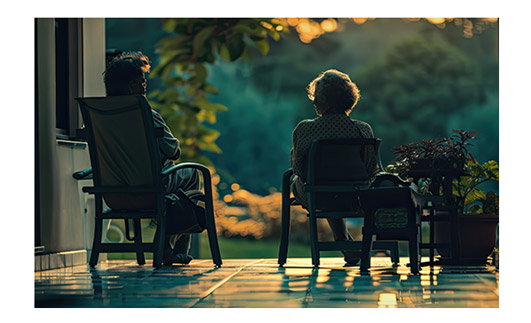
Summer gives us more opportunities to experience that kind of attention. It might be an evening walk after dinner, a few minutes on the porch, listening to cicadas as daylight fades, or watching fireflies begin to appear.
Those moments invite us to notice. And maybe that’s exactly what our minds have been missing.
Every now and then, I still think about that old screen door banging shut as my kids rushed outside to see what the day might bring. Looking back, I realize that sound was a reminder that the best parts of summer were happening on the other side of the door.
This season, I hope we’ll all spend a little more time there.
All the best,
|
|
Jason Eichenholz built a remarkable career as a technology entrepreneur, earning more than 85 patents and leading groundbreaking innovations. But his most important work began at home.
Inspired by his son Jonathan, Jason is creating Jonathan’s Landing — an inclusive community designed to help adults with autism and other neurodiverse individuals build meaningful careers, achieve greater independence, and thrive as valued members of their communities.
In this week’s Celebrate Your Story, Jason shares the personal journey behind the project, explains the growing “services cliff” facing families as children with autism reach adulthood, and discusses how entrepreneurship can help solve one of society’s most pressing challenges.
It’s an inspiring conversation about innovation, purpose, and what becomes possible when business is used to create lasting social impact.
|
|
Every business conversation this year seems to circle back to artificial intelligence. This week’s episode of Power & Impact circles back to something older: leadership.
Former Xerox CEO Steve Bandrowczak has spent his career helping organizations navigate massive change. In our conversation, he makes the case that the companies that get AI right will be led by people who know how to help others adapt, learn, and take on new ways of working — not necessarily the ones with the sharpest technology.
Steve also shares the experiences that shaped him decades before he became a CEO: leaving home at 16 with little more than a paper bag and earning a master’s degree alongside his daughter years later. He’s built a career by showing that staying curious matters more than any title.
This conversation offers a fresh perspective on the mindset required to guide teams through major technological transitions. Share your thoughts at [email protected].
|
|
50 Years In: Learning to think like a farmer
As 1-800-Flowers celebrates its 50th anniversary, I’ve been thinking about the lessons that shaped me long before I opened my first flower shop. Some of the most important ones came from time spent outdoors and watching things take root.
Looking back over the past five decades, I still smile at one of the biggest surprises of my career: the day I realized I had become a farmer.
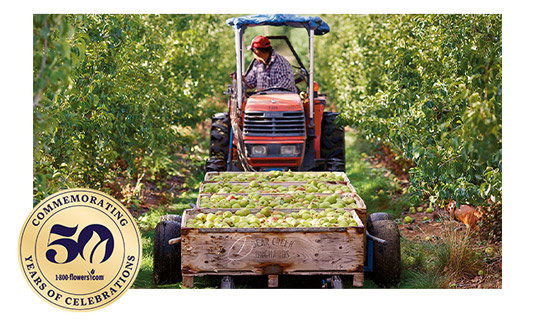
More than 90 years ago, brothers Harry and David Holmes began sharing pears from their family orchards in Oregon’s Rogue Valley. What started with exceptional fruit grew into one of America’s most beloved gifting brands, built on the simple idea that sharing something extraordinary brings people closer together.
I admired Harry & David long before it became part of our family of brands. Our customer data showed that after shopping with us, many people headed to Harry & David to finish their gift list. We spent more than a decade hoping the right opportunity would come along. When it finally did in 2014, we didn’t hesitate.
The acquisition transformed our business in ways I never imagined. Suddenly, this kid from Queens found himself paying attention to the snowpack in southwest Oregon and the growing season across thousands of acres.
It’s easy to think of Harry & David as beautiful gift baskets arriving on a doorstep. I’ve come to learn that every basket begins outside, with healthy soil, careful hands, and the patience to let nature do its work. It’s a perspective I’m grateful to have gained.
|
|
Missed my LinkedIn Live? Catch the replay
Last week, I hosted another LinkedIn Live conversation, sharing stories from the past 50 years of building 1-800-Flowers.com, including the moments that shaped our company, the lessons I’ve learned, and the people who made the journey possible.
If you couldn’t join me live, you can still watch the replay whenever it’s convenient. And if you’d like to join future conversations as they happen, you can follow me on LinkedIn and turn on notifications so you’ll know when the next session begins.
|
|
|
Related articles that caught my eye
|
|
|
|
|
|
|
Written by our Founder and Chairman, our Celebrations Pulse letters aim to engage with our community. From sharing stories to welcoming your ideas, we want to help you to express, connect, and celebrate the important people in your life.
|
|
|
|
|