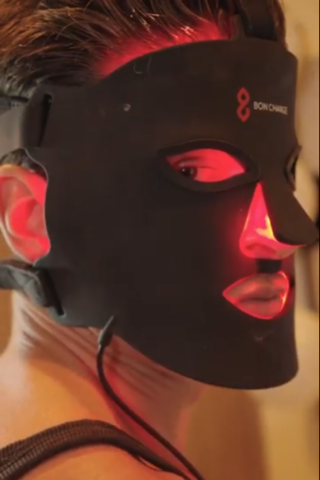
Skin is one of the first places where aging visibly shows up, and one of the last places where people actually address it.
By the time you notice fine lines, sagging, or dull texture, your skin's collagen production has likely already been declining for years.
Here's why: as you age, fibroblast activity slows down. These are the cells responsible for producing collagen and elastin, the proteins that keep skin firm, plump, and resilient.
Less fibroblast activity means less collagen, and less collagen means the visible signs of aging start to show up faster.
That gap is where red light therapy can help, supplying the cellular energy fibroblasts need to keep producing collagen.
But not every wavelength penetrates deep enough to matter, rendering many red light masks ineffective.
The ones backed by research use red light around 630nm, which supports collagen and reduces visible fine lines, paired with near-infrared light around 850nm, which reaches deeper into the layers where circulation and tissue repair happen.
|