100% Grass-fed
Grass-Fed Traditions currently supplies 100% grass-fed beef from small-scale family farms in Wisconsin.
How do we define “grass-fed?”
The cows are on pasture, not in feed lots eating silage. They are also finished on grass, and do not eat grains at all.
We don’t process animals in the winter or early spring, when they are only eating dry grass. Our animals are eating green grass right up to the time of processing, and are dry aged before packaging.
Many sources of “grass-fed” beef today are simply from cows in feedlots eating silage year round.
Our cattle are never treated with antibiotics or hormones, and they are treated humanely right up until the time they are processed at a family-run small scale processing plant in Wisconsin.
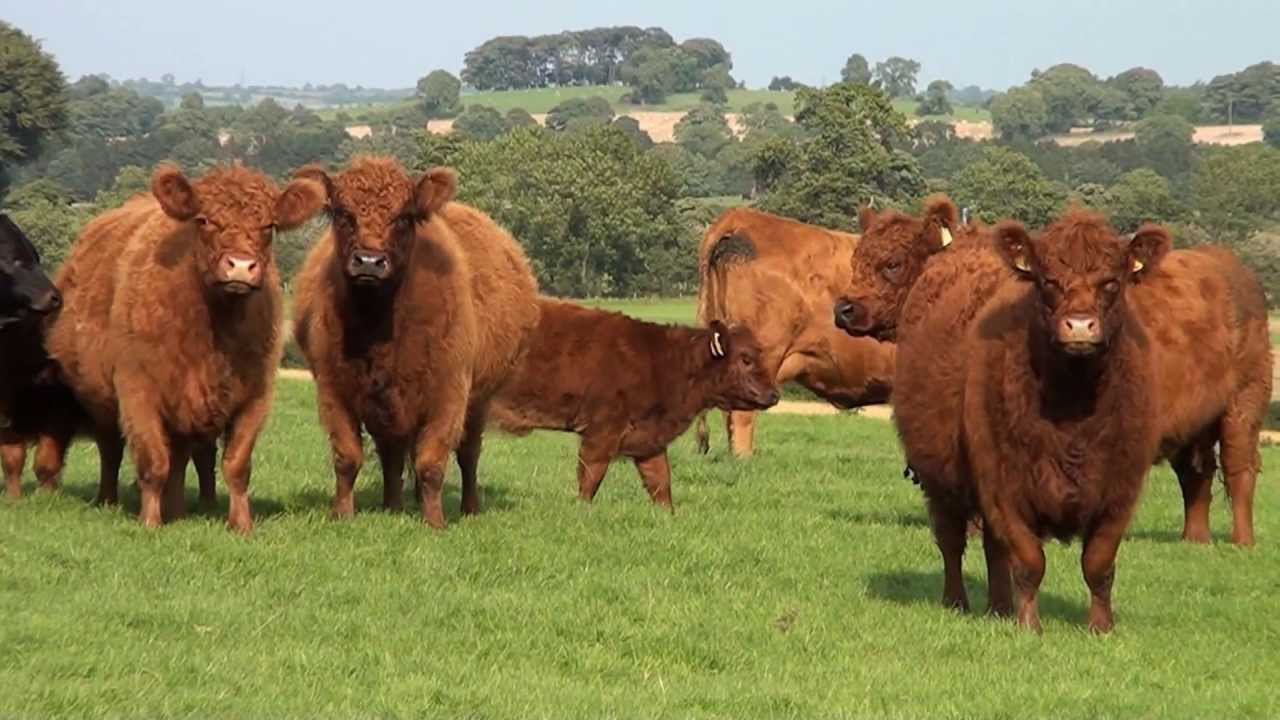
Galloway Cattle
Galloway cattle are an ancient breed that originated in the rugged hill country of southwestern Scotland. They are related to the Angus which was developed in northeastern Scotland.
While the Angus was selected for rapid growth on better feed, the Galloway was selected for its ability to thrive on poor forage in a cold wet climate.
They were first imported to the states in the 1850s. They are still rare in North America, and worldwide only number about 10,000. Their popularity is now increasing with the renewed interest in grass-fed and grass-finished beef.
The Galloway, unrivaled as a grazing breed, utilizes coarse grasses frequently shunned by other breeds. They have the ability to produce a high quality beef product directly from grass.
Due to the breed’s naturally dense, insulating coat the Galloway does not layer on excessive outside fat.
Results of a multi-breed research project conducted by a Canadian Government Experiment Station, reveal that the Galloway ranks second only to the Buffalo in hair density tests.
The robust, hardy nature of the Galloway is especially suited for northern harsh climates. The claim that Galloway beef is juicy, tender, and flavorful is substantiated in recent USDA tests of Galloway crossbreds, when compared with eleven other breeds.
Results of the Cycle IV Germ Plasm Evaluation (GPE) Program at the USDA Meat Animal Research Center (MARC), Clay Center, Nebraska, showed the Galloway crosses placing at the top of the chart for flavor, juiciness and tenderness.