Think of how much time it takes you to hunt down answers to company-specific questions. The information exists, but it’s either locked inside the heads of teammates or buried so deep in other company resources that you need someone’s help to find it.
While generative AI is ideal for instant question-answering, a large language model (LLM) isn't enough. LLMs are trained on public data and lack company-specific information. They can provide a general direction, but not specific details. Additional input is necessary for accurate results.
Enter retrieval-augmented generation (RAG). Think of it as AI’s trusty GPS system — it helps the model pinpoint the precise location of information and deliver it to an end user. With RAG, AI users can generate contextually relevant insights and make better-informed decisions using the most relevant and up-to-date information your company has to offer.
Problem solved, right? Well … not exactly.
While RAG has become the table-stakes for successful enterprise AI implementation, building an effective RAG solution can be challenging for developers — especially in enterprise environments with constantly changing internal data. Many larger tech companies are rushing to release generative AI with RAG for business customers, but these solutions may have accuracy and compliance problems, leading to unanticipated costs in the future.
Fortunately, the folks at Writer have developed a one-of-a-kind RAG solution that achieves higher accuracy than traditional vector-based RAG approaches. Whether you’re a technical or a non-technical decision maker, this month’s newsletter will break RAG down into plain language so you can evaluate potential AI solutions with clarity and insight.
In this month's newsletter:
Learn what RAG is and why it’s a hot topic for enterprise AI
Explore the concept of vector retrieval and its limitations in enterprise use cases
Understand why a graph-based solution like the Writer Knowledge Graph is the best approach to enterprise RAG
Get a taste of the power of the Writer Knowledge Graph with a quick product tour
Knowledge is power — with the right RAG solution, your company can wield it responsibly and accurately.
Wishing you efficient and accurate knowledge hunting,
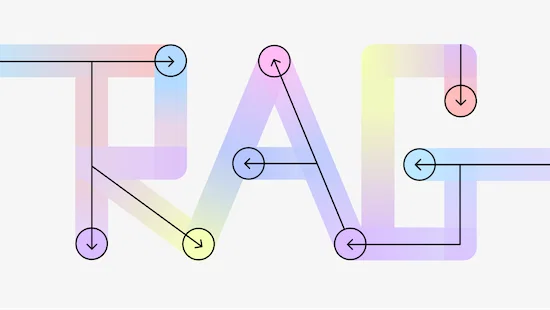
Retrieval-augmented generation (RAG): What it is and why it's a hot topic for enterprise AI
In this blog post, we explore the concept of retrieval-augmented generation (RAG) and its impact on AI language models in the enterprise. Discover how RAG enhances content generation by combining information retrieval and text generation, and learn how the Writer Knowledge Graph simplifies the implementation of RAG for businesses.
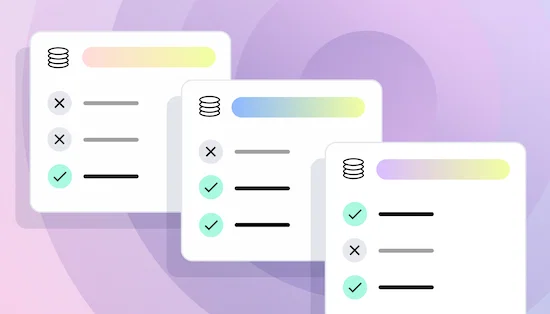
The limitations of vector retrieval for enterprise RAG — and what to use instead
Learn about the limitations of vector retrieval for enterprise retrieval-augmented generation (RAG) and explore alternative approaches to enhance data retrieval accuracy. Gain insights into the challenges of vector-based retrieval and the need for more effective methods in enterprise settings.
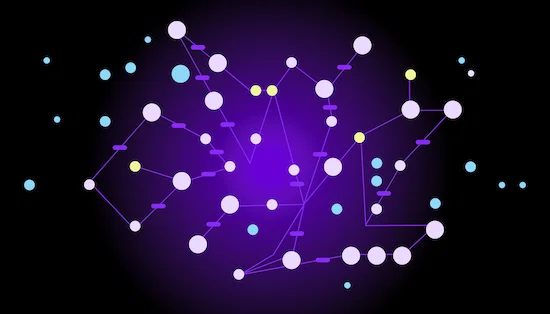
Vector databases, graph databases, and knowledge graphs
Discover the differences between vector databases, graph databases, and knowledge graphs, and learn how to choose the right data storage technology to support retrieval-augmented generation (RAG) in enterprise settings. Explore the strengths and weaknesses of each database type and understand why knowledge graphs, with their ability to preserve semantic relationships and encode structural information, are particularly suitable for RAG-based search.
Writer Knowledge Graph: Superior RAG for enterprise
Just like GPS has revolutionized how we travel, retrieval-augmented generation (RAG) is transforming the way AI language models navigate the complex landscape of data, putting enterprise generative AI solutions within reach.
Writer Knowledge Graph, our graph-based RAG, grounds your generative AI with company-level context by connecting our platform to your internal data sources. It achieves higher accuracy and vastly fewer hallucinations than traditional RAG approaches that use vector retrieval.
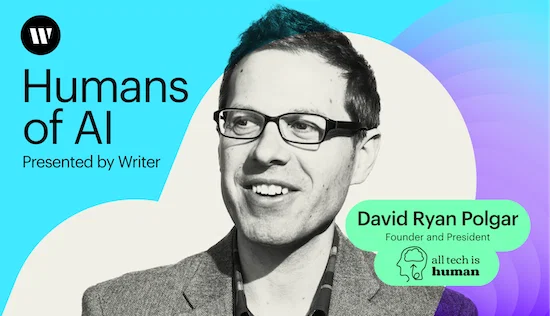
On this episode of Humans of AI, we’re joined by David Ryan Polgar, founder of All Tech is Human, a non-profit and community dedicated to bringing together people, organizations, and ideas to grow and strengthen the Responsible Tech ecosystem. David shares some harrowing stories from the early days of social media that led him to where he is today — at the intersection of tech and human rights, AI and ethics. A lawyer and educator at the forefront of a movement “altering the DNA of tech development,” David is determined to create spaces and communities for human conversations and connections so that together we can shape the future of AI.
Generative AI design patterns: A comprehensive guide
In this comprehensive guide, MIT technologist Vincent Koc explores generative AI design patterns for working with Large Language Models (LLMs). By examining various production implementations, he shares approaches and patterns to overcome challenges such as cost, latency, and hallucinations in generative AI. From layered caching strategies to utilizing knowledge graphs, this guide provides valuable insights into enhancing the effectiveness of generative AI implementations.
Writer.com’s graph-based RAG alternative to vector retrieval
In a recent interview with The New Stack, May Habib, CEO of Writer, discussed the company's graph-based alternative to Retrieval-Augmented Generation (RAG). By leveraging knowledge graphs and graph databases, Writer aims to enhance the accuracy and contextual preservation of AI applications. Habib explained how their approach eliminates the need for complex chunking processes and offers a more scalable solution compared to traditional RAG methods using vector databases. The interview delves into the concept of knowledge graphs, their impact on knowledge management, and the potential use cases for Writer's innovative approach. To gain deeper insights into this alternative approach to data processing, read the full interview on The New Stack.
Meet Palmyra-Vision, our multimodal LLM with vision capabilities
We’re excited to introduce you to Palmyra-Vision, our multimodal LLM that combines visual and language understanding to analyze and generate text based on images.
Palmyra-Vision excels at extracting handwritten text, classifying objects, and describing graphs, charts, and infographics. Not only can it understand visuals, it can also answer specific questions, analyze graphs, and generate new content based on your images. Palmyra-Vision achieves a score of 84.4% on VQAv2 question-answering benchmarks, outperforming both GPT-4V and Gemini 1.0 Ultra.
We’re aiming to make the Writer’s Brief newsletter an indispensable monthly addition to your inbox. What would you like to see more (or less) of in the newsletter next month? Share your thoughts in a reply to this message or join our Slack community, ActiveVoice and send me a DM! — Alaura ✌️