筒仔米糕: Totally Tubular
savory rice pudding and a new Tatung accessory launch

Is this your brand on Milled? Claim it.

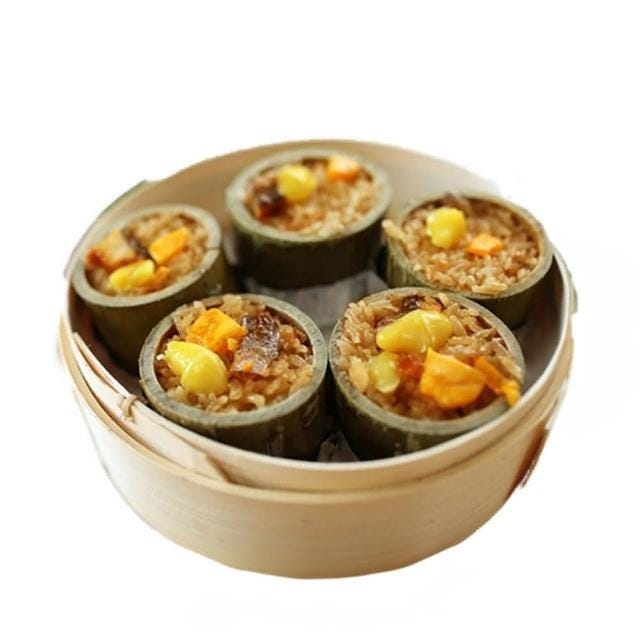
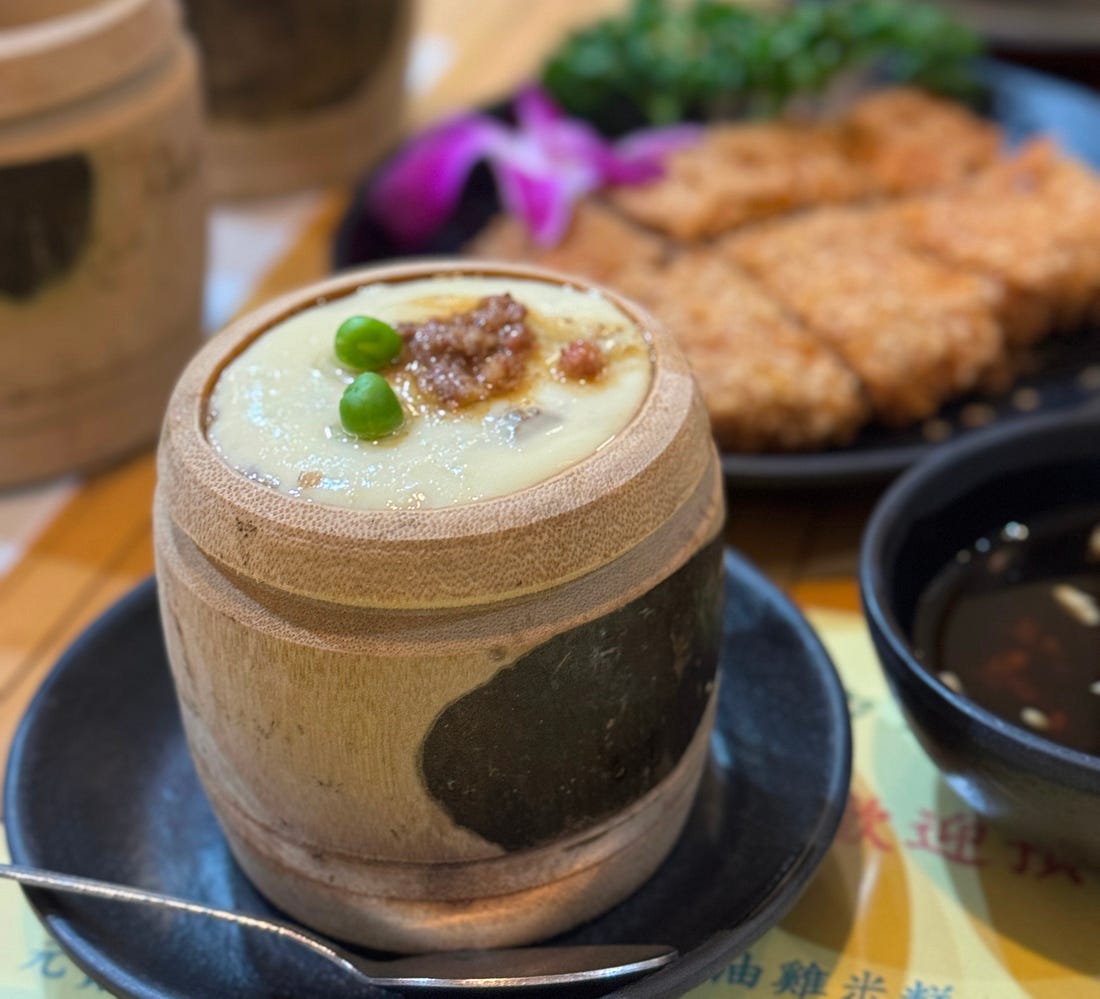
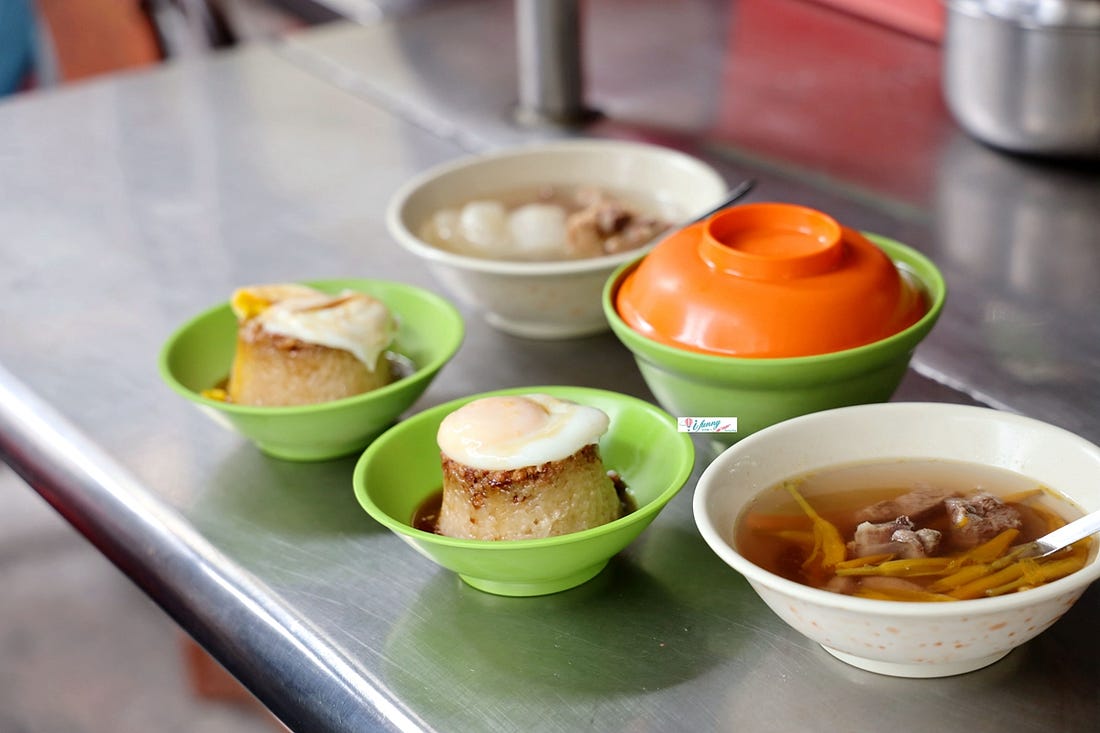
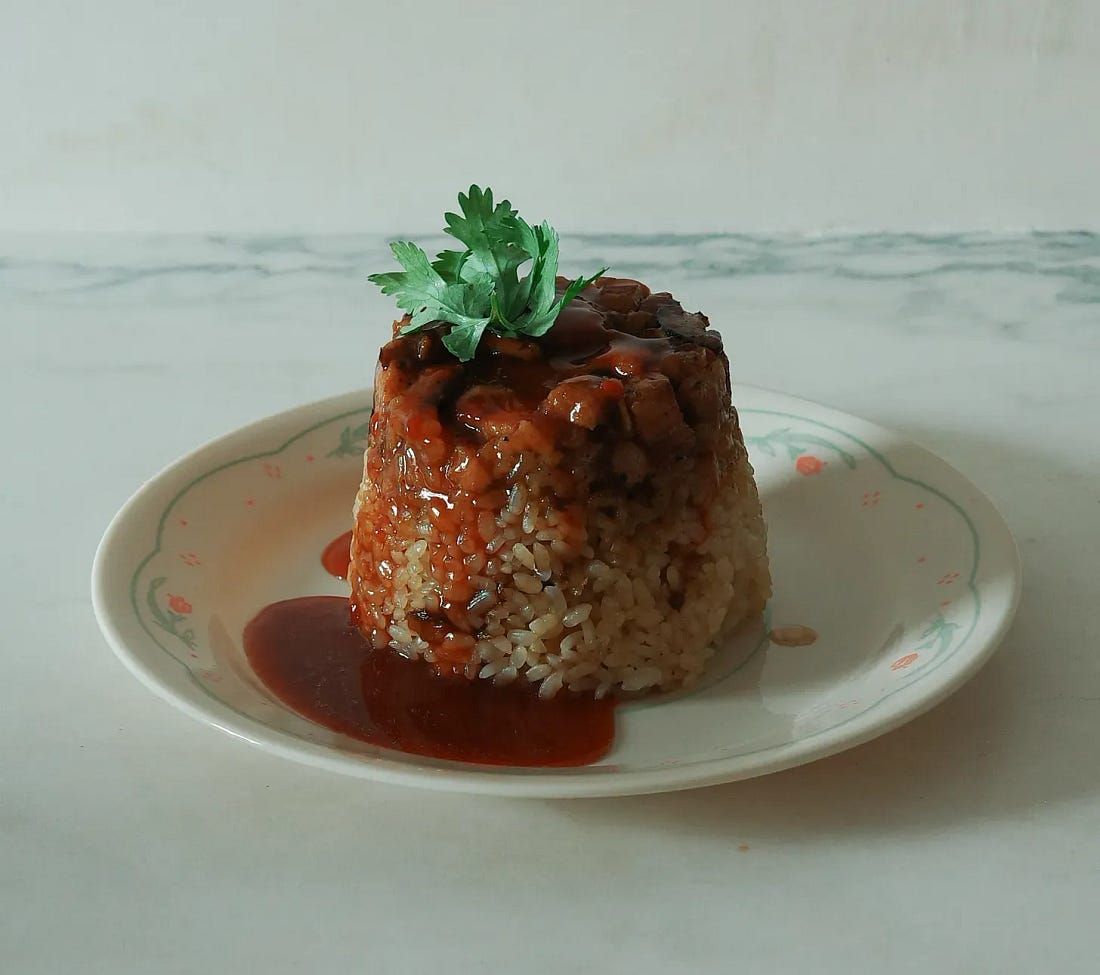
This is Yun Hai Taiwan Stories, a newsletter about Taiwanese food and culture by Lisa Cheng Smith 鄭衍莉, founder of Yun Hai. If you aren’t yet a subscriber, sign up here.  This week, we’re launching “sticky rice tubes” aka stainless steel steamer ramekins, an accessory for the Tatung electric steamer that will enable you to steam lots of little things at the same time, but also make tubular cakes. They’re simple: a bit of stainless steel formed into the perfect shape and size for maxing out Tatung real-estate. The design for these comes from a Taiwanese traditional rice pudding, traditionally prepared in a cylindrical form. It’s a favorite food of Lillian Lin, our COO. Many of you who have come through our shop or slid into our comments have said so, too. Read on to learn more, and grab the recipe I’ve developed for you to easily make this Taiwanese favorite at home. Speaking of new launches, we’ve been hard at work over the last few months. Stay tuned for the latest season of Cooking With Steam and more product launches in the fall. Oh, and we just submitted our Fall 2027 lunisolar almanac to the printer, be sure to sign up for the waitlist! So excited. Form follows function? Or form follows the woody stems of a giant supergrass belonging to the Poaceae family? Enter tube rice pudding, or 筒仔米糕 tong zi mi gao/tâng-á-bí-ko, made by layering a container with braised pork, mushrooms, dried seafood (and more), then packing in seasoned glutinous rice. It’s steamed, overturned onto a plate, and dressed with sauce. If zongzi 粽子 and oil rice 油飯 shared a second cousin, it would be this little tower of power.
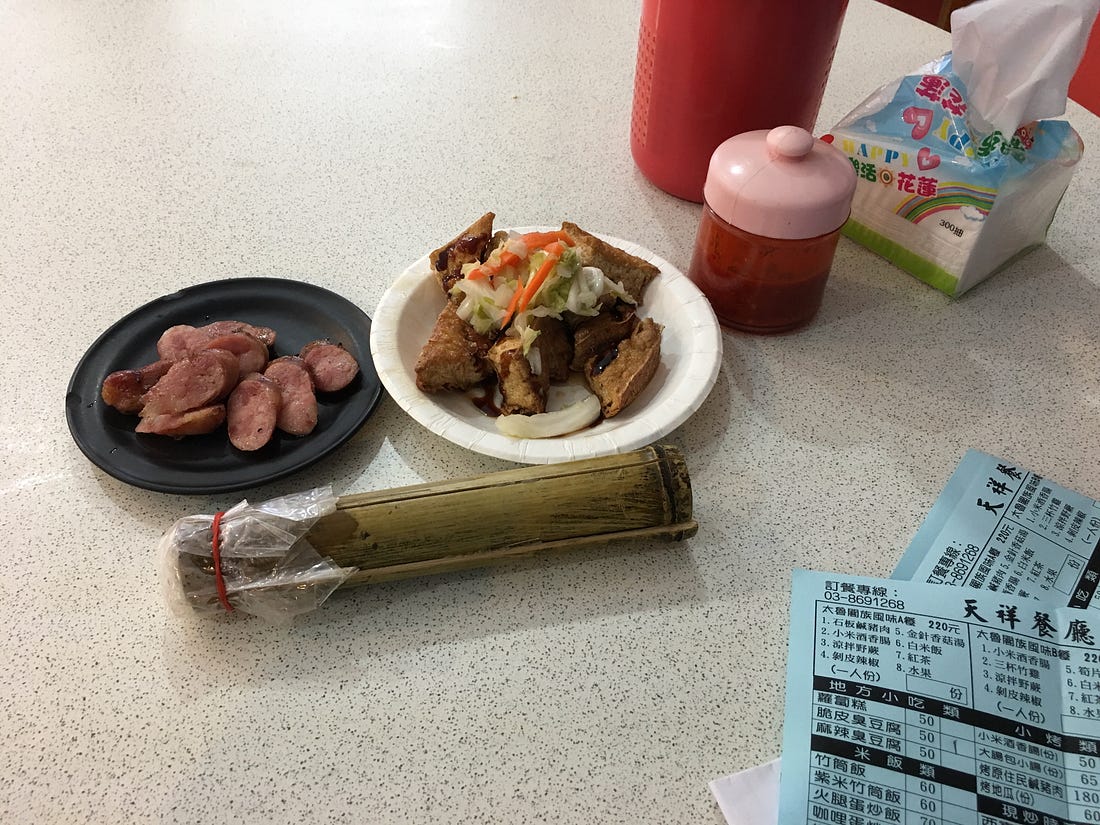
The form of this dish has its origins in Taiwan’s National Tube: bamboo. The Ministry of Education’s Hokkien dictionary confirms that this dish was originally steamed in the hollow stalk, and the form persists today:
How endearing that this entry also confirms this is “very delicious.” Delightfully unobjective. I’d like to see this in more dictionary entries about food. I took the liberty of updating the OED banana split entry to follow suit.
But let’s not branch off into splits, and circle back to tubes.
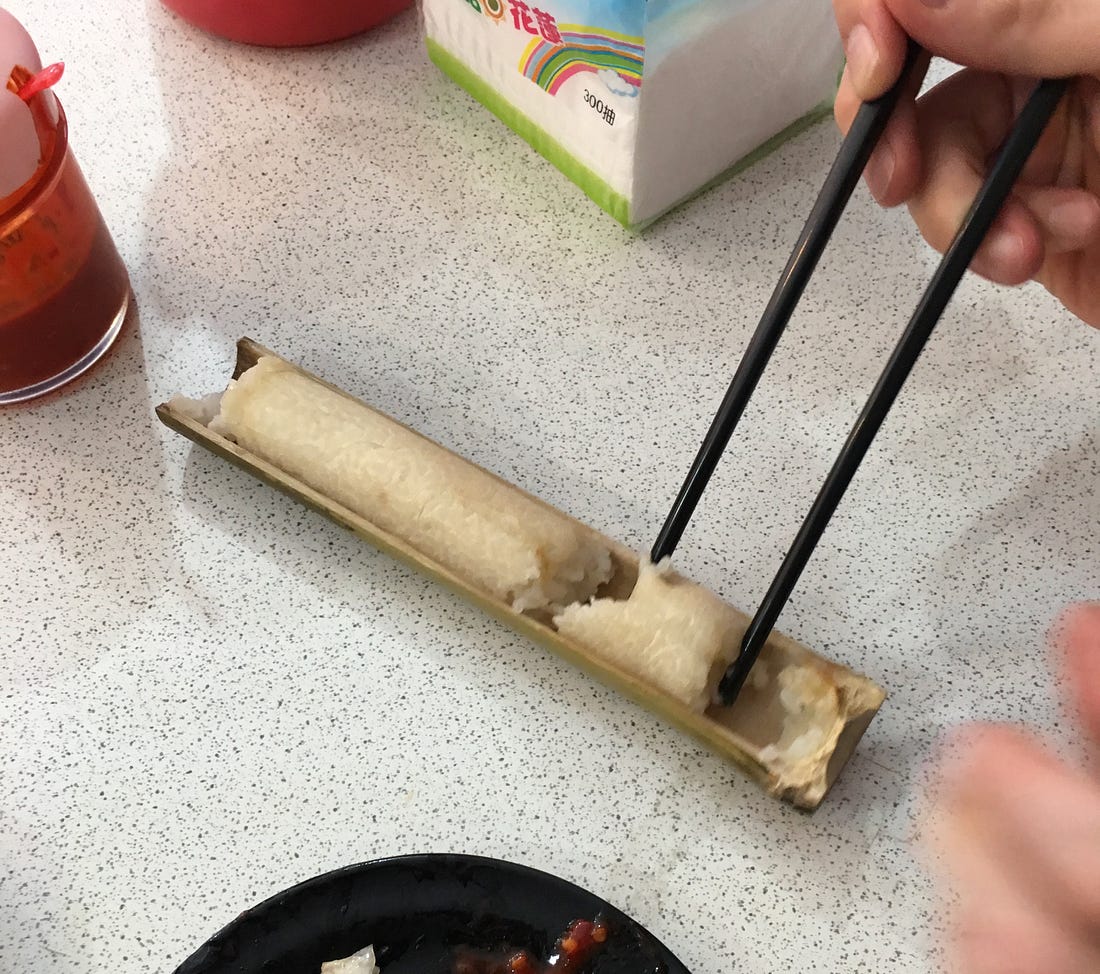
There’s a significant family of dishes where bamboo tubes are stuffed with meats, nuts, rice, and seasonings, and steamed to create a cylindrical pudding. These can vary widely, from the cup-shaped version we’re featuring here to a skinnier bamboo segment stuffed with rice that’s sliced or cracked open. I’ve seen these steamed over a fire while camping and sold at street stalls on the eastern side of the island. There’s also a Tainan style mi gao that doesn’t involve a tube, and that’s very special, too (here’s Lillian’s favorite Tainan-style mi gao stand, recommended by a taxi driver and open until midnight).
Tong Zi Mi GaoTube Rice Pudding is more a format than a formula. The general gist: meaty toppings are rich with shallot flavor (usually braised or stir-fried, sometimes marinated and steamed with the cake); the rice is seasoned (with braising broth, shallot oil, or soy sauce); and the overturned structure is dressed with a runny sauce (a friend let me know that 甜辣醬 sweet chili sauce is “already so good,” but “could go next level” with 海山醬 hai shan jiang sea mountain sauce, included in the recipe I share below). I’ve seen them topped with a fried egg, steamed with a tea egg, or mixed with bits of taro (yum) in the rice. I’ve gone rogue and even made them topped with bacon, but that’s a concept for a different day.
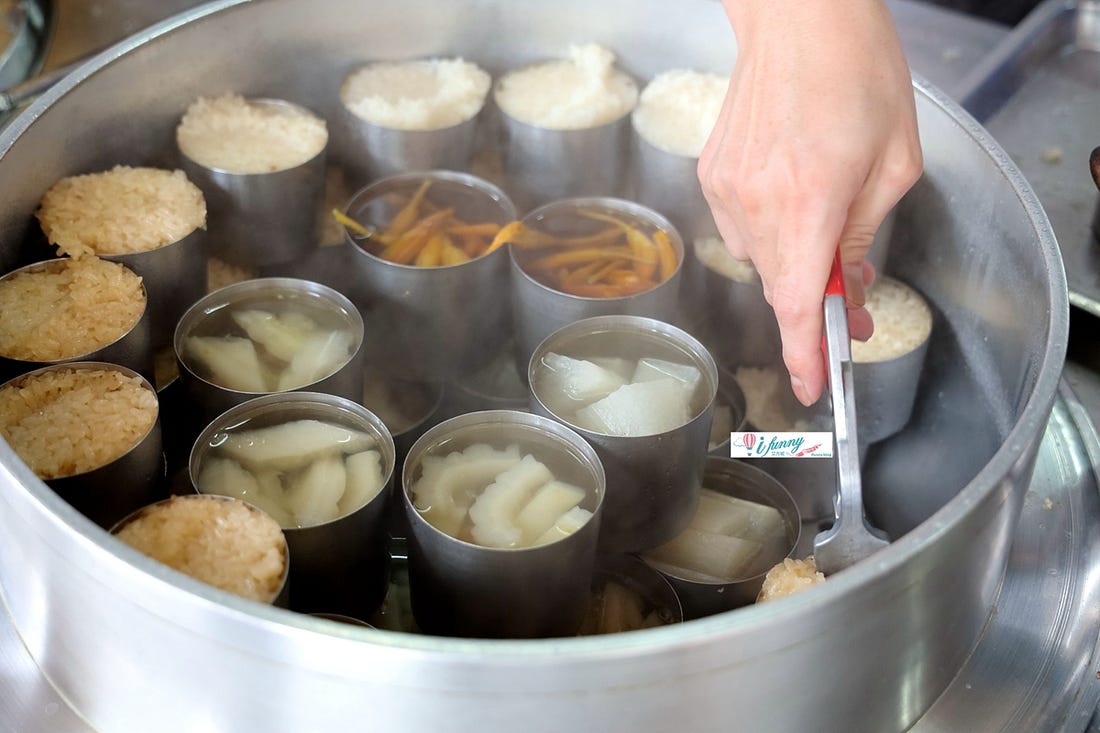
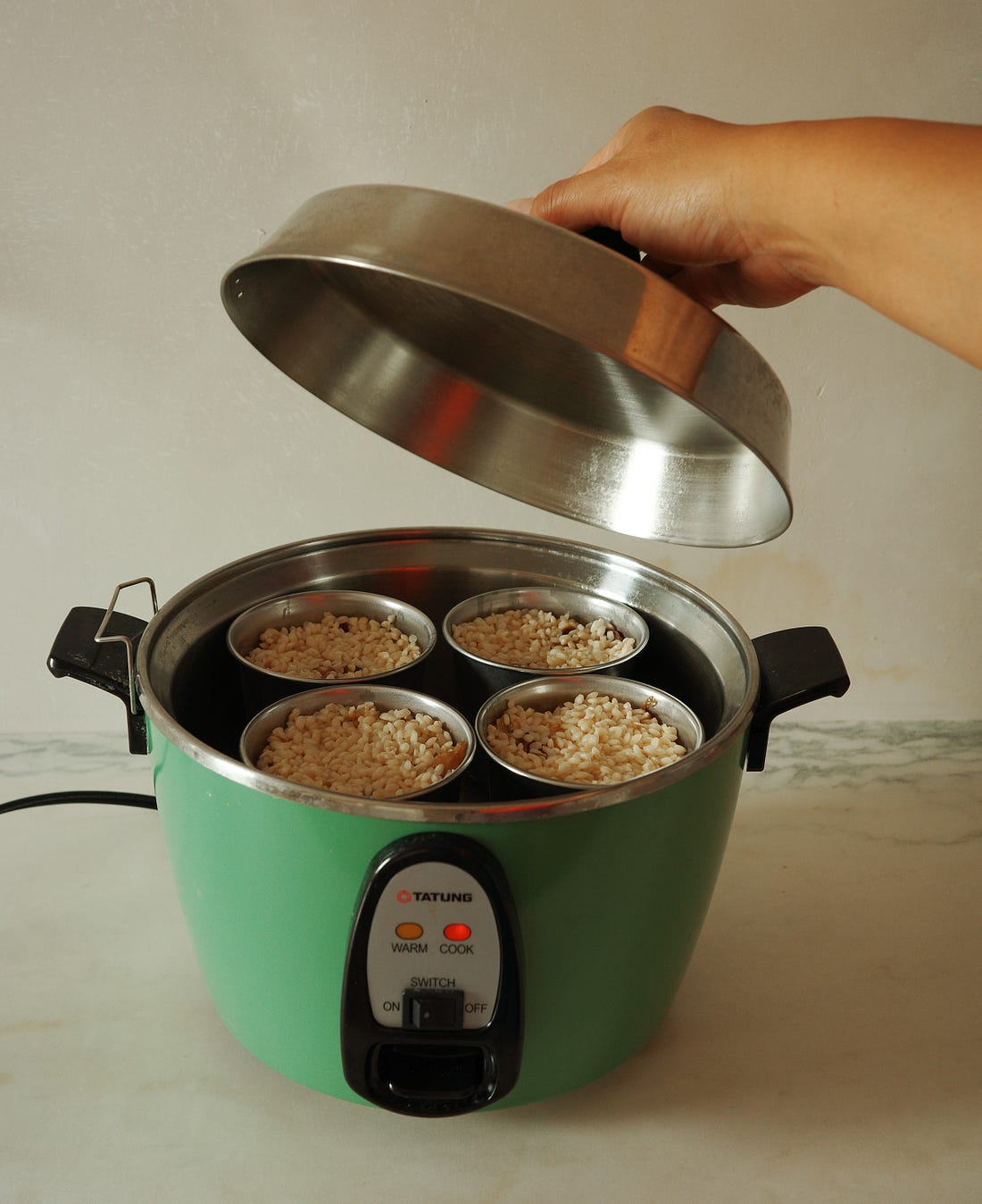
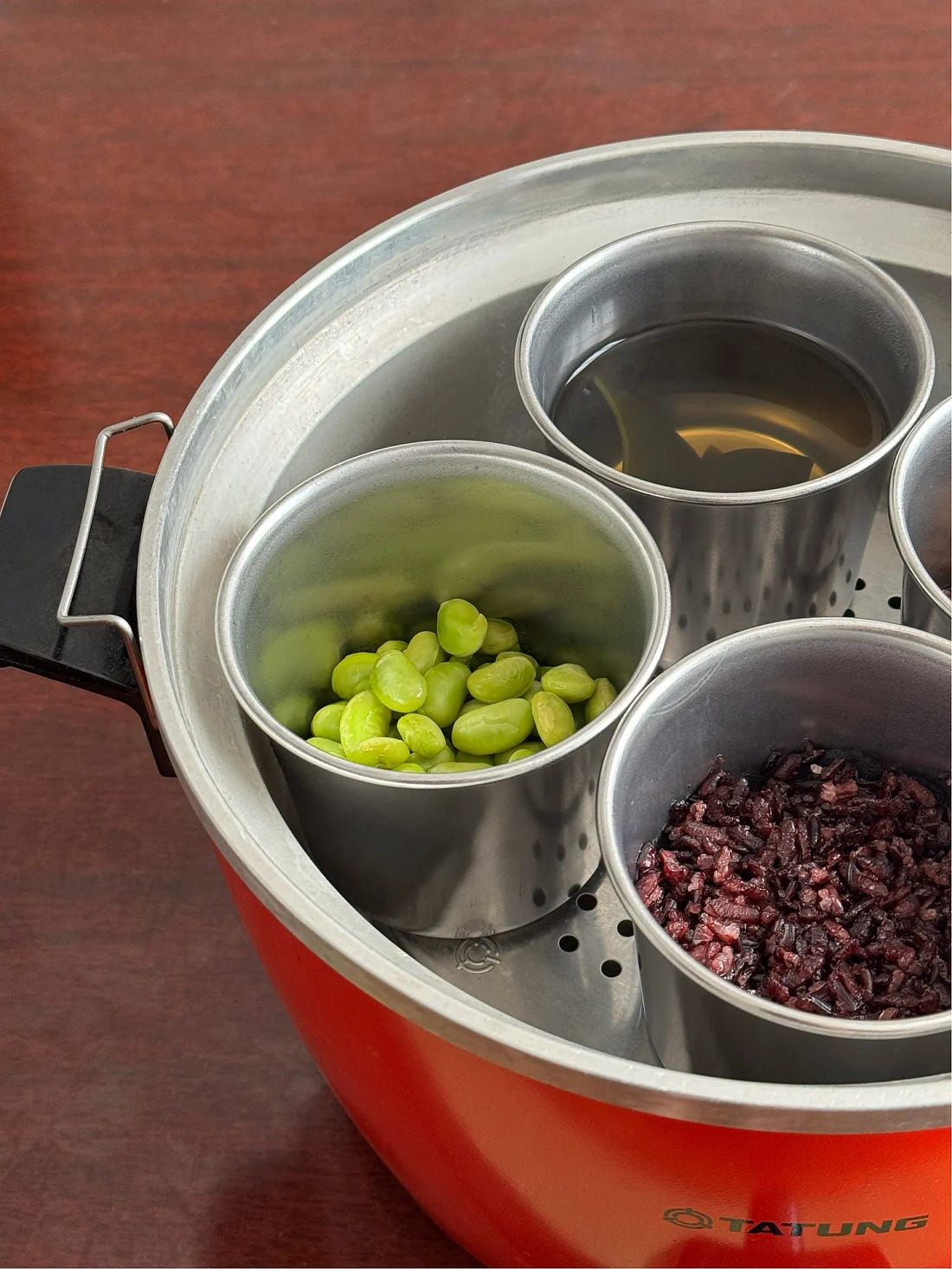
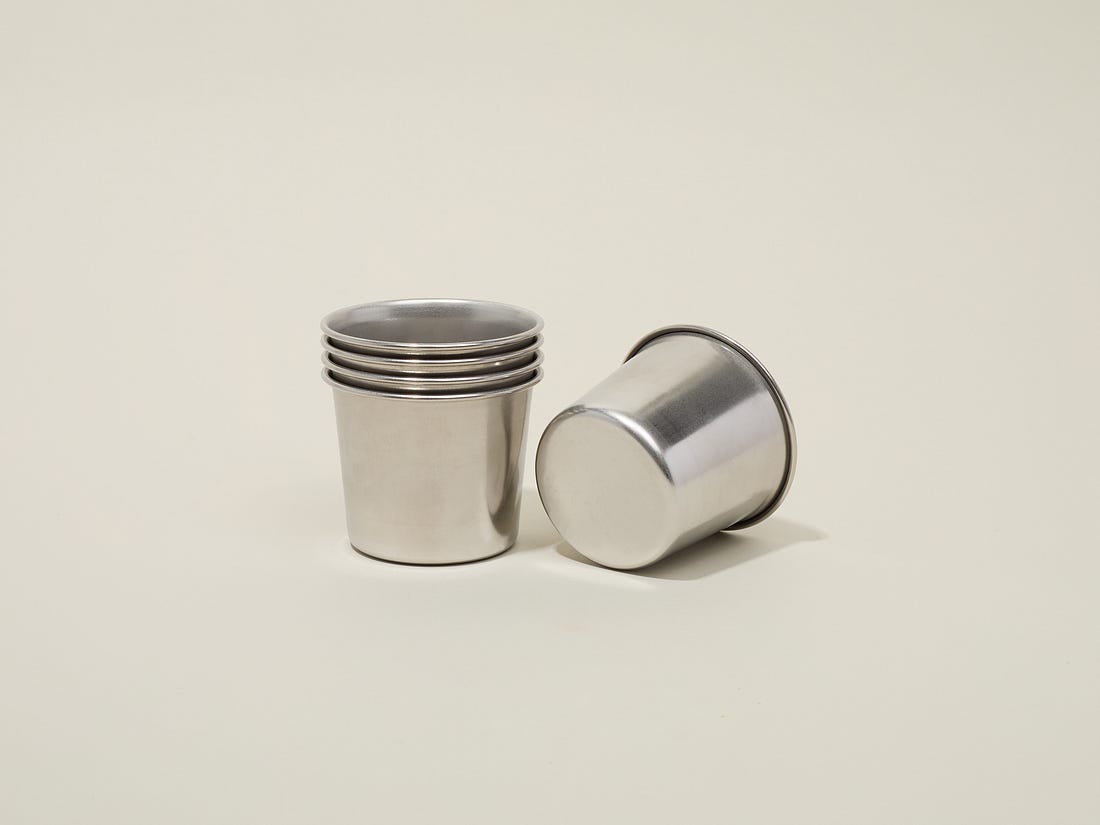
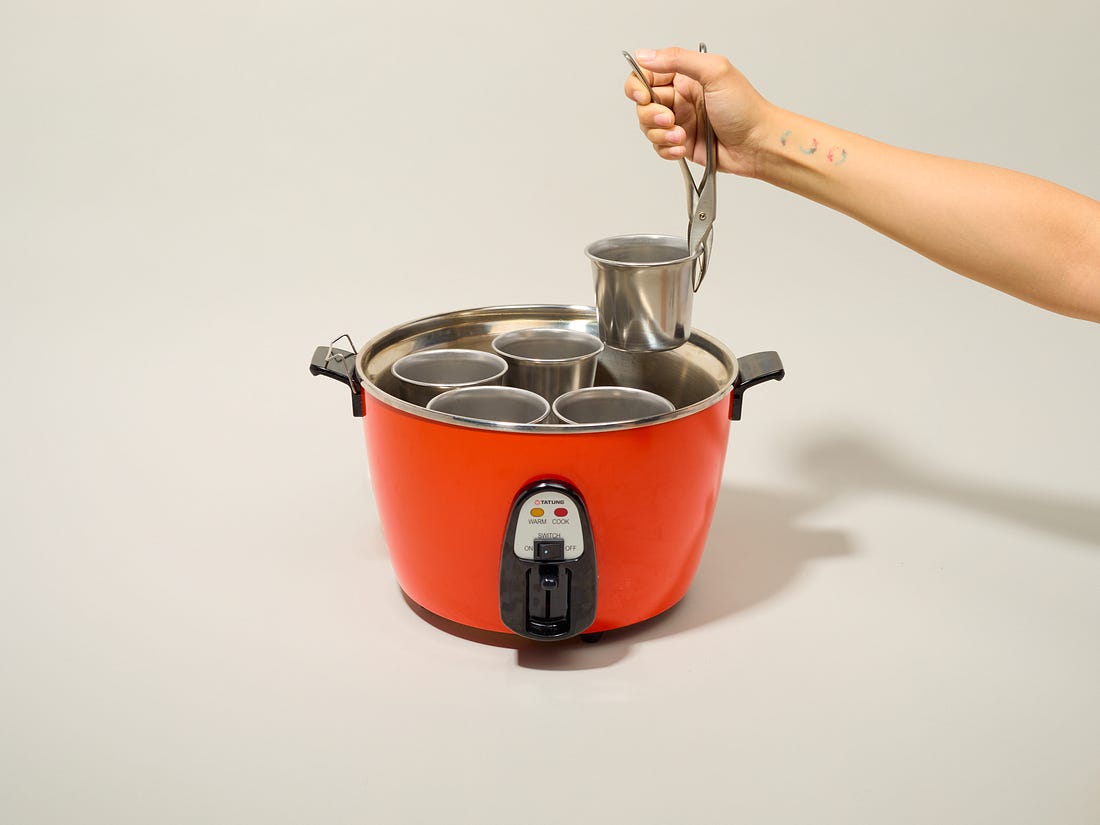
Today we’re launching the bamboo-analog steamer ramekins that make this dish possible: stainless steel cups designed to fit four or five to a Tatung steamer. They’re equally useful for bamboo steamers, metal steamers, or any other set up you might already have. Use these to make tube rice pudding at home, but also steam many things at once, from leftovers to individual soups.
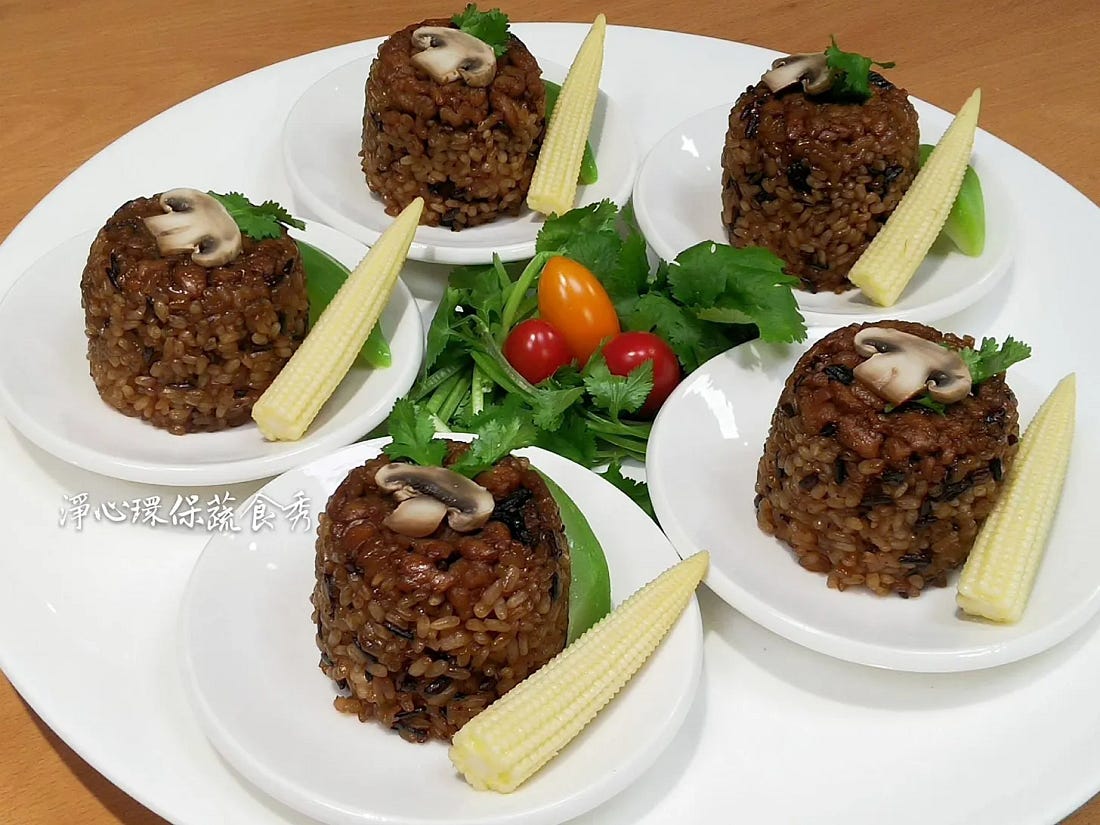
In honor of the woody stems of a giant supergrass belonging to the Poaceae family, I have written a recipe for tong zi mi gao that uses our shallot oil, making this dish as accessible as ever. Of course, it also features our hyperyummy log-grown mushrooms and a selection of Taiwanese black soybean soy sauces, all of which contribute to an old school 古早味 flavor. Once you’ve got the traditional one down, I’d encourage you to riff! Heck you could even go steakhouse and put a white button mushroom on top and baby corn on the side, why not.
Recipe: Tube Rice Pudding
At the link below, you will find a recipe for tube rice pudding that includes a very important shortcut: our crispy shallot oil. This saves you the step of slicing, slow-crisping, and seasoning them, and brings a very true-to-life old school Taiwanese flavor to the whole affair. I adapted this from many many YouTube videos and much trial and error; feel free to adjust the salt and seasoning level according to your preference. If you plan to use a lot of sauces, you may adjust the soy sauce down a tad. If you prefer to just add hot sauce, keep it seasoned as is.
A few notes: the number of servings is approximate, and depends on how full you pack the ramekins and the size and shape of your toppings. This recipe is enough for four full ramekins. If you want to ensure 5 very full ramekins, just size up a little bit, increasing the rice and toppings by about 5-10%.
Magically, you don’t need to grease the ramekins before filling. The fat in the toppings and the texture of the rice will release from the mold easily. Just be sure to turn it over while it’s still warm — don’t let it cool down too much or it will stick. If that happens, just reheat it for a while. Take a look at how easy this is: 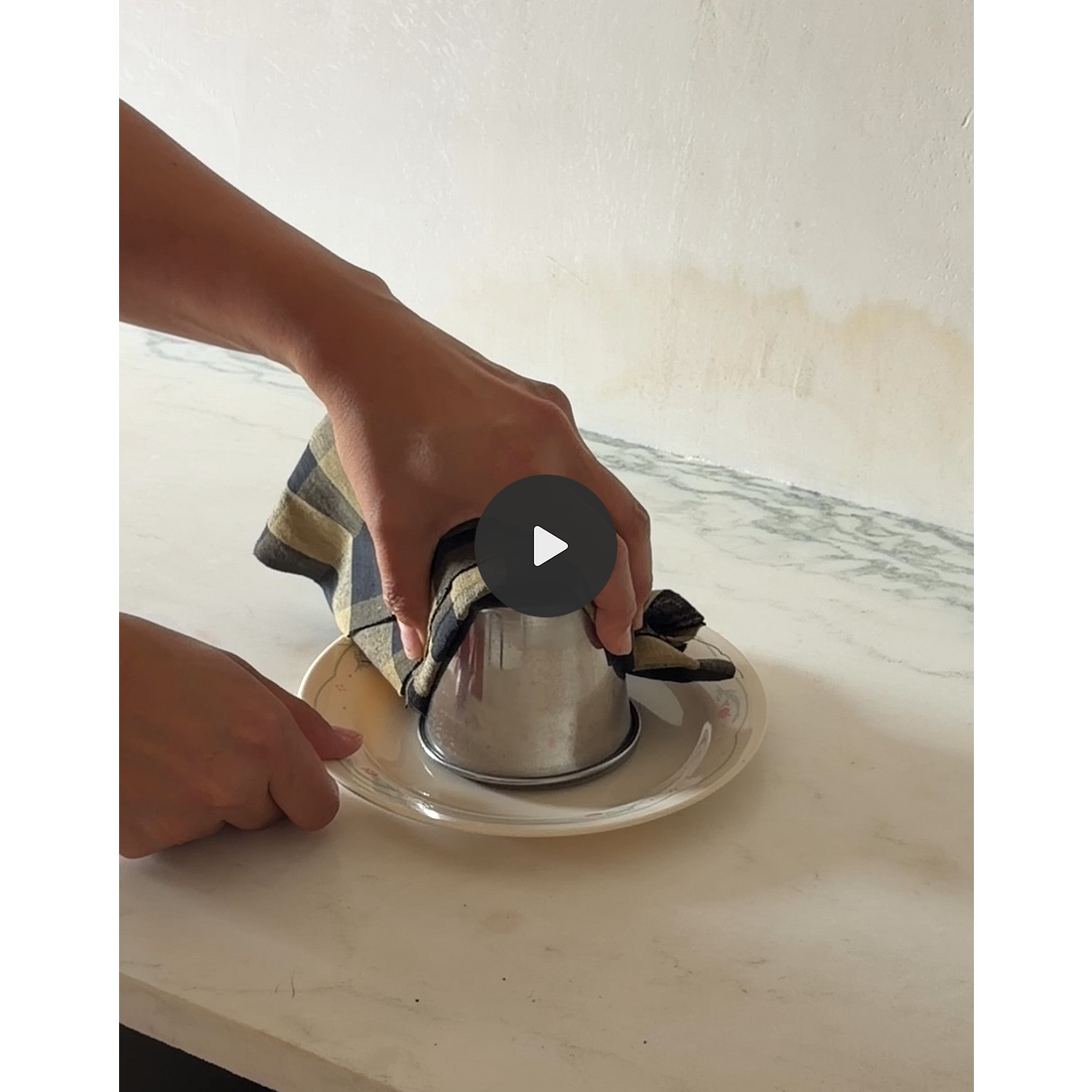 Finally, you can pop them in the freezer to resteam later. Freeze directly in the ramekin (sealing the top), or demold, let cool, and wrap in plastic wrap. If you do demold them, just be sure to resteam them in the original vessel, sans plastic wrap.
The Tubes In QuestionAs mentioned, we now carry the conventional ramekin for this style of rice pudding, a stainless steel cup known colloquially as 米糕筒 or sticky rice tube. You could also call it 不鏽鋼蒸杯 or stainless steel steaming cup, and though that wouldn’t be as cute, it does kind of get to the heart of the matter: this stainless steel tube can be used for so much more than rice cake. Use it for steamed eggs, flan, black sugar cake, or even to reheat small portions of leftovers in your Tatung steamer.
Like our other Tatung steamer accessories, these sticky rice tubes are designed specifically to fit our steamers. Four fit readily in a 6-cup and five in an 11-cup. If you want to steam for a crowd, layer more bamboo steamers on top. If you’re a daredevil, stack them, à la tong zi mi gao shops.
Because they’re made from stainless steel, the ramekins are corrosion-resistant and non-reactive when exposed to acidic foods. They’re easy to clean, dishwasher safe, and oven safe. We sell them in sets of four or five, and individually, too.
Before I Go…
And that’s all for now. It’s been a big, busy, wild few months. XO! Nowadays most have switched to metal cups for steaming, Written with editorial support by Amalissa Uytingco, Jasmine Huang, Lillian Lin, and Natya Regensburger. If you enjoyed this newsletter, please share it with friends and subscribe if you haven’t already. I email once a month, sometimes more, sometimes less. For more Taiwanese food, head to yunhai.shop, follow us on instagram and twitter, or view the newsletter archives.
You're currently a free subscriber to Yun Hai Taiwan Stories. For the full experience, upgrade your subscription.
|