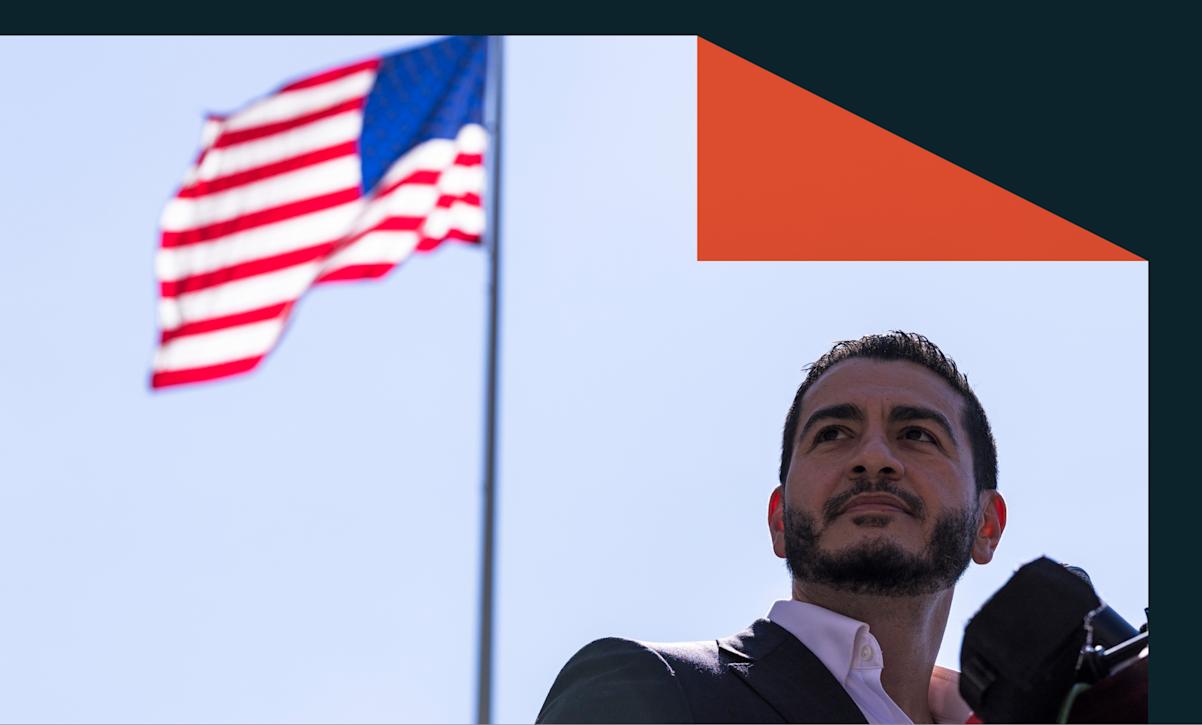
What's going on: From Mayor Zohran Mamdani (D-NY) to Rep. Lateefah Simon (D-CA), Muslim politicians are rising to prominence in the Democratic Party. Last week, Abdul El-Sayed won Michigan’s Democratic Senate primary; if he wins the general election, he’ll be the first Muslim Senator in US history. Now, many Republican politicians are doubling down on Islamophobia. Sen. Tommy Tuberville (R-AL) called El-Sayed a “terrorist” while Sen. Ted Cruz (R-TX) said Mamdani and El-Sayed “hate Christians” and want “Sharia law.” President Donald Trump said on Monday that “we have jihadists being elected all over the place.” Many Republicans have started using El-Sayed’s full name, Abdulrahman Mohamed El-Sayed, a longstanding tactic to frame nonwhite politicians as outsiders. (El-Sayed’s response: “My name is not the reason you can’t afford your groceries.”) It’s the latest example of what The New York Times describes as “anti-Muslim rhetoric [becoming] increasingly normalized in the ranks of the GOP.”
This isn’t entirely new: Just ask Rep. Ilhan Omar (D-MN) and Rep. Rashida Tlaib (D-MI), who have been frequent targets of Islamophobia from their fellow Congress members and from Trump. While some solidly blue areas have embraced their elected Muslim politicians (New York magazine’s current cover story is titled “Habibi City”), the US public as a whole has gotten more Islamophobic in recent years. The Council on American-Islamic Relations measured higher Islamophobia in 2025 than in any year since it began tracking data in 1996 — as in, worse than post-9/11. Maya Berry, executive director of the Arab American Institute, told PBS earlier this year that, at least back in 2001, then-President Bush and some elected officials publicly condemned Islamophobia… even as they enacted policies that placed Muslim residents on watchlists and under surveillance.
What's going on: Ah, the old escape hatch switcheroo. We’re just learning that last month when President Donald Trump left the NATO summit in Turkey, he was smuggled out of Air Force One in a catering truck before boarding a smaller plane. These Eras Tour shenanigans were in response to a credible threat from Iran. Guess who else is learning this for the first time? The journalists and some White House staffers who traveled home on the original plane, and had no idea that they were in the line of fire. So far, the Trump administration hasn’t weighed in. Secretary of State Marco Rubio — who was among the officials left behind on the decoy plane — dodged questions about it yesterday in a Homer Simpson-like manner.
A ruse by any other name: A media historian blasted the maneuver, saying that for the White House to “lie to the press corps in its entirety about where the president is — that's a new Rubicon that’s being crossed.” This incident could further exacerbate the already fraught relationship between Trump and the press, which, as The Washington Post puts it, is “marked by name-calling, threats, legal restrictions, and lawsuits” from the president. This kind of thing has happened at least once before. Back in 2000, President Bill Clinton secretly changed planes on his way to Pakistan. But in that case, at least one member of the press corps was briefed by White House officials on the sleight of plane in advance.
What's going on: AI that spies on us and takes our jobs is a hard pass. But AI that helps couples struggling with infertility? We’re listening. A team from Columbia University has developed technology that uses artificial intelligence to help men who suffer from extraordinarily low sperm count. The system — called STAR (Sperm Tracking and Recovery) — uses a magnifying lens to analyze and snap images of semen samples. AI assesses the images for sperm to capture and set aside. Doctors have used a similar technique with a microscope, but it can take up to eight hours — and they still might not find anything. STAR technology does for sperm what a telescope does for eyes looking up at the stars. The system took years to develop, and its first success story was a couple who conceived a healthy baby after 20 years of infertility. Good things come to those who wait (and who are willing to use AI).
This feels like what AI should be used for: About one in six people worldwide experience infertility, and male infertility is responsible for up to 40% of all those cases. Since it was rolled out in 2025, STAR has been used in 175 cases and recovered sperm 26% of the time. In those instances, couples have the option to move on to IVF. For now, the STAR technique only exists at Columbia and requires specially trained clinicians. But the goal is automation that could be used at other facilities. As the doctor who helped develop STAR said, “With zero sperm, you effectively are giving up the hope of a biological child. With one sperm, you could envision the child, the grandchildren, the great-grandchildren.”
A free flight to Maui to mark a one-year anniversary. A last-minute trip home for a family member. Cash back that covered a crucial grocery run. Those are just a sampling of the submissions Skimm’rs sent us when we asked about their best points win. They’re proof that rewards aren’t just a nice-to-have — they’re how lots of people afford real, meaningful life moments.
But there’s a catch. A bill moving through Congress right now (the Durbin-Marshall bill) could shrink or eliminate the very rewards programs that made these wins possible. That means the “free” flights, the cash back, the upgrades — they’re all at risk.
💃 The Dallas Cowboys cheerleader who shocked everyone by hanging up her short shorts has announced a razzle-dazzling career pivot. The show must go on.
Psst…this is just the preview:Subscribe to theSkimm app and never miss a moment.
Deals You Should Know About
Skimm Shopping, here. Our main job is to tell you about the can’t-miss sales we discover so you can capitalize while the code still works. Without further ado…
A free Galaxy A37 with no activation fees when you sign up with this provider